UN chief warns high loan costs are hurting African economies
By Aloys Michael, May 11, 2026United Nations (UN) Secretary-General António Guterres has criticised the global financial system for imposing high borrowing costs on African countries, saying the continent is being unfairly penalised despite having strong economic potential and stable financial prospects.
Speaking on Monday, May 11, 2026, at the UN Headquarters in Gigiri, Nairobi, during the inauguration of the United Nations Nairobi Expansion Project, Guterres said African nations are paying far more for development loans than wealthier countries.
“It is not acceptable that African countries pay more than three times what developed countries pay in order to obtain the loans they need for development. Many of these countries have more solid financial situations and better development prospects than developed countries that obtain resources at much lower costs. This is absolutely unacceptable,” he said.
Guterres, who is in Kenya for a two-day visit as one of the headline delegates at the Africa Forward Summit 2026, presided over the Ksh43.9 billion expansion project alongside President William Ruto.
The UN chief said the current global financial architecture continues to disadvantage African countries, limiting their ability to access affordable financing for development and economic growth.
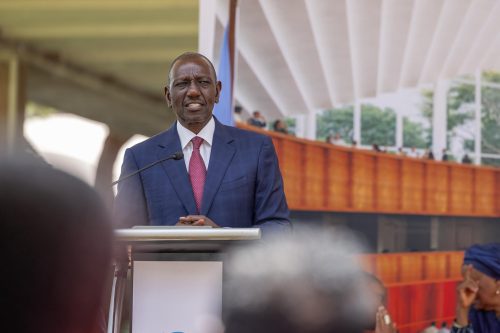
Ruto has repeatedly pushed for reforms to the global financial system, arguing that the current structure is outdated, unfair and tilted against developing nations.
According to the President, high interest rates and restrictive lending conditions have trapped many African countries in cycles of debt, slowing economic progress across the continent.
Calls for international lenders’ reforms
Ruto has also been at the forefront of calls for reforms at major global institutions, including the International Monetary Fund (IMF), the World Bank and the United Nations Security Council (UNSC).
Among the reforms he has championed at international forums such as the Africa Climate Summit, G7 meetings and UN conferences is Africa’s demand for permanent representation at the UNSC, including at least two permanent seats with full veto powers.
Ruto argues that the current UNSC structure reflects the global power arrangement established after World War II in 1945 and no longer represents modern geopolitical realities. He has also pointed to Africa’s significant contribution to UN peacekeeping missions despite lacking permanent representation in the council’s top decision-making structure.
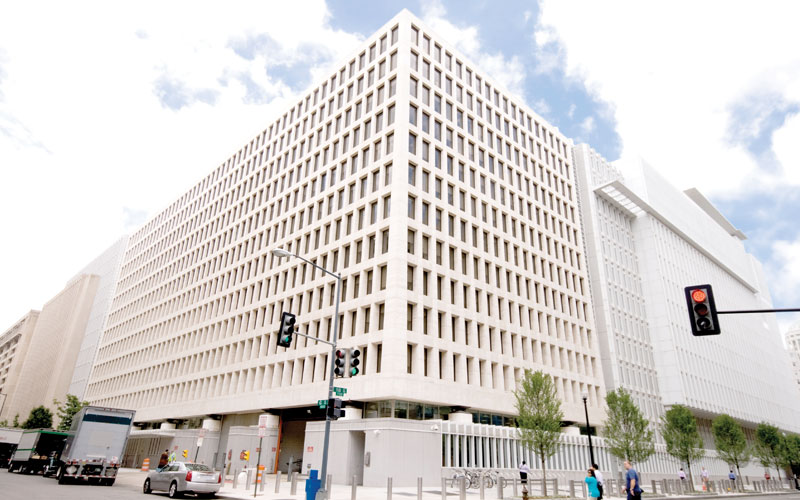
The present global financial system was established in 1945 following the creation of the IMF and the World Bank by 44 nations at the end of World War II to promote economic stability and support global reconstruction.
Guterres noted that African countries were excluded from those discussions, a situation he said continues to affect the continent today.
“The truth is that because Africans were not at the table in 1945, essential institutions of global governance were created without African representation, and Africa continues to pay a huge price for that. That is why we are insisting there will be no justice until there are permanent African members in the Security Council,” the UN chief said.
He added that Africa’s concerns would receive greater attention if the continent had stronger representation within global financial institutions such as the IMF and World Bank.
“The African continent can count on me. I will always stand by your side to correct injustices and to make sure the world recognises the price Africa has paid because of the injustices it has suffered,” he said.