Advertisement
UN chief states just energy transition era unstoppable
Thursday 24th July, 2025 07:20 AM|

United Nations Secretary General António Guterres has declared that the fossil fuel era is fading and that the world has passed the point of no return on the shift to renewables.
Guterres said a clean energy future “is no longer a promise, it is a fact”. No government, no industry and no special interest can stop it. “This is not just a shift in power. It is a shift in possibility,” he said.
“Of course, the fossil fuel lobby will try, and we know the lengths to which they will go. But, I have never been more confident that they will fail because we have passed the point of no return.”
He implored governments to file sweeping new climate plans before November’s COP30 climate summit in Belém, Brazil, saying the fossil fuel era is nearing its end.
You Might Also Like
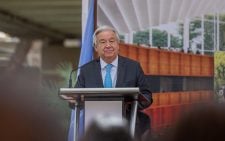


He urged governments to “go all-out” on the energy transition and ensure their new national climate plans help increase clarity and certainty about the switch to renewables.
In a special address at UN Headquarters in New York, Guterres cited surging clean energy investment and plunging solar and wind costs that now outcompete fossil fuels.
“The energy transition is unstoppable, but the transition is not yet fast enough or fair enough,” he said.
The speech, ‘A Moment of Opportunity: Supercharging the Clean Energy Age – a follow-up to last year’s Moment of Truth’, was delivered alongside a new UN technical report drawing on global energy and finance bodies.
“Just follow the money,” Guterres said, noting that US$2 trillion flowed into clean energy last year, US$800 billion more than fossil fuels and up almost 70 per cent in a decade.
Halting apathy
Making the case for the “unstoppable” shift from fossil fuels towards renewables, Guterres urged policymakers around the world to supercharge the new “clean energy era” despite geopolitical turmoil.
The UN boss has invited world leaders to present their NDCs at a high-level summit due to take place on September 24 in New York on the sidelines of the UN General Assembly.
Only 30 of the 195 signatories to the Paris Agreement have submitted their NDCs, although the UN had originally set a February deadline.
Some of the biggest carbon emitters, including China, the European Union and India, have yet to publish their updated climate plans with an emission reduction target for 2035.
“The reality is that we prefer to prioritise high-quality and ambitious NDCs rather than having countries rush and prepare NDCs that are low-ambition and do not have the full buy-in of all stakeholders in the economy,” a senior UN official told reporters on Monday.
If countries present their climate plans by the September event, there will still be time for the UN climate body to produce a synthesis report assessing the collective impact of the new pledges ahead of COP30, the official added.
Supporting Guterres’ call, Brazil’s COP30 president André Corrêa do Lago said NDCs “must go beyond ambition”.
“They must become climate plans that create jobs, reduce inequalities, and bring prosperity to all,” he added, “Inclusion is not an accessory to climate ambition – it is its very economic and political strength.”
The key point from the UN chief’s address is that the world has reached a point of no return and has irreversibly shifted towards renewables, with fossil fuels entering their decline.
He highlighted the clean energy surge, noting that US$2 trillion was invested in clean energy last year, US$800 billion more than in fossil fuels.
A cost revolution shows solar, once four times costlier, is now 41 per cent cheaper and offshore wind 53 per cent cheaper than fossil fuel alternatives, according to new data from the International Renewable Energy Agency (IRENA).
More than 90 per cent of new renewables worldwide beat the cheapest new fossil alternative.
Affirming their role in energy security, Guterres said renewables ensure “real energy sovereignty”. Issuing a global challenge, he called on G20 nations to align new national climate plans with the 1.5°C target of the Paris Agreement.
Six opportunity areas exist in what the UN chief calls “a shift in power… a shift in possibility, to a clean energy future”: climate plan ambition, modern grids, sustainable demand, just transition, trade reform, and finance for emerging markets.
Renewables nearly match fossil fuels in global installed power capacity, and almost all the new power capacity built last year came from renewables, he noted, adding that every continent had more clean power than fossil fuels.
Guterres also highlighted the geopolitical risks of fossil fuel dependence.
Flailing fossil fuels
“The greatest threat to energy security today is fossil fuels,” he said, citing price shocks after Russia’s invasion of Ukraine.
“There are no price spikes for sunlight, no embargoes on wind. Renewables mean real energy security, real energy sovereignty and real freedom from fossil-fuel volatility.”
Financing, however, is the choke point. Africa, home to 60 per cent of the world’s best solar resources, received just 2 per cent of global clean energy investment last year.
Only one in five clean energy dollars over the past decade went to emerging and developing economies outside China.
Flows must rise more than fivefold by 2030 to keep the 1.5-degree limit alive and deliver universal access.
Guterres urged reform of global finance, stronger multilateral development banks and debt relief, including debt for climate swaps.
“The fossil fuel age is flailing and failing. We are in the dawn of a new energy era,” he said, “That world is within reach, but it won’t happen on its own. Not fast enough. Not fair enough. It is up to us. This is our moment of opportunity.”
Guterres expressed concern that too often governments send mixed messages, with bold renewable targets on one day and new fossil fuel subsidies and expansions the next.
“The new nationally determined contributions (NDCs) must send the right signals and be supported by policies that show the clean energy future is both ‘inevitable’ and ‘investable,'” the UN chief added.
He said leaving fossil fuels behind and doubling down on investment in renewables makes economic sense, boosts energy security and represents a game-changer for the hundreds of millions of people still living without electricity.
Thanks to plummeting costs, growth in clean energy has been skyrocketing, with renewables providing 92.5 per cent of all new electricity capacity in 2024.
But despite that, renewables have yet to make a significant dent in replacing fossil fuels, which still accounted for 60 per cent of the global power mix last year, according to the International Energy Agency (IEA).
Solar and wind are now almost always the least expensive and fastest option for new electricity generation, notes the new UN report.
“The transition is not yet fast enough or fair enough,” said Guterres, noting investment in renewables remains highly concentrated in advanced economies and China.
A series of structural barriers and major challenges still need to be overcome.
These include providing cross-government policy clarity, prioritising critical infrastructure such as grids and storage, removing stubbornly high subsidies for fossil fuels, increasing energy-transition finance for developing countries and fighting back against political resistance from fossil fuel lobbies.
Author
Alberto Leny
View all posts by Alberto LenyLatest News







Advertisement
More on News