Advertisement
Trump at a crossroads as US weighs tough options in Iran
Sunday 22nd March, 2026 08:20 AM|

Three weeks after the joint US-Israeli war against Iran began, the conflict has reached a fuzzy state of mixed messages and uncertainty, with Donald Trump’s public comments often seemingly contradicted by realities on the ground.
The war is “very complete, pretty much”, Trump has said, but new American ground forces, including a Marine expeditionary unit, are moving into the region. It is “winding down”, but US and Israeli bombing and missile strikes on Iranian targets continue unabated.
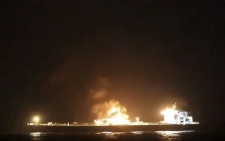
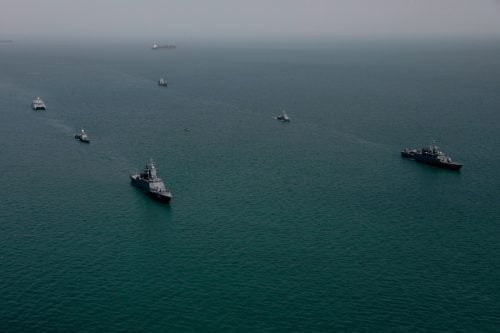
Opening the Strait of Hormuz, the geographic choke point through which 20 per cent of the world’s oil export travels, is a “simple military manoeuvre”, but for now, only Iranian-approved ships are transiting the waters. The Iranian military is “gone”, but drones and missiles are still striking targets in the region, and targets have extended as far as the joint US-UK base in Diego Garcia.
In a Saturday, March 21, 2026, evening post on Truth Social, Trump threatened an escalation, warning that if Iran didn’t “fully open, without threat” Hormuz in 48 hours, the US military would begin targeting Iranian power plants, “starting with the biggest”.
You Might Also Like
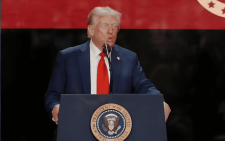
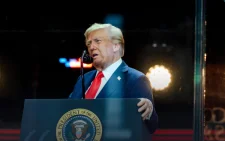
The day before, however, he had used his social media website to provide a numbered list of American military objectives for the Iran war, which he said the US was “getting really close” to fulfilling.
The items, comprising his most detailed statement on the subject since the war began, included degrading or destroying Iran’s military, its defence infrastructure and its nuclear weapons programme, as well as protecting American allies in the region.
Not included was the goal of securing the Strait of Hormuz, which Trump said should be the responsibility of other nations that are more dependent on oil exports from the Gulf. The president has frequently noted that the US is a net exporter of energy and does not rely on oil from the Middle East – although such a view glosses over the global nature of the fossil fuel market, where price fluctuations directly impact the price at American gas pumps.
Trump’s Truth Social post also made no call for Iranian regime change. Gone are any references to approving the nation’s next leader or “unconditional surrender”, which Trump had insisted on in the early days of the war.
In Trump’s latest outline of his objectives, it is possible that the US could end its operation with Iran’s current anti-American leadership in power, its oil exports still flowing and its ability to assert some measure of control over the Strait of Hormuz intact.

The initial reaction from Congress, including from Trump’s Republican allies, was cautious at best.
“We’re talking about boots on the ground. We’re talking about that kind of extended activity,” said Republican Congressman Chip Roy of Texas.
“They have got a whole lot more briefing and a whole lot more explaining to do on how we’re going to pay for it, and what’s the mission here.”
If that is an unappealing resolution to a war that the president and his aides have said began with the 1979 Iran Revolution and that they would finish, there is an alternative route that involves the US ground forcespresently on the way to the Middle East region.
Author
Latest News







Advertisement
More on News