Treasury reveals factor behind mobile money tracking systems
By Aloys Michael, May 11, 2026The National Treasury has moved to clarify growing public concern over proposals to allow tax authorities access to mobile money transaction data, insisting the initiative is primarily aimed at tackling illicit financial flows rather than monitoring ordinary users.
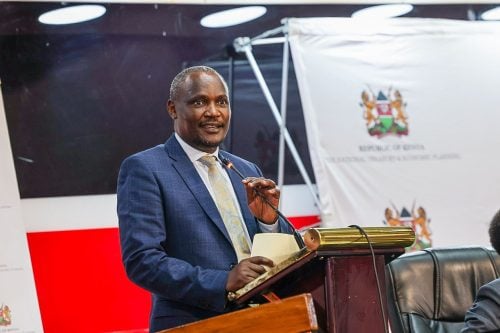
Addressing the press on Monday, May 11, 2026, the Treasury Cabinet Secretary John Mbadi said the focus of the reforms is on individuals whose declared incomes do not match their visible lifestyles, not everyday Kenyans who rely on mobile money for routine personal transfers.
Mbadi defended the Kenya Revenue Authority’s (KRA) position, arguing that resistance to the Data Protection (Amendment) Bill, 2025, has in some cases been driven by individuals seeking to shield unexplained wealth, adding that strengthening oversight of commercial mobile money channels is necessary because they are sometimes exploited to conceal business earnings and launder proceeds that should be taxed.
“Mobile money transactions are not the issue. The problem with this amendment, which has been fought over the years, is these people we call money launderers. They are the ones fighting this thing because they cannot justify their income,” he stated.
He maintained that mobile money platforms remain neutral financial tools and are not being targeted themselves.
Instead, the concern lies in misuse by individuals who have significant undeclared income streams and resist inclusion in the tax system.
Concerns over users safety
According to Mbadi, this creates an uneven burden where compliant salaried workers continue to shoulder most of the tax load while others evade accountability, arguing that protecting such practices under the guise of data privacy undermines fairness in taxation.
The CS emphasised that transparency in financial dealings is a global standard, noting that even public officials are expected to declare their wealth, warning that resisting reforms in the name of privacy could weaken efforts to ensure equitable contribution to national development.
“Because what you are earning, a lot, a huge chunk of it goes to paying taxes. Don’t you think that is unfair? Why are you protecting these people? Please don’t protect these people with this so-called data privacy,” Mbadi posed.
Meanwhile, the KRA has sought to reassure the public that its focus remains strictly on commercial transactions processed through Paybill and Till numbers, not private peer-to-peer transfers.
Speaking at the Meru Citizen Assembly, George Obell, Commissioner for Micro and Small Taxpayers at the KRA, said concerns about surveillance of personal remittances were misplaced.
He explained that the integration system is designed to track business activity, not family or social support exchanges.
“KRA is not interested in personal transactions, which include personal transfers between individuals such as sending money to family members, friends, or relatives,” Commissioner Obell told taxpayers.