Treasury blocks remote voting in 2027 over IEBC trust crisis
By Aloys Michael, January 26, 2026Hopes for remote voting in the 2027 General Elections have been dealt a blow after the Treasury ruled out advanced voting systems, blaming lingering public mistrust in the Independent Electoral and Boundaries Commission (IEBC).
In its draft 2026 Budget Policy Statement (BPS), the Treasury said rolling out remote voting at this stage could face significant challenges and may fail to gain public acceptance.
“Current low trust in the IEBC may challenge successful implementation of technology-supported advanced voting systems that enable eligible voters to cast their ballots remotely,” the report reads in part.
Parliament had recommended in the 2024 BPS that the IEBC introduce advanced voting technologies to facilitate remote voting. However, the Treasury said the plan cannot proceed under existing conditions.
As planning for the 2025/26 financial year got underway, IEBC sought Ksh61.74 billion to finance the 2027 elections over three financial years, 2025/26, 2026/27 and 2027/28. The commission projected that Ksh55 billion of this amount would be provided by the National Treasury, forming the basis for its election preparations.
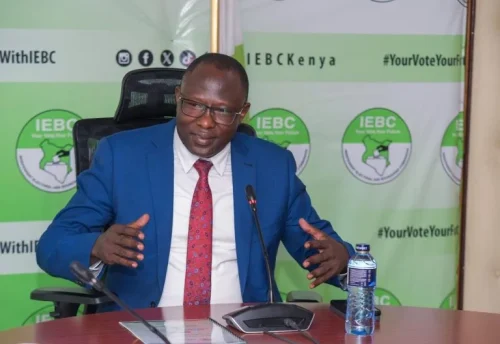
IEBC funding crisis
To kick-start pre-election activities, the IEBC proposed front-loading Ksh15.3 billion in the 2025/26 budget to cater for voter registration and the acquisition of election technology, including software and hardware.
However, the National Assembly approved only Ksh9.33 billion, according to the Controller of Budget (CoB), Margaret Nyakang’o, in the first-quarter budget implementation review for 2025/26. This allocation, though higher than the Ksh3.82 billion provided in 2024/25, fell short of the commission’s request.
The CoB report notes that the IEBC’s operations are structured around two core programmes: electoral process management and delimitation of electoral boundaries. The electoral process programme encompasses administrative planning, financial services, voter registration, electoral operations, voter education, stakeholder partnerships, and information and communication technology.

For the 2026/27 financial year, the commission has projected a budget of Ksh25.4 billion, with a further Ksh21 billion planned for 2027/28.
Despite these preparations, the review of electoral boundaries may not be concluded ahead of the 2027 General Election. Article 89 of the Constitution requires the IEBC to review constituency names and boundaries every eight to 12 years, with any such review to be completed at least 12 months before a general election of Members of Parliament.
The Constitution fixes the number of constituencies at 290 and also provides for regular reviews of ward boundaries, names and numbers. It further states that where a general election is held within 12 months of the completion of a boundary review, the revised boundaries cannot be applied.
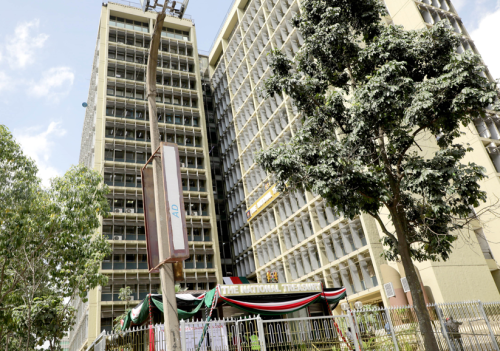
Electoral boundaries
In determining constituency boundaries, the law requires the IEBC to align them as closely as possible with the population quota, while allowing for variations based on geographical features, urban centres, community interests, historical and cultural ties, economic considerations and communication networks.
Separately, the National Treasury, in the 2026 draft BPS, reaffirmed its commitment to a National Assembly resolution that prioritises compensation for land acquired for public projects before budget approvals.
The resolution was adopted following persistent concerns over delays in compensating affected landowners and directs that no project should proceed until full compensation is paid.
“The government will continue to prioritise settlement of pending land compensation claims within the approved allocations under the 2024/25 financial year budget,” the Treasury said in the draft BPS.
To promote compliance, the Public Investment Management (PIM) Regulations, 2022, mandate that Ministries, Departments, and Agencies secure and provide land for projects before approval and funding by the National Treasury.
Additionally, the National Treasury has committed to settling all pending bills within a sustainable fiscal framework, including outstanding obligations owed by the IEBC to suppliers, to clear all eligible claims.