Advertisement
Survey: 300 people killed in cattle rustling, banditry
Wednesday 04th September, 2024 07:31 AM|
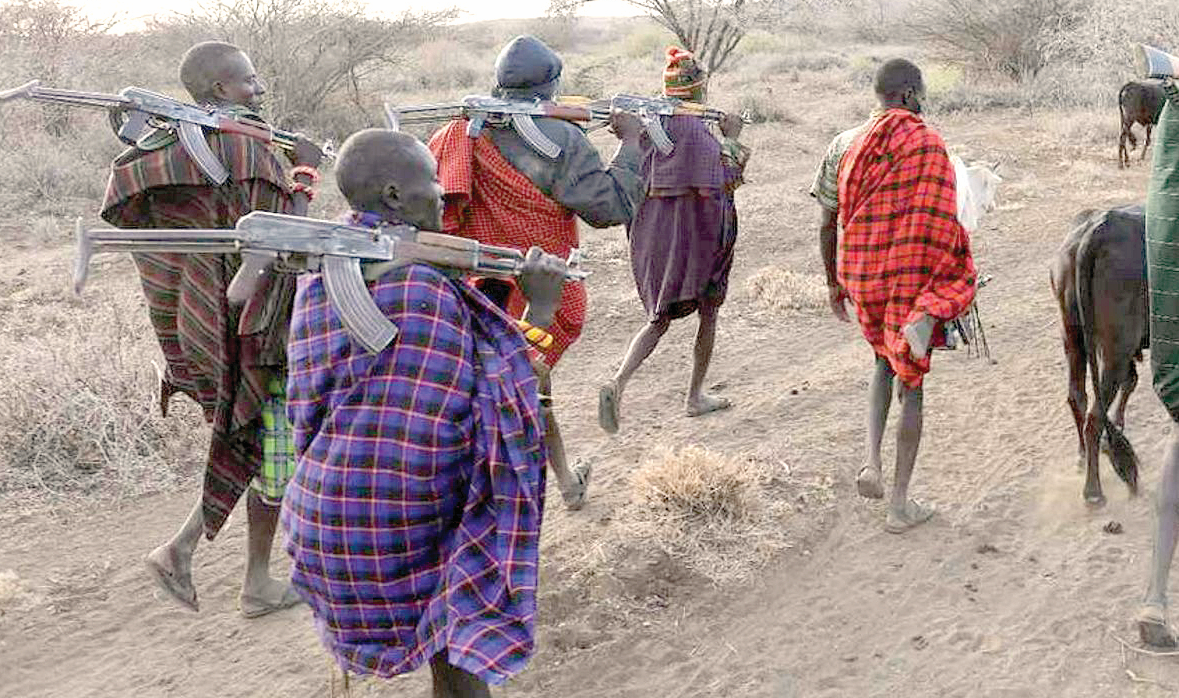
There is collapse or diminishing value for human life as evidenced by higher number of people injured and killed during livestock rustling and banditry, a study has shown.
The study by the National Crime Research Centre (NCRC) has shown that over 300 people have been killed since last year, adding that there was increased use of terrorism-like violence and militarisation and the vitalisation of modern weaponry during such raids.’
The study, titled Managing the Dangerous Drift in Livestock Rustling and Banditry in Kenya and released last month, covered the counties of Baringo, Elgeyo Marakwet, Isiolo, Kitui, Laikipia, Marsabit, Meru, Samburu, Turkana, West Pokot, Tana River, Kisumu and Nandi.
Further analysis showed that different counties had their unique aspects in the present-day raids they were experiencing.
The unique aspects include the commercialisation of livestock rustling and banditry, collapse or diminishing value for human life as evidenced by higher number of people injured and killed, increased and or frequent raids and the higher number of animals stolen.
The study further showed that the leading counties are Laikipia, West Pokot, Samburu, Meru, Elgeyo Marakwet, Isiolo, Turkana, Baringo and Marsabit.
Other unique aspects of banditry, according to the NCRC are displacement of huge populations; use of vehicles and bodaboda in the transportation of stolen livestock; change from an ‘organized cultural sport’ to an ‘organized crime’; increased involvement of politicians in livestock rustling and banditry; utilization of mobile phone and other technology in conducting such raids and destruction of built infrastructure including houses and schools.
The NCRC has also identified increased involvement of security/law enforcement officers; a declining ‘authority’ of the community elders over their youthful livestock raiders; aggression towards and target of women and children victims; use of livestock rustling and banditry as a tool for politicization of territorial or land boundary disputes and political competition and supremacy.
“There is also increased role of women in the perpetration of livestock rustling and banditry, and use of such raids to contest against government programmes,” NCRC states.
The main drivers of the present-day raids have been identified as the commercialization of livestock rustling and banditry, and the inability of the government to provide adequate security protection to vulnerable local communities, proliferation of illegal small arms and light weapons, high levels of ignorance and illiteracy among the youthful population, economic and poverty vulnerability, historical ethnic and inter-community hostility, and competition over scarce natural and economic resources.
Proliferation of small arms
The proliferation of illegal small arms was however found not to be a driver in Kisumu and Nandi counties.
County-disaggregated data also showed that inadequately regulated market for livestock related products was a major driver of livestock rustling and banditry in all counties except in Nandi, Tana River, Kitui and Turkana counties.
On the other hand, cycles of revenge were a major factor for livestock rustling and banditry in all the study counties except in Kisumu, Nandi, Baringo, Tana River and Meru. In other counties apart from Kisumu, Nandi, Tana River and Kitui, the raids were majorly fueled by the need to re-stock after loss of livestock during droughts.
Most sample respondents in all the counties except in Kisumu, Nandi, Tana River, Kitui and Turkana believed that livestock rustling and banditry was majorly a factor of developmental marginalization of the pastoral cluster regions.
According to the study NCRC, rustling has metamorphosed over time, with implications for change of tact in combating the present form of the menace.
Further, its complexity and threat to national security necessitates a multifaceted and multiagency approach that does not over-prioritize the current militarization and policing of the problem whose success has been sluggish.
Author
George Kebaso
View all posts by George KebasoLatest News







Advertisement
More on News