Advertisement
Storm brews over IDP compensation as leaders push enforcement of 2012 Act
Saturday 14th February, 2026 11:43 AM|
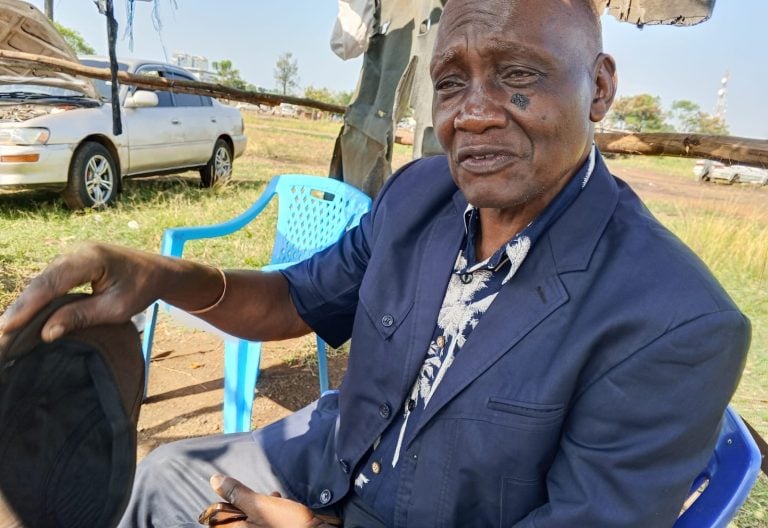
A fresh storm is brewing over the government’s handling of internally displaced persons (IDPs), with leaders now demanding the full implementation of the Prevention, Protection and Assistance to Internally Displaced Persons and Affected Communities Act, 2012, before any new compensation is rolled out for victims of the 2017/18 post-election violence.
The law, assented to in 2012 by former President Mwai Kibaki, was designed to create a comprehensive framework for the protection, assistance and resettlement of IDPs. But more than a decade later, IDP representatives claim its key provisions remain largely dormant, leaving thousands in limbo.
Speaking in Kisumu, Nyanza IDPs chapter chair Nelson Owegi accused the government of sidelining the very law meant to safeguard displaced families. He argued that the Act provided for a National Policy on IDPs and an operational secretariat to coordinate implementation, yet both, he said, have failed to function as envisioned.
“The 2012 Act was not meant to be a ceremonial document. It was supposed to guide how this country treats its displaced citizens with dignity,” Owegi said. “For 14 years, that policy has not been operationalised. That is why we are seeing confusion, discrimination and selective payments.”
You Might Also Like



At the heart of the dispute is the Sh6.5 billion IDP resettlement fund approved by Parliament in the 2015/16 financial year. Owegi claims that in Luo Nyanza, 30,000 IDPs were profiled according to their records, but only 3,700 received payments of Ksh50,000 each, far below the Ksh200,000 he says was agreed upon during consultations at Nakuru’s Nuru Palace.
“We sat down with government officials and agreed on Sh200,000 per household. How did that suddenly shrink to Sh50,000?” he posed. “Our people signed documents; they were verified, and then the promise changed without explanation.”
State records, however, indicate that 18,000 IDPs were profiled in the region under the then Regional Commissioner Francis Mutie—a discrepancy that remains contested.
Owegi further alleged that IDPs in Central Kenya and Rift Valley were treated more favourably, with compensation ranging between Sh400,000 and Sh450,000 per household, and in some instances, allocation of land.
“We are not saying others should not be paid,” he clarified. “We are saying let there be equity. If one Kenyan received Sh450,000 and land, why should another Kenyan who suffered the same violence receive Sh50,000? Is our pain different?”
In Kisii and Nyamira counties, Owegi pointed to what he termed a controversial list of 15,000 IDPs expected to benefit from part of the Sh6.5 billion allocation. He maintained that Luo Nyanza allegedly received only Ksh200 million shared on a pro rata basis, according to a state-prepared list.
“That Sh200 million was divided among thousands of people. It became tokenism instead of meaningful resettlement,” he said. “You cannot rebuild a life with sympathy money.”
Selective Compensation OF IDPs
The IDP leadership has now drawn a firm line, warning against selective compensation of victims of the 2017/18 unrest while earlier victims remain unsettled.
“We will not sit back and watch history repeat itself,” Owegi declared. “If the government compensates 2017/18 victims and ignores those of 2007/08 who are still unpaid, we will move to court. Justice cannot have phases.”
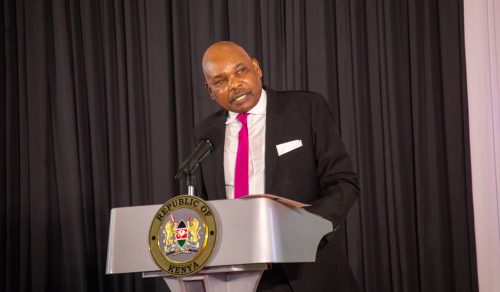
He urged the government to revive the secretariat established under the Act and operationalise the National Consultative Coordination Committee on IDPs so that it can work alongside President William Ruto’s newly created team led by Prof. Makau Mutua.
“Revive the structures created by law instead of creating parallel teams,” he said. “The Act already gave us a roadmap. Follow it.”
Owegi insisted that full implementation of the 2012 law would resolve data disputes, harmonise compensation frameworks and restore confidence among displaced families.
“All we are asking for is fairness, transparency and respect for the law,” he concluded. “Let the government implement the IDPs Act in totality. Only then can we talk about new compensation. Otherwise, this country will continue recycling injustice.”
As tensions rise, the unfolding dispute threatens to reopen long-standing wounds over post-election resettlement, with thousands of displaced families watching closely to see whether the promises anchored in law will finally be fulfilled.
Author
Kepher Otieno
View all posts by Kepher OtienoLatest News






Advertisement
More on News