Advertisement
Titan sub: Sounds a glimmer of hope in sub search…but what’s next?
Thursday 22nd June, 2023 03:20 AM|
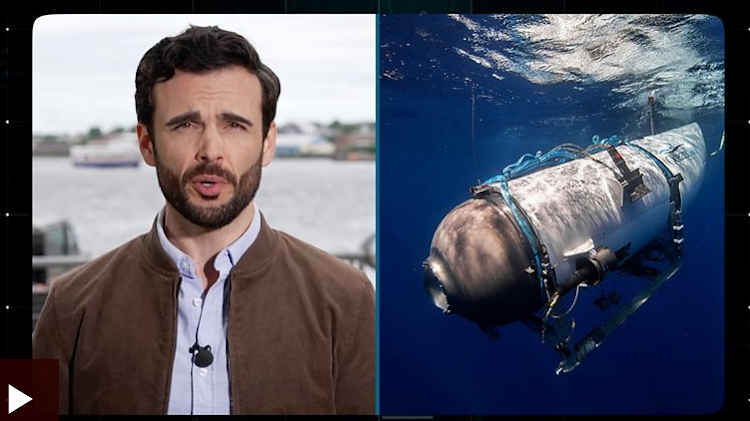
News that noises have been picked up in the hunt for a missing submersible has offered a glimmer of hope that the five men on board are alive.
The sounds were recorded by sonar buoys in a massive rescue operation, which is racing against time to find the Titan in the middle of the Atlantic Ocean. It was lost on a deep-sea voyage to the Titanic wreck three days ago.
Underwater operations have been relocated to investigate the noises, the US Coast Guard has said, but so far they haven’t found anything.
And with oxygen supplies expected to run out at about 10:00 GMT on Thursday, the next few hours are critical.
US authorities say the noises were heard at half-hour intervals for about four hours on Tuesday, according to reports by several news outlets.
Deep-sea experts who spoke to the BBC say it is hard to determine what these noises might be without seeing the data, and Rear Adm John Mauger – who is leading the search – has also confirmed the source of them is unknown.
But it is possible they could be short, sharp, relatively high-frequency noises, made from within the sub by hitting a hard object against the end of it.
Frank Owen, from the Submarine Institute of Australia, says he is confident – based on the information available – the sounds are coming from inside the vessel.
“If there was a 30-minute interval, it’s very unlikely to be anything but human related,” he told the BBC.
The men on board include British businessman Hamish Harding, 58, British-Pakistani businessman Shahzada Dawood, 48, his son Suleman, 19, and Stockton Rush, 61, the chief executive of OceanGate, which runs the voyages at a cost of $250,000 per head.
Underwater noises
But Owen says the noises “smack of advice” coming from the fifth man inside – 77-year-old Paul-Henry Nargeolet, a former French navy diver and renowned explorer. “He would know the protocol for trying to alert searching forces… on the hour and the half-hour, you bang like hell for three minutes.”
The decision to relocate the search indicates authorities are thinking similarly.
But in previous maritime searches – like those for missing Malaysian Airlines flight MH370 in 2014, and the Russian submarine Kursk in 2000 – underwater noises were heard too, and yielded no results.
And Rear Adm Mauger has said there are a lot of metal objects at the Titanic site that could have been causing the noises.
The other ray of hope is that these sounds were picked up by the sonar buoys at all, Owen says.
Author
Story Agencies
View all posts by Story AgenciesLatest News








Advertisement
More on News