Advertisement
Services disrupted at KNH as nurses down tools
Monday 13th April, 2026 03:41 PM|
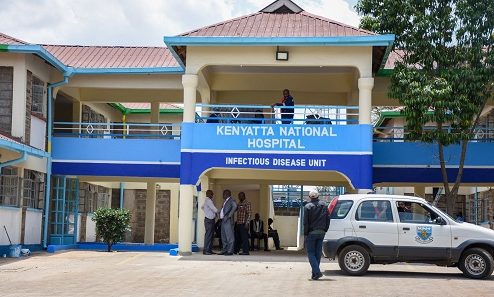
Operations at Kenyatta National Hospital (KNH) were disrupted on Monday, April 13, 2026, after nurses downed their tools, triggering a fresh labour standoff that has begun to strain essential health services at the facility.
The nurses are protesting that long-standing grievances have affected routine services, including wards, outpatient clinics, and some emergency support functions.
Patients seeking treatment at the hospital are experiencing delays and reduced access to care as the industrial action takes effect.
Hospital management acknowledged the disruption but insisted that efforts were underway to stabilise operations. The administration confirmed that salaries, including those of nurses, had been processed up to March 2026 following recent engagements with union representatives.
You Might Also Like


Management also said it had begun hiring temporary nurses to maintain critical services in wards as negotiations continue.
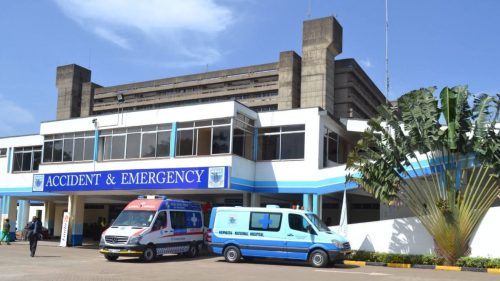
However, despite these assurances, nurses have vowed not to resume duty until their concerns are fully addressed.
Speaking during the standoff, KNH Chief Executive Officer Richard Lesiyampe said most issues under the Collective Bargaining Agreement (CBA) had already been resolved, with only a few pending matters remaining.
“Most of the issues of the CBA were concluded. On remittance, we have paid up to February. What remains is for March, and we will pay before the 20th. I am not a liar, and you know me well,” Lesiyampe said.
He added that management would continue operating within the framework of agreements reached with union representatives, noting that some delays were procedural and not indicative of neglect.
Despite the hospital’s position, nurses say their grievances have accumulated over time and remain unresolved.
Their complaints include delayed remittance of statutory deductions, stalled promotions, inadequate medical cover, and persistent staffing shortages that they say have worsened working conditions.
Nurses demands
The nurses further argue that employment terms at the facility have deteriorated, with increasing casualisation of staff and limited job security for many health workers. According to them, these challenges have been ongoing for more than a year despite repeated engagements with management.
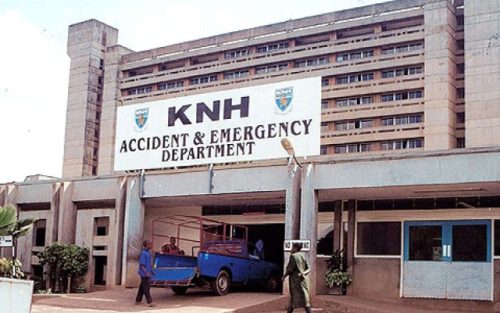
Nurses have expressed frustrations over a long-standing agreement that has not been fully implemented, citing commitments made under a 2017 return-to-work formula.
“We have been engaging management for more than a year now, with several issues affecting our members. The Return to Work formula of 2017 involved increasing the number of nurses. Nursing service allowance was to be increased from Ksh20,000 to Ksh30,000. Uniform allowance was to be increased from 10,000 to 25,000. This has not been done up to today.”
Nurses also emphasised the strain placed on frontline workers amid shortages and heavy workloads, arguing that their compensation does not reflect the demands of their profession.
The ongoing strike is expected to worsen pressure on Kenya’s healthcare system, particularly at KNH, which handles thousands of patients daily from across the country.
Hospital management has indicated that contingency measures, including temporary staffing, are being deployed to cushion the impact, though the effectiveness of these interventions remains uncertain.
The strike has raised concerns over patient care at the country’s largest referral hospital, with calls mounting for urgent intervention by the government to resolve the impasse.
Author
Latest News






Advertisement
More on News