Senate rejects governors’ push for independent borrowing amid audit jitters
By Aloys Michael, February 25, 2026Governors have suffered a major setback after the Senate rejected their proposal to allow counties to borrow directly from financial markets without going through the National Treasury.
The senators warned that allowing counties to take loans on their own could push them into heavy debt, which would eventually burden taxpayers.
Currently, all 47 counties are struggling with pending bills of more than Ksh150 billion. Some counties also owe commercial banks millions of shillings in unpaid overdrafts.
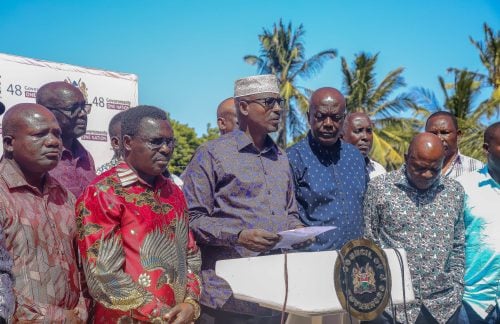
On February 19, 2026, Council of Governors (CoG) Vice Chairman Muthomi Njuki and Finance Committee Chairperson Fernandes Barasa appeared before the Senate Finance and Budget Committee to defend their proposal.
“The council of Governors recommends that the Senate initiates the establishment of a threshold for county governments’ borrowing entitlements pursuant to section 50(5) of the Public Finance Management (PFM) Act,” Njuki said.
At the moment, counties cannot borrow directly unless the National Treasury guarantees the loan. The Public Finance Management Act requires the national government to oversee and manage borrowing for all state agencies, including counties.
Barasa told senators that counties should be given more freedom, but under strict rules. He proposed that the Senate rely on section 50(2c) of the PFM Act to ensure borrowing limits are respected and debt risks are controlled in the medium term.
However, the Senate Finance Committee, chaired by Mandera Senator Ali Roba, dismissed the proposal. Lawmakers warned that opening the door to direct borrowing could lead to financial chaos.
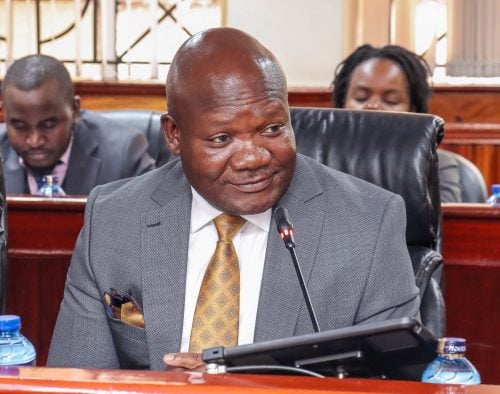
“Very few governors have the instruments or ability to borrow responsibly in international markets. Opening this window could be disastrous,” said Migori Senator Eddy Oketch.
Debt crisis
Senators insisted that relaxing borrowing rules could expose counties, and the national economy, to serious risks. They cautioned that without proper financial discipline, countries could sink into unsustainable debt, abandon projects midway and destabilise public finances.
Meanwhile, the Commission on Revenue Allocation (CRA) has proposed Ksh458.94 billion for county governments in the 2026/2027 financial year.
Appearing before the National Assembly’s Budget and Appropriations Committee on Tuesday, February 24, 2026, the commission, led by Mary Wanyonyi Chebukati, said the allocation is based on a projected revenue of Ksh2.9 trillion for the 2026/27 financial year, up from a target of Ksh2.7 trillion in 2025/26.
The CRA raised concern over what it termed as an imbalance in sharing resources. It questioned why counties would get an additional Ksh5 billion, while the national government’s allocation is proposed to rise by Ksh152.5 billion.
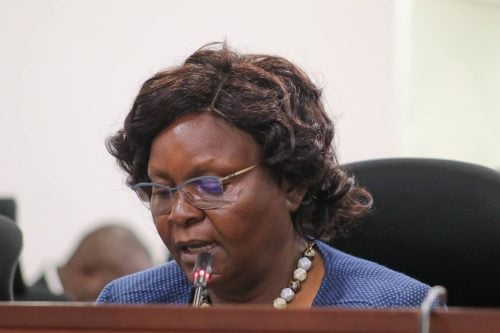
Mary said the commission considered the responsibilities counties have in delivering essential services when making its proposal.
The CRA also advised that when devolved functions are budgeted at the national level, the two levels of government should sign intergovernmental agreements to ensure projects are completed and operational.
The committee further reviewed submissions from the Office of the Auditor General (OAG), which raised concerns over its proposed budget of Ksh8.776 billion.
The Auditor General’s office said it is facing a shortfall of Ksh2.311 billion, warning that the funding gap could affect its ability to audit more than 12,000 public entities.
The office noted that the deficit may also disrupt audits of newly established institutions, including Level 2 and Level 3 hospitals and Technical and Vocational Education and Training (TVET) institutions.
Lawmakers are now expected to review the submissions from both the CRA and OAG before tabling a report in the House to guide debate and final approval of the country’s fiscal framework.