Advertisement
Senate confronts CS Barasa over environmental failures
Wednesday 23rd July, 2025 08:33 PM|

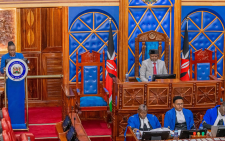
Mounting concerns over Kenya’s environmental health took centre stage in Parliament when Cabinet Secretary for Environment, Climate Change and Forestry, Deborah M. Barasa, faced Senators over invasive species, poor waste management, and sluggish climate action across counties.
These included the unchecked spread of the invasive Prosopis juliflora, commonly known as Mathenge, the worsening state of waste management in some counties, and the overall pace of compliance with national climate legislation.
Addressing the Senate on Wednesday, July 23, 2025, Barasa acknowledged that Prosopis juliflora has become a national crisis.
“The weed now covers an estimated 1.1 million hectares across 22 counties,” she said, with Turkana and Marsabit among the worst-hit regions.
You Might Also Like

She explained that its spread was largely due to a misinformed afforestation strategy, with the problem intensifying during the 1997–1998 El Niño season.
Barasa said in response, the Ministry has launched the National Prosopis Strategy and Action Plan (2025–2035), aimed at guiding both eradication and value-addition efforts.
“We have supported counties like Marsabit, Baringo, Isiolo, and Tana River in developing spatial management plans,” Barasa told the Senators, adding that local communities have been trained in converting the plant into charcoal and animal feed, among other uses.
She also admitted that past commercial-scale interventions had failed, citing a 2015 gasification pilot in Baringo that collapsed due to poor feedstock quality.
“The project could not sustain operations because of the high impurity levels in the Prosopis biomass,” she said.
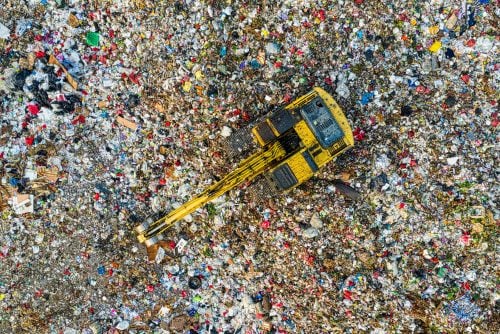
Informal dumpsites menace
The Senate in a separate concern about illegal dumping in Kangema Constituency, specifically at Mukarara Junction, where an abandoned quarry has been turned into an informal dumpsite.
Barasa confirmed the site was “not compliant with national waste management regulations,” noting that it lacked proper infrastructure, fencing, and environmental safeguards.
To remedy the situation, Barasa said the Ministry, through the National Environment Management Authority (NEMA), has issued improvement notices to the Murang’a County Government.
“We’ve also directed all counties to conduct environmental audits and ensure they establish licensed and compliant waste disposal sites in line with the Waste Management Act,” she said.
Beyond the immediate challenges, Barasa outlined long-term environmental restoration efforts, including the 15 billion Tree Growing Initiative and the National Landscape and Ecosystem Restoration Strategy (2023–2032).
She also pointed to collaboration with global institutions like the International Labour Organisation (ILO), especially in community-led restoration of areas affected by invasive species in Garissa, Turkana, and Tana River.
Barasa reiterated the Ministry’s commitment to working with devolved governments to ensure full implementation of the Climate Change Act.
“We are mainstreaming climate risk into development planning across all counties,” she emphasised.
Senators demanded stronger penalties for non-compliant counties, while also calling for public transparency in enforcement actions.
“Without accountability, these problems will persist. There is a direct link between ecological degradation and youth development, especially when it comes to health and education,” they warned.
Author
Latest News





Advertisement
More on News