Advertisement
Sakaja says Nairobi’s 100-year swamp problem needs national support, not a 3-year fix
Friday 13th March, 2026 12:33 AM|

Nairobi Governor Johnson Sakaja has emphasised that the city’s chronic flooding, often described as a 100-year swamp problem, demands sustained national government support rather than short-term, three-year solutions.
In a March 12, 2026 interview, Sakaja highlighted the deep-rooted structural challenges facing Nairobi, rejecting quick-fix narratives and calling for collaborative efforts to address the crisis.
Sakaja explained that Nairobi’s flooding stems from its historical development on swampy terrain, compounded by decades of inadequate planning, rapid urbanisation, saturated soils, and encroachments on riparian lands.
“The city was built on a swamp,” he stated, noting that expecting to resolve a century-old issue in just three years is unrealistic. He stressed that Nairobi, as Kenya’s capital, faces unique pressures not shared by other counties.
You Might Also Like

“Nairobi can never just be part of the formula for giving counties money. It’s a capital city,” Sakaja said, pointing out that the current revenue-sharing model fails to account for the metropolis’s scale and service demands.
Funding and emergency response
The governor disclosed that Nairobi requires at least Ksh60 billion annually to tackle infrastructure needs, maintain essential services, and respond to emergencies like the recent devastating floods.
Despite improvements in own-source revenue from Ksh8 billion to Ksh13.8 billion, the funds remain insufficient for a growing city employing thousands in public services. Sakaja dismissed claims of being overwhelmed, instead describing himself as “under-resourced” and a “glorified cashier paying salaries” without adequate backing for major projects.

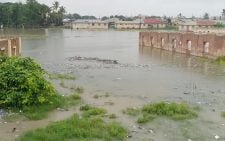
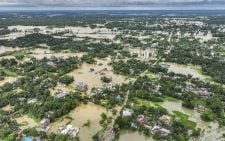
Recent heavy rains in early March 2026 caused widespread havoc, claiming at least 26 lives in Nairobi amid a national toll of 42 deaths. Floodwaters submerged roads including Lang’ata and Mombasa Road, disrupted traffic, and displaced families.
Critics, including senators Boni Khalwale and Samson Cherargei, have accused the county of poor preparedness, citing high allocations last year of Ksh20.18 billion and demanding Sakaja’s resignation.
Sakaja countered by defending emergency efforts, including deploying rescue boats in Mwiki and coordinating with national agencies. He praised joint operations during the floods, where 4,500 Green Army personnel and county fire teams saved lives.
“If we didn’t do what we did, we would have been talking about so many more lives lost,” he said.
Collaboration and long-term solutions
In the Senate on March 10, 2026, Narok Senator Ledama Olekina defended Sakaja, describing flooding as a systemic, inherited issue affecting other African cities like Lagos.
“This is a problem that has been transferred from one administration to another,” Ledama said, urging focus on long-term solutions such as addressing soil saturation and urban planning.
Sakaja highlighted a signed cooperation agreement with the national government as a key step forward, potentially unlocking Ksh 80 billion for infrastructure. “I’m ready to provide the solutions,” he affirmed, urging unity over finger-pointing.
He also outlined ongoing waste management improvements to prevent blockages, predicting that Nairobi could become one of the cleanest cities soon.
Author
Latest News






Advertisement
More on News