Advertisement
Saba Saba: Motorists experience massive traffic jams as police mount roadblocks on major Nairobi roads
Tuesday 07th July, 2026 07:54 AM|
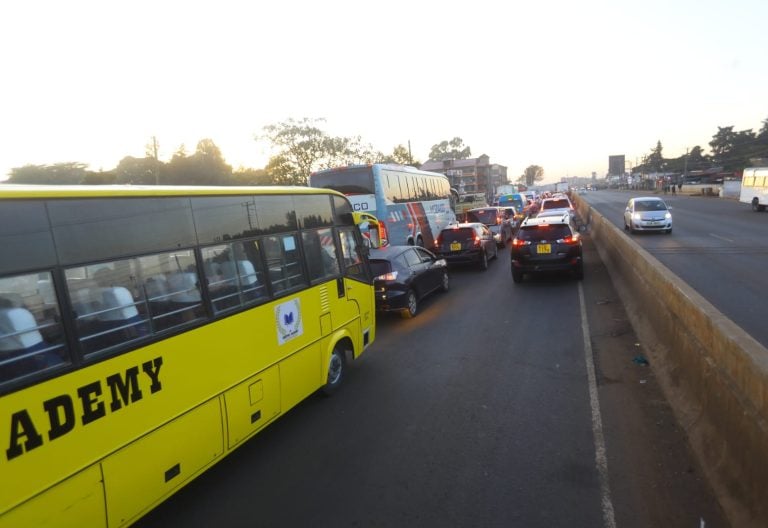
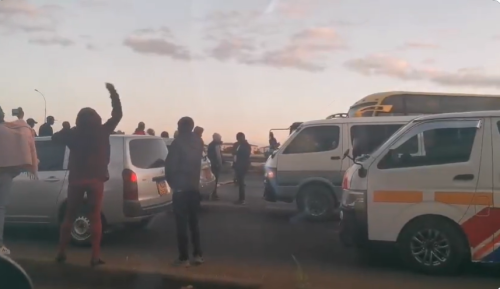
Thousands of motorists and commuters were caught on Tuesday, July 7, 2026, in massive traffic snarl-ups after police mounted roadblocks and intensified security checks on major roads leading into Nairobi’s Central Business District (CBD) ahead of the planned Saba Saba demonstrations.
Long queues of vehicles formed on key highways as officers subjected motorists to security screening, with several roads partially or completely blocked in an operation aimed at restricting access to the city centre.
On Thika Road, police erected checkpoints at Blue Post, Ruiru, Githurai, Allsops and Kimbo, where Nairobi-bound motorists were diverted to the Kimbo service lane, causing heavy congestion during the morning rush hour. Crowds of commuters were also seen walking towards the city after public service vehicles were forced to terminate their journeys before reaching the CBD.
Similar security operations were mounted along Mombasa Road, Uhuru Highway, Jogoo Road, Lang’ata Road, Kiambu Road, Valley Road and Waiyaki Way, where police conducted vehicle searches and restricted access into the city centre.
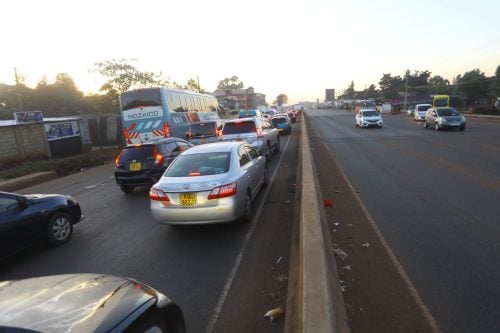
Commuters forced to walk
You Might Also Like


Along Jogoo Road, vehicles were turned away at the City Stadium Roundabout, with many Nairobi residents forced to continue on foot after matatus and buses were stopped.
Witnesses reported heavy police deployment around the City Stadium area as officers maintained barricades near Nacico Plaza and screened pedestrians attempting to access the CBD.
On Thika Road, motorists experienced lengthy delays as security personnel carried out checks at multiple roadblocks, while some drivers sought alternative routes to avoid the congestion.
Police, on Monday, July 6, 2026, revealed plans to erect enhanced checkpoints on various Nairobi roads ahead of the anticipated Saba Saba protests.
CBD under tight security
The heavy deployment comes ahead of the annual Saba Saba commemorations, with police seeking to prevent protesters from accessing sensitive government installations and the Nairobi CBD.
Officers, including anti-riot police, were deployed at strategic locations across the capital, while razor wire barricades were erected on several roads leading to key government offices and Parliament.
Only emergency service vehicles and selected government vehicles were allowed through some of the roadblocks, with the majority of private and public service vehicles being redirected.
Businesses remain cautious
The heightened security measures were accompanied by low traffic volumes on some roads, as many Nairobi residents chose to work from home or postpone travel amid uncertainty surrounding the demonstrations.
Several businesses in the city centre remained closed or delayed opening, while schools and some private institutions advised learners and staff to stay away from the CBD as a precaution.
Saba Saba protests
The annual Saba Saba commemorations trace their origins to July 7, 1990, when pro-democracy activists staged historic demonstrations demanding the restoration of multiparty democracy under the KANU government.
Over the years, the anniversary has evolved into a symbolic day for civic action, with activists and civil society organisations using it to push for governance reforms, constitutional rights and government accountability.
This year’s commemorations come amid heightened political tensions following recent anti-government protests, allegations of police brutality and renewed calls for accountability over deaths, injuries and enforced disappearances linked to demonstrations.
Human rights organisations and sections of the opposition have maintained that citizens have a constitutional right to peaceful assembly, while security agencies say they are obligated to maintain law and order and protect lives and property during public demonstrations.
Author
Mustafa Juma
View all posts by Mustafa JumaLatest News






Advertisement
More on News