Ruto warns of silent forces that could break East African unity
By Faith Lagat, May 5, 2026President William Ruto addressed Tanzania’s Parliament in Dodoma on Tuesday, May 5, 2026, reflecting on the collapse of the original East African Community (EAC) and calling for stronger regional cooperation. The speech focused on shared history, past divisions, and the need for closer collaboration among partner states.
“After the collapse of the East African Community in 1997, we must reflect honestly on lessons we cannot afford to repeat. Whether capitalism in Kenya or Ujamaa in Tanzania, each system sought to advance the welfare of the people,” Ruto said.
He acknowledged ideological differences that shaped the region’s past, noting that both Kenya and Tanzania pursued development models aimed at improving the well-being of their citizens.
Historical ties and regional lessons
Ruto highlighted the longstanding relationship between Kenya and Tanzania, pointing to cooperation during the independence period and continued engagement in regional affairs. He said both countries share a common foundation built on mutual support and shared goals.
“For decades, Tanzania and Kenya have walked side by side. A partnership forged in struggle and anchored in shared purpose. Even during the struggle for independence, Tanzania stood with Kenya, affirming a shared belief in freedom, dignity, and self-determination,” he said.
He also pointed to past tensions among neighbouring countries, noting that competition and mistrust had affected regional integration efforts.
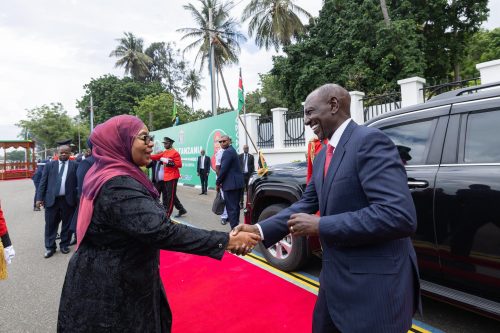
“For far too long, relations among neighbouring countries have been shaped by competition, suspicion and rivalry forces that have fragmented our markets, weakened our voice and constrained our collective progress. Some of these forces are still very alive with us,” he said.
Regional cooperation and integration efforts
The address comes amid renewed focus on strengthening the East African Community through trade, infrastructure development, and policy alignment. Kenya and Tanzania have recently signed agreements aimed at improving trade, investment, and cross-border movement.
Regional initiatives continue to focus on enhancing the customs union and common market protocols, alongside infrastructure projects such as transport corridors and energy interconnections.
Parliamentary committees in Kenya have also highlighted ongoing cooperation in regional security, including joint training, intelligence sharing, and peacekeeping efforts among partner states.
Security collaboration and future outlook
Officials have pointed to the importance of regional collaboration in maintaining stability and supporting economic development. Cross-border cooperation in security and infrastructure remains central to integration efforts within East Africa.
The revived EAC, established in 1999, has expanded its membership and continues to pursue integration goals despite challenges related to funding and policy harmonisation.
Ruto said deeper unity among East African countries would strengthen economic growth and improve the region’s global standing. He called on partner states to build on shared interests while addressing past challenges through coordinated action.
The address forms part of ongoing engagements between Kenya and Tanzania aimed at strengthening bilateral relations and advancing regional integration.