Advertisement
Ruto reveals how 9 major informal settlements pay more for illegal electricity
Tuesday 17th February, 2026 07:51 PM|

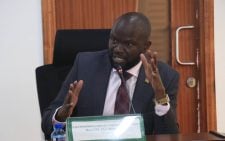
President William Ruto has revealed that at least nine major informal settlements pay more for illegal power connections in Nairobi County.
Speaking at the State House on Tuesday, February 17, 2026, the President revealed how the informal settlements pay more than residents in formal estates pay legally.
According to Ruto, in some cases, residents pay up to 150% more, a practice he says is unfair to residents and contributes to inequality in access to electricity.
“Across the city’s nine major informal settlements, families sometimes pay more for illegal electricity than residents in formal estates pay legally; in some cases, up to 150% more. This is an injustice we must correct,” Ruto said.
You Might Also Like

In a bid to curb the illegal power connections, Ruto said the national government is working closely with Kenya’s utility company, Kenya Power.
On his part, the government will invest at least Ksh1.5 billion in transformers and proper last-mile connections, alongside a prepaid bulk framework to lower power costs for low-income households.

Energy CS remarks on illegal power
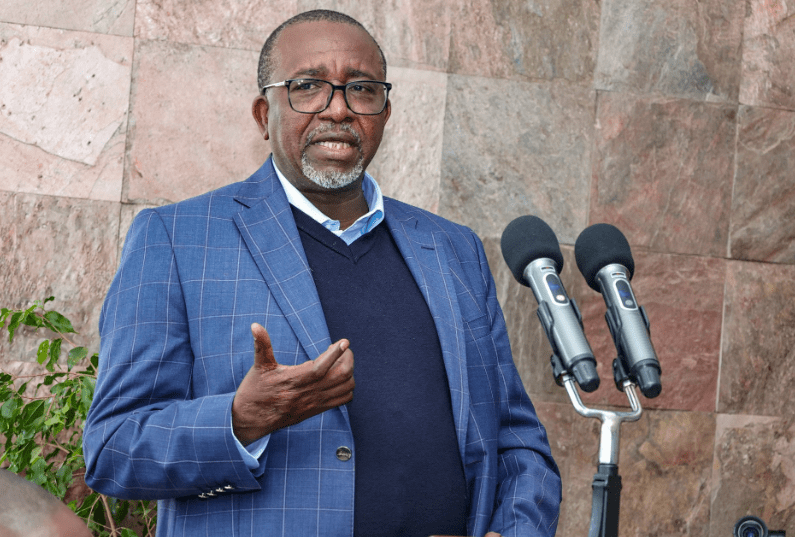
Ruto’s remarks follow reports by the Energy Cabinet Secretary Opiyo Wandayi, who had outlined a plan by Kenya Power to address the growing challenge of illegal electricity connections in densely populated urban neighbourhoods.
At the time, the CS stated that the areas which are often characterised by high population density and limited infrastructure have become increasingly difficult to manage, with cases of unsafe and unregulated power connections on the rise.
Wandayi while appearing during an interview on a local radio station on Tuesday, July 22, 2025. He revealed that the government is adopting a new strategy dubbed “bulk metering” to streamline electricity supply in such environments.
The approach involves designating a single individual or entity within an estate or neighbourhood to act as the central point of contact with Kenya Power.
“Illegal connections are very rampant in build-up neighbourhoods. In neighbourhoods with high population intensity, we have heard challenges controlling this menace because of issues to do with security and so forth, but we are coming up with a solution – what we are calling bulk metering – in those neighbourhoods, in those estates where it will be difficult for Kenya Power personnel to access every household. We are coming up with a strategy to do bulk metering,” Wandayi stated.
According to Wandayi, the bulk metering model is expected to address multiple challenges at once, which includes improve billing efficiency, reducing electricity theft, and eliminating the need for Kenya Power personnel to physically access every household.
Author
Latest News



Advertisement
More on News