Advertisement
Ruto mega dams promise remains a dry pipe dream
Monday 21st July, 2025 12:20 AM|

Will President William Ruto’s ambitious promise to deliver 1,000 dams across the country be achieved before the 2027 polls?
The 2022 pre-election pledges seem to be haunting the Kenya Kwanza administration, promises increasingly appearing unattainable, and with revelations emerging that not a single dam has been completed since the pledge was made.
Water Cabinet Secretary Erick Mugaa recently confirmed that the implementation of the projects has faced financial constraints.
Appearing before the Senate plenary, the CS was candid that investments in water have not been very lucrative in PPPs because the tariffs do not cover the costs.
You Might Also Like


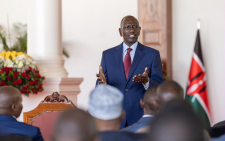
“I have to be very candid and also the House, because water infrastructure is not cheap; it is capital-intensive. When you talk about 1,000 large dams, most of them were scheduled to be implemented under Public Private Partnerships (PPP). Under PPP, a proponent has to invest their money and recoup that money in a stipulated duration of time,” Mugaa explained, before going on to tell the House that investments in water have not been very lucrative in PPPs because tariffs do not cover the cost recovery.
Land irrigation
He however, admitted that the water sector has failed to attract the anticipated level of private investment.
Mugaa was responding to Kajiado Senator Seki Lenku Ole Kanar’s question, who had sought to know how many dams had been completed under the Kenya Kwanza administration.
“The Kenya Kwanza administration had a plan to construct 1,000 dams across the country. Could the Cabinet Secretary tell us at least how many dams have been constructed to completion already, and those that are stalled so far?” Seki posed.
President Ruto made the 1,000-dam pledge during the 2022 election campaign, framing it as a cornerstone of his administration’s plan to boost food security by reducing Kenya’s dependency on rain-fed agriculture.
His government promised to increase land under irrigation to three million acres and uplift millions of farmers across the country.
“Our stretch is to do 100 mega dams, construct close to 1,000 small dams, and nearly 3,800 water pans across the country,” Ruto declared shortly after assuming office.
The President had argued that the construction of dams was crucial to transforming Kenya’s agriculture by enabling consistent irrigation, supporting livestock farming, and improving access to clean water for households.
He said his administration would empower at least six million livestock farmers, with water infrastructure being the foundation of this initiative.
“We plan to build more dams for irrigation, for domestic use, and for livestock,” Ruto had explained. “We also aim to construct small-capacity dams so that we can harvest water at every level.”
He cited specific areas such as Baringo, where dams like Radat, Amaya, Beregei, Kimwarer and Arror were earmarked for construction.
The CS noted that although a number of dam projects are currently under construction, none of the large-scale dams have reached completion.
Mugaa cited projects such as Bucha, Fauci and Um as being underway, but emphasised that their progress has been slow and uncertain.
“Some are ongoing, especially the large dams. We have Mwache Dam, Thwake Dam and Umaa Dam ongoing, although some of them are suffering from financial challenges. We are, however, compiling a list of smaller dams that are at various stages of progress. This will give a more comprehensive picture of the overall implementation,” he told the House.
According to Mugaa, Kamumu Dam is a zoned high rock-filled dam that is 60 metres high, 725 metres long, and will store approximately 22 million cubic litres, adding that the project is expected to cost approximately Ksh6.65 billion and it was developed by Tana Water Works Development Agency.
The water CS explained that there was an expression of interest in the same in December 2020 under the model of engineering, procurement, construction and financing.
Mugaa further explained that following the evaluation, the Wheelmen Group of Belgium was identified as the preferred contractor.
However, the project could not commence due to the high cost of financing proposed by the contractor.
“There were issues with land and wayleave acquisition that still remain incomplete according to the Resettlement Action Plan (RAP). The project is part of some projects on the pipeline under the PPP framework,” said Mugaa.
Growing risk
Thuci Dam, he explained, which is a zoned, also rock-filled structure, 84 metres high and around 332 metres long, is expected to have a storage capacity of around 23 million cubic metres at a cost of Ksh9 billion.
The project is meant to do some irrigation, domestic consumption and produce up to 5 megawatts of power.
In August 2023, Ruto’s then Water CS, Alice Wahome—now heading the Lands and Housing docket—had similarly acknowledged the financial strain undermining the government’s ability to deliver on the mega dams promise.
Kenya continues to experience cyclic droughts that have exacerbated food and water scarcity in many counties.
The delayed implementation of the dams, therefore, not only reflects a stalled promise but also a growing risk to the nation’s food and water security.
As the government grapples with dwindling resources and a wary private sector, it remains to be seen whether the President’s flagship water infrastructure plan can be salvaged—or if it will join the long list of lofty promises that failed to materialise.
Author
Rawlings Otieno
View all posts by Rawlings OtienoLatest News






Advertisement
More on News