Ruto explains delay in reopening Kenya-Somalia border
By Faith Lagat, June 1, 2026President William Ruto has explained why Kenya has yet to reopen its border with Somalia, saying security concerns and instability in the neighbouring country continue to complicate efforts to restore normal cross-border movement and trade.
Speaking during the North Eastern Media Roundtable in Wajir on Monday, June 1, 2026, the head of state said he had hoped the border would have been reopened by now but noted that the government must balance economic interests with national security.
“You know, it is my wish. I really thought I would have opened those borders by now,” Ruto stated. “But unfortunately there is always a delicate balance between security and commerce, and we must protect both.”
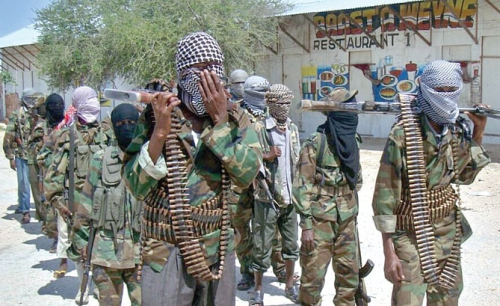
The Kenya-Somalia border has remained largely closed for years following security concerns linked to attacks by the militant group Al-Shabaab. While informal movement and trade continue in some areas, formal border operations remain restricted.
Security concerns remain key challenge
Ruto said Kenya has invested heavily in protecting its border and safeguarding its citizens from security threats originating from Somalia.
He noted that Kenyan security personnel continue to serve in Somalia as part of regional peace and security efforts aimed at stabilising the country and preventing extremist activities from spilling across borders.
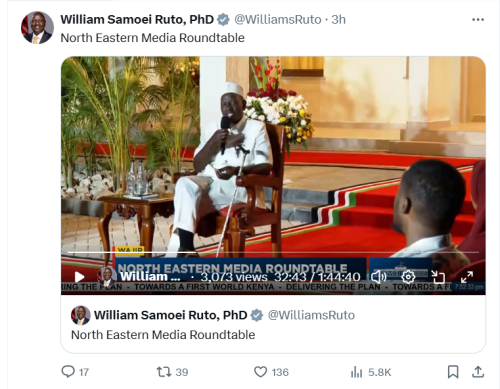
“We have had challenges with our border with Somalia because of the things that you all know,” he said.
Ruto added that the absence of a stable international funding mechanism for security operations in Somalia has created additional challenges.
“Over the last two years there hasn’t been a coherent plan… Today we do not have a predictable funding model that is supported by the international community,” he said.
According to Ruto, troops operating in Somalia have at times relied on resources provided directly by participating countries, increasing the burden on Kenya.
He said these factors have slowed plans initially put in place to facilitate the reopening of the border.
Political developments in Somalia
Beyond security concerns, Ruto pointed to ongoing political challenges within Somalia as another factor affecting the decision.
He said efforts to build consensus among Somalia’s different political actors remain critical to strengthening governance and improving security coordination.
According to the president, disagreements surrounding ongoing political processes in Somalia have made it more difficult to achieve the level of stability required for broader regional cooperation.
Ruto said Kenya continues to engage with Somali stakeholders and support efforts aimed at fostering dialogue and unity.
He stressed that a stable and secure Somalia would benefit both countries by creating an environment that supports trade, investment and movement of people.
The president noted that security and political stability remain closely linked and must be addressed together before significant policy changes can be implemented along the border.
Trade opportunities still under consideration
Despite the delays, Ruto acknowledged the economic benefits that would come with reopening the border.
He said Kenya remains committed to regional integration through frameworks such as the East African Community, the Common Market for Eastern and Southern Africa (COMESA) and the African Continental Free Trade Area.
According to the president, cross-border trade has the potential to create opportunities for communities on both sides of the frontier and contribute to economic growth.
Ruto maintained that the government is continuing to assess options that could allow the border to reopen while maintaining adequate security safeguards.
“We’re still looking at opportunities to see how we can open the border but that is a delicate balance that we must always keep in check to make sure that we do not do one and lose the other.”
His remarks come amid continued discussions on regional security, trade and cooperation between Kenya and Somalia as both countries seek to strengthen ties while addressing persistent security challenges.