Advertisement
Ruto reduces diesel price after pressure from transport stakeholders
Friday 22nd May, 2026 09:10 AM|

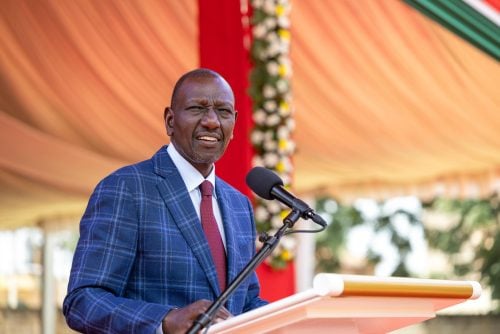
President William Ruto has announced that diesel prices will be reduced by Ksh10 in the upcoming June–July fuel price review by the Energy and Petroleum Regulatory Authority (EPRA).
While speaking during a press briefing after a stakeholder meeting with transport sector players in Mombasa, following the suspension of their strike on Friday, May 22, 2026, the head of state said the agreement was reached after joint consultations with transport sector stakeholders.
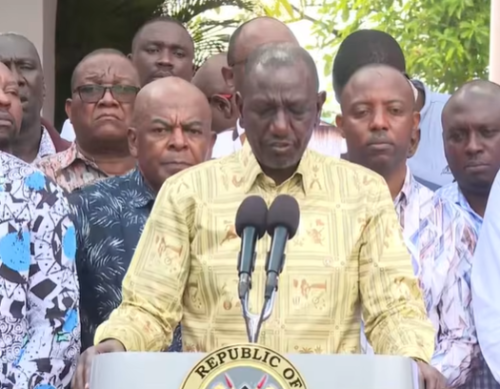
“I have directed that in the pricing cycle, the next pricing cycle, we are going to further reduce the price of diesel by a further Ksh10 for the June-July cycle to help stabilise pump prices and provide additional relief to consumers.”
Sweeping measures
You Might Also Like

Ruto said that through forward planning using the Petroleum Development Levy Fund, the government had built strategic financial reserves to help stabilise the market during such periods without disrupting the broader economy.
He added that the Petroleum Development Fund had been used to cushion consumers from sharp rises in global oil prices, noting that in the last two pricing cycles, covering April–May and May–June 2026, the government had utilised Ksh13.7 billion to stabilise fuel prices.
He further stated that, secondly, working with Parliament, the government had reduced VAT on petroleum products from 16% to 8%, foregoing about Ksh14.4 billion in tax revenue in order to reduce pressure on Kenyan families and businesses.
He noted that in the April–May 2026 pricing cycle, the government had utilised Ksh6 billion in fuel stabilisation and also foregone Ksh6.41 billion in VAT revenue, bringing the total expenditure on stabilisation for that cycle to Ksh12.45 billion.
Petroleum stabilisation levy
Ruto further stated that during the May–June 2026 pricing cycle, the government had utilised another Ksh7.7 billion for stabilisation and foregone Ksh8 billion in VAT revenue, bringing the total spending for that cycle to Ksh15.72 billion.
He said that as a result, super petrol prices were reduced by Ksh15.87 per litre, diesel by Ksh44.89 per litre, and kerosene by Ksh78 per litre.
He also said that without government intervention, super petrol would have retailed at Ksh230 per litre instead of Ksh214, diesel at Ksh277.75 instead of Ksh232.86, and kerosene at Ksh270 instead of Ksh191.
Ruto noted that across the April–May and May–June 2026 pricing cycles, the government had spent a total of Ksh28.19 billion on fuel price support through direct stabilisation measures and tax relief interventions, saying these efforts had protected millions of Kenyans from even more severe economic hardship.
Ruto defends G-to-G deal
Ruto also explained that through the Government-to-Government fuel supply framework, the country had secured guaranteed fuel supplies despite global supply chain disruptions, ensuring uninterrupted availability across the country.
He said the arrangement had stabilised fuel pricing compared to the previous market system, where prices fluctuated sharply every month.
This comes after the transport sector lobby groups had demanded a reduction of diesel price by Ksh34.
Author
Latest News






Advertisement
More on News