Revealed: How Nairobi became Africa’s quiet migration capital
By Aloys Michael, May 17, 2026For years, the global conversation around African migration has focused almost entirely on Europe. overcrowded boats in the Mediterranean, border crackdowns and fears of mass migration from Africa to the West.
But a new continental mobility report reveals a very different reality: most African migrants never leave Africa at all.
According to the report Africa on the Move: Boosting Mobility and Connectivity, “72.4 per cent of migrants from sub-Saharan Africa remain within Africa”.
Instead of heading to Europe, millions of Africans are increasingly moving between African countries, transforming cities like Nairobi into major continental migration hubs.
Quietly, Kenya’s capital has become one of Africa’s most important crossroads for regional migration, trade and cultural exchange.
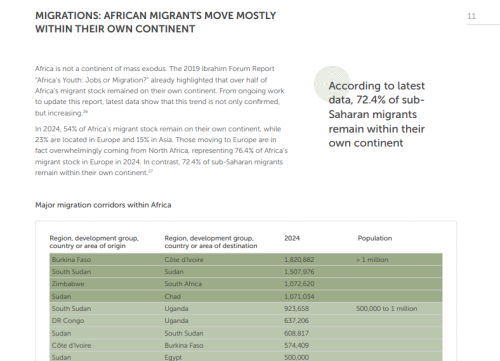
The report specifically identifies the Somalia-to-Kenya and Uganda-to-Kenya corridors among Africa’s major migration routes.
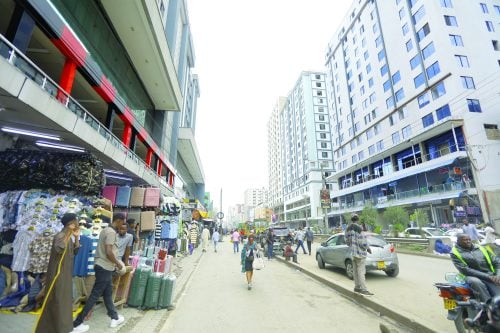
From Somali entrepreneurs in Eastleigh to Ugandan workers, South Sudanese traders, Ethiopian restaurateurs and Congolese musicians, Nairobi is steadily evolving into a city shaped by African mobility.
In Eastleigh, the impact is visible on nearly every street as what was once a largely residential estate has transformed into one of East Africa’s busiest commercial centres, powered heavily by Somali-owned businesses, logistics companies and wholesale traders.
The neighbourhood now links Nairobi commercially to Mogadishu, Kampala, Dubai and beyond.
Across the city, Ugandan workers are deeply embedded in Kenya’s hospitality, construction and service industries while Congolese creatives continue reshaping Nairobi’s music, fashion and nightlife scenes. South Sudanese traders use Nairobi as a financial and logistical base connecting East and Central Africa.
The report argues that this growing regional migration is being driven partly by efforts to deepen African integration through blocs such as the East African Community (EAC).
“EAC Common Market Protocol guaranteeing free movement of persons and labour,” the report reads.
Yet despite this shift, global perceptions of African migration remain dominated by Europe-bound narratives.
Migration experts say the overwhelming media focus on African migrants reaching Europe has obscured the much larger movement happening within Africa itself. In reality, migration inside Africa is often driven by business opportunities, education, family ties, conflict displacement and regional labour demand rather than attempts to leave the continent permanently.
Labour mobility
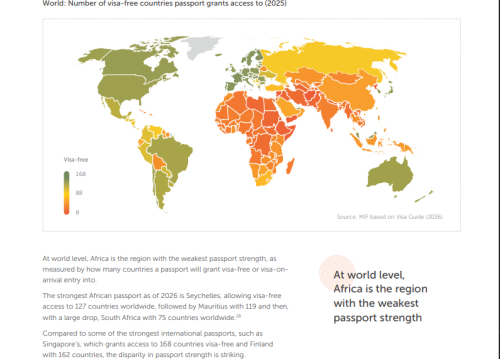
The report notes that African governments are slowly implementing frameworks designed to improve labour mobility, professional recognition and regional movement.
“Implementation remains uneven and politically constrained,” the study warns.
For Nairobi, the migration boom is reshaping both the economy and the identity of the city.
As Kenya positions itself as East Africa’s fintech, logistics and business hub, Nairobi is increasingly attracting workers, entrepreneurs and students from across the continent. African migration is contributing to housing demand, retail growth, transport expansion and cross-border trade networks.

At the same time, the rapid movement of people continues exposing tensions around jobs, urban pressure and public services.
But analysts argue that Africa’s future growth may depend on how effectively cities like Nairobi manage migration rather than resist it.
The report points to international examples such as the European Union and MERCOSUR, arguing that regional mobility systems can strengthen labour markets and economic integration when properly managed.
What is emerging in Nairobi is part of a much bigger continental transformation.
African cities are no longer simply national capitals. They are becoming regional capitals.
And while the world continues focusing on Africans migrating to Europe, a far larger migration story is unfolding much closer to home.
Africa is increasingly moving within Africa, and Nairobi has quietly become one of its most important destinations.