Report reveals worsening democratic crisis in East Africa amid rising civic action
By Aloys Michael, March 3, 2026Democratic governance across East Africa is facing renewed strain as governments tighten control over political space even as citizens step up demands for accountability.
A new regional assessment paints a picture of mounting economic hardship, contested elections and shrinking civic freedoms, dynamics that are not only fuelling discontent but also catalysing a new wave of citizen-led organising.
The report, released by Inuka Kenya Ni Sisi on February 27, 2026, finds that economic pressures, political tensions and restrictions on civic space are converging to reshape public life across the region.
According to the study, these trends are deepening democratic backsliding while simultaneously driving communities to mobilise, protest and build alternative platforms for engagement.

“In Tanzania, elections have been marred by irregularities and violence. In Uganda, harassment of opposition leaders ahead of elections raises serious concerns about political freedoms, the study reads.
“These are not isolated events; they reflect a regional struggle over governance, citizen agency, and constitutionalism. It is within this context that Inuka Kenya Ni Sisi! anchors its work.”
The report situates these developments within a broader regional pattern marked by contested political transitions, restrictions on public assembly and growing hostility toward dissent.

Abductions and detentions
Activists and opposition figures in several East African countries have been reported to have faced abductions, detentions and tighter controls on civil society operations, developments the study describes as symptomatic of a wider governance crisis.
Amid this regional turbulence, Kenya is emerging as a focal point of civic transformation. While democratic space is narrowing in parts of East Africa, the country is witnessing a surge in public engagement, largely spearheaded by young people and grassroots networks.
Economic distress, from the rising cost of living to persistent unemployment, has intensified public frustration, pushing more citizens into political participation.
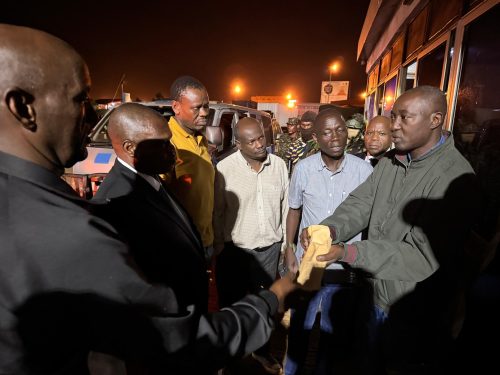
The study describes the convergence of governance concerns and economic hardship as the spark behind a new phase of activism that came into sharp focus during the 2024–2025 demonstrations, including the Gen Z-led protests and Saba Saba anniversary rallies.
Unlike previous mobilisation cycles often driven by political elites or election cycles, the current wave is described as largely citizen-organised and operating outside traditional party structures. Grassroots movements, digital campaigns and community forums are increasingly serving as platforms for civic expression and policy advocacy.
The report highlights youth-led organising as a defining feature of this shift. Facing economic precarity and limited opportunities, young people are playing a central role in shaping conversations around accountability, governance reform and social justice.

Their activism spans public demonstrations, online advocacy and dialogue forums aimed at bridging political divides.
Beyond street protests, the organisation points to structured interventions designed to sustain civic resilience. Among them is the East Africa Wellness Hub, which promotes cross-border learning on trauma healing and community strengthening.
“Nationally, Maskani ya Taifa continues to anchor transformative community dialogues, while our Movement Building and Enterprise Development programs equip citizens with the organisational and economic tools for sustained agency,” the report states.
Still, the study cautions that the same pressures fuelling activism are also heightening tensions between citizens and state institutions.

The Gen Z factor
As economic grievances deepen, public expectations for transparency and responsive governance are rising, generating friction in already polarised political environments.
Across East Africa, the intersection of democratic backsliding and socioeconomic stress is producing what the report describes as a growing accountability movement, one driven by citizens who increasingly feel excluded from formal decision-making processes.
Kenya’s trajectory, the study argues, illustrates both the risks and possibilities inherent in this moment. Long regarded as a pivotal democratic actor in the region, the country is now navigating a complex phase in which civic innovation and institutional strain coexist.
While escalating protests may signal instability to some observers, the report contends that they also reflect a profound shift in how citizens engage with power.
By organising beyond established political channels, communities are experimenting with new forms of participation aimed at reshaping governance from the ground up.