Protesters torch vehicle in Githurai as fuel strike intensifies
By Kenneth Mwenda, May 18, 2026A vehicle was set ablaze in Githurai on Monday morning, May 18, 2026, as protests linked to the nationwide matatu strike turned chaotic along Thika Road.
The protests broke out as transport operators and residents demanded an immediate reversal of the recent fuel price hikes and major reforms to the government-to-government (G2G) fuel import programme, which demonstrators blame for failing to stabilise prices and contributing to the sharp increases.
Videos shared online showed thick black smoke billowing from the burning vehicle. Demonstrators blocked parts of Thika Road using stones and burning tyres, forcing motorists to turn back, while others abandoned their vehicles and walked.
The incident happened during a nationwide strike organised by the Transport Sector Alliance, which brings together matatu operators, boda boda riders, truck drivers and other transport players protesting against high fuel costs.
Commuters travelling to Nairobi faced major disruption, with long traffic jams reported along sections of Thika Road. Public transport vehicles remained off the roads in several areas as operators joined the strike.
The alliance is demanding that the government reverse the latest fuel price increase announced on May 14.
The protests in Githurai mirrored demonstrations reported in other parts of the country.
Fuel protests disrupt transport
In Kitengela, protesters lit bonfires with tyres and blocked sections of Namanga Road using stones, making the road impassable for several hours. Motorists were forced to seek alternative routes as transport activities ground to a halt.
In Roysambu and other sections of Thika Road, protesters erected barricades as police officers monitored the situation.
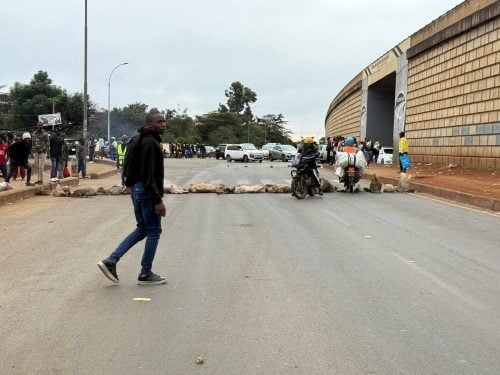
Kenya Red Cross said the strike had disrupted movement in Nairobi, Kiambu, Kajiado, Machakos, Kisumu, Embu, Murang’a and Makueni counties.
“Movement has been disrupted in several parts of the country following a nationwide transport sector strike linked to fuel price increases,” the agency said in a statement.
The organisation added that public transport, taxis, boda bodas and cargo movement had all been affected.
Schools in some areas also felt the impact after learners failed to report because matatus were not operating. Some parents kept children at home while others walked long distances to work.
Transport operators argue that the rising cost of fuel has made business difficult and increased the cost of living across the country.
They say higher fuel prices have pushed up transport fares, food prices and the cost of basic goods.
National Treasury Cabinet Secretary John Mbadi defended the fuel prices, saying global market pressures were responsible for the increases.
“In my view, the strike is completely uncalled for,” Mbadi said during a television interview. “We are trying to manage a global shock with domestic tools.”
He said the government had already reduced VAT and used fuel stabilisation measures to cushion consumers.
Despite this, transport operators insist they will continue with the strike until the government addresses their demands.