Advertisement
Police service at breaking point as system mired in dirty politics
Saturday 21st June, 2025 12:20 AM|

Over the past year, public confidence in the Kenyan police has taken a steep dive amid mounting allegations of brutality, extra-judicial killings, and a disregard for basic rights and constitutional limits.
But beneath the allegations that have seen public condemnations, lies political intrigues and interference, succession politics, infighting and indiscipline that threaten to dent its long-standing reputation as a symbol of law, order, and national integrity.
Behind the crisp uniforms, ceremonial parades, and routine press conferences, a storm is brewing—one that threatens to unravel the very institution entrusted with protecting the nation.
Though President William Ruto has consistently said in public that his government has given the National Police Service (NPS) a free hand to operate independently, interviews with several senior police officers give a contradictory view.
You Might Also Like

Sources within the service say different factions within the Kenya Kwanza have been pulling strings by controlling senior officers whom they claim to have lobbied for their appointment.
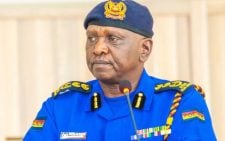
“We have several officers whose appointments were politically instigated, and as such, they owe their loyalty to their respective godfathers. How do you expect such officers to even listen to the Inspector General of Police Douglas Kanja, when they can pick up their phones and call directly powerful forces at State House,” an officer at the rank of a Senior Assistant Inspector General of Police told the PD Weekendi.
Boundary reviews
Early this week, Kenyans were forced to take to the streets to force Deputy Inspector General Eliud Lagat to step aside following the death of Albert Ojwang’ in the cells at Central Police Station.
Ojwang’ was allegedly murdered in the police cells, a day after he had been arrested by officers from the Directorate of Criminal Investigations (DCI) officers from his Homa Bay home.
The official explanation by police that Ojwang had repeatedly banged his head on the wall was immediately disputed by the family, members of the public and an autopsy report, which pointed to signs of torture.
Despite one of the key suspects linked to the murder, Police Constable James Mukhwana, confessing to the Independent Policing Oversight Authority (IPOA) that Ojwang’ had been tortured under the instructions of Lagat, the senior officer had stayed put in his office, with Kanja appearing helpless over demands that he either interdict him.
Lagat is said to be one of the senior officers said to owe his loyalty to certain politicians in the country.
Several officers, who have attained their retirement age, such as the DCI Director Mohamed Amin and another officer in the Operation Support Unit (OSU), which has been linked to the abduction and enforced disappearance of government critics, have used their political connections to remain in office well past the mandatory retirement bracket.
Amin was due for retirement in December 2023, but has remained in office.
Amin’s DCI has been under focus over the emergence of abductions and enforced disappearance of perceived government critics, particularly the Gen Zs, amid claims that his office has been acting on orders from external forces over, claims that he has consistently denied.
Signs of resistance
But despite consistently denying the DCI’s involvement in the abductions, to date, the agency is yet to arrest and prosecute anybody with the abduction, enforced disappearance and murder of the more than 60 government critics since June last year.
Political interference in the NPS is said to be one of the hindrances to the much-touted police reforms initiated immediately after the promulgation and implementation of the 2010 Constitution.
According to Johnstone Kavuludi, the first chairman of the National Police Service Commission (NPSC), the efforts of his team to institute positive reforms in the service were “thwarted by some functionaries at Harambee House who were uncomfortable with the pace and trajectory the commission had taken in the reform initiative.”
“To date, one can still detect subtle signs of resistance to reforms in the police service by the same functionaries, especially if they are not seen to be of benefit to the political class or protective of other extraneous interests,” Kavuludi observes.
Kavuludi proposes that Independent institutions and offices such as NPSC, IPOA and NPS that were established under the constitution should be allowed latitude and supported to take the lead in undertaking envisaged reforms without external interference from the Executive and political class.
External interference
Police reforms would be hard to come to fruition through directives that don’t take cognisance of already existing well-documented and tested strategies, policies, regulations and guidelines put in place by the pioneering Commission, approved by parliament and even presented to the Head of State, upon our exit,” he says.
He adds: “If only these instruments were looked through, there wouldn’t even have been a need for other task forces and working groups to come up with new recommendations, leaving those from which these task forces have heavily borrowed to gather dust on shelves. This brings into focus the essence of respecting institutional memory inherent in, especially, the National Police Service Commission.”
In a nutshell, Kavuludi is calling for the implementation of the Career Progression Guidelines ( Schemes of Service) that were approved by the NPSC in 2018, defining the career path and development of Police Officers in a fair, transparent and accountable manner.
“This would not only inspire confidence but also give hope to all serving officers in advancing to higher positions in the service, with emphasis on merit and competence,” he says.
Critics claim reforms have been more talk than action, with NPSC, which is tasked with oversight, accused of being toothless, often deferring to the executive instead of holding officers accountable.
Political interference aside, sources also cite the emerging instances of tribalism, cronyism and favouritism in the deployment and promotion of officers in the DCI and KPS.
For example, out of the 63 Police Stations in Nairobi, 20, among them, Dandora, Huruma, Ngara, Parliament, Utalii, Drive-Inn, Riruta, Kilimani, Langata, Parklands, Villa, Kamukunji and Central are manned by an Officer Commanding Station (OCS) from one particular ethnic community.
Almost a similar scenario is replicated in the officers serving as Sub County Police Commanders (popularly referred to as OCPDS).
It is also said that several senior officers in the ranks of Commissioners of Police, Assistant Inspectors of Police (AIGs) and Senior Assistant Inspectors of Police (SAIGs) have found themselves being forced to operate along the corridors at Vigilance House after failing to be deployed anywhere due to their tribes.
A case is also cited of an officer who was a Senior Superintendent of Police in 2023, heading a police division.
Today, only two years later, the officer has moved three ranks and is now a SAIG, overseeing the majority of his former seniors.
“There are several instances where officers are fast-tracked through the ranks because of hailing from the correct tribes. It is quite demotivating seeing your juniors rising to become your boss overnight,” says one officer.
Officers were recently shocked when an officer attached to the Office of Prime Cabinet Secretary Musalia Mudavadi was promoted from the rank of SSP to a Commissioner of Police despite having completely failed the Gazetted Officers Examination, in what is called a discreditable failure in police parlance.
Those familiar with the promotions say KPS and DCI are the worst affected.
And with the tenure of Kanja nearing an end in 2027, succession intrigues are said to be playing centre stage with several senior officers using their political connections to position themselves for the position.
Insiders say Lagat is one of the senior officers being fronted by a section of politicians from the Rift Valley.
“Some senior politicians from Rift Valley have, since last year, been pushing for a person from their community to succeed Kanja, the reason you see the IG being fought from all quarters, including being sabotaged by his own officers,” said one source.
Officers say Kanja has, on several occasions, been misled by some of his officers to sabotage him, like in the incident of Ojwang, where he was made to believe that the teacher had banged his head on the wall.
According to political analyst, Javas Bigambo, the intrusion of political players in NPS threatens to cripple its operations.
“When politicians start interfering in the operations of the police service, they polarise not only its activities but also operations,” Bigambo says.
Author
Print Reporter
View all posts by Print ReporterLatest News




Advertisement
More on News