Advertisement
Pharmacy board, KRA ink deal to ease port clearance
Wednesday 23rd July, 2025 04:50 PM|
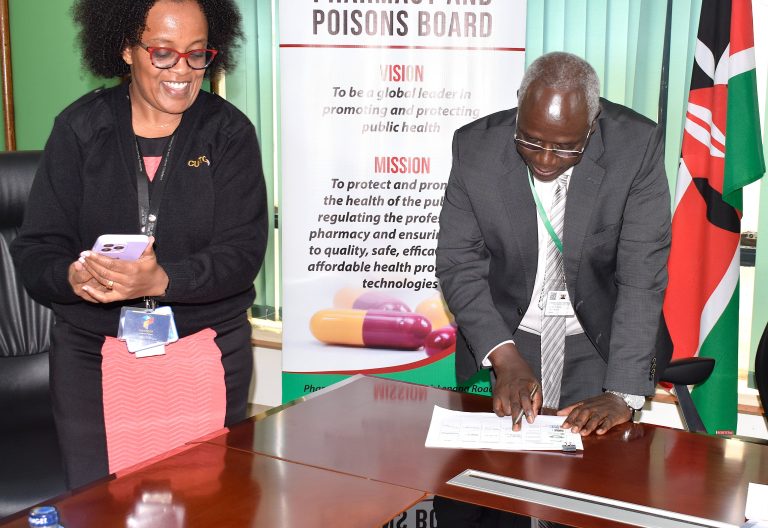
In a significant step toward modernising Kenya’s cargo clearance systems, the Pharmacy and Poisons Board (PPB) and the Kenya Revenue Authority (KRA) have signed a landmark Service Level Agreement (SLA) aimed at streamlining sea cargo clearance and enhancing regulatory efficiency.
The agreement is expected to serve as a template for future SLAs across other key government departments as part of a wider national push for digital and regulatory reforms in the port logistics sector.
With this deal in place, Kenya joins a growing list of nations aligning customs and health regulation processes to promote faster, safer, and more transparent international trade.
The agreement, signed on Wednesday, July 23, 2025, in Nairobi, by PPB Chief Executive Officer F. M. Siyoi and witnessed by KRA’s Assistant Manager for Customs and Border Control, Winfred Kinyua, marks a major milestone in the government’s efforts to improve trade facilitation and inter-agency collaboration.
You Might Also Like



“This agreement is a culmination of two years of extensive collaboration involving 24 Partner Government Agencies,” Siyoi said.
“It is a bold step that will enhance access to safe and quality health products and technologies at our ports.”
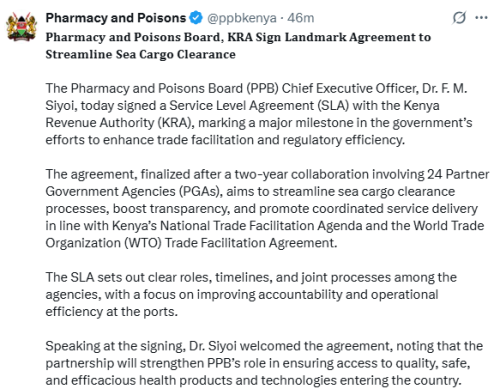
The SLA outlines clear roles, timelines, and joint operational processes between regulatory bodies, aiming to boost accountability, transparency, and coordinated service delivery.
It aligns with Kenya’s National Trade Facilitation Agenda and supports international commitments under the World Trade Organisation (WTO) Trade Facilitation Agreement.
Siyoi emphasised the importance of this partnership in strengthening border controls without creating unnecessary delays.
“The goal is to ensure that imported pharmaceutical goods meet the required standards while eliminating inefficiencies and duplication in the clearance process,” he noted.
According to officials, the agreement will not only expedite cargo clearance at Kenyan seaports but also enhance oversight on the importation of medical products, helping combat counterfeit and substandard drugs entering the country.
Kinyua, representing KRA, said the SLA was a model of how agencies can work together to promote safe trade while reducing costs and improving timelines.
“This collaboration is a testament to our shared commitment to efficient and secure trade systems that benefit both government and private stakeholders,” she said.
Author
Latest News








Advertisement
More on News