Advertisement
Omtatah raises concerns over EACC’s capability in fighting economic crimes
Tuesday 05th August, 2025 08:22 PM|

Busia Senator Okiya Omtatah has raised serious concerns over the capacity of the Ethics and Anti-Corruption Commission (EACC) to effectively address economic crimes and the misappropriation of public funds.
Speaking on the floor of the Senate on Tuesday, August 5, 2025, the outspoken legislator criticised the commission for its limited manpower and operational structure, describing it as insufficient to tackle the magnitude of corruption in the country.

He pointed out that the EACC is understaffed and composed mainly of civilians, led by a retired bishop, which he argued undermines its effectiveness in confronting complex financial crimes.
“EACC has no capacity to begin with; there are very few people. Secondly, they are civilians, led by a retired bishop, and we have all this infrastructure of the DCI across the country that could be opened and utilised by the people to make sure that they tackle this misappropriation of public funds,” Omtatah stated.
You Might Also Like

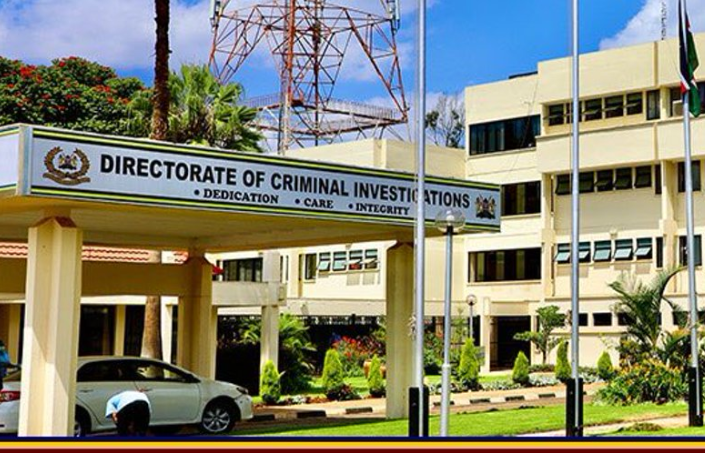

Omtatah questioned why the government continues to rely on EACC when the country has a well-established infrastructure under the Directorate of Criminal Investigations (DCI), which is present across the country and better suited to enforce the law on economic crimes.
He noted that leveraging DCI resources would provide a more practical approach to addressing misappropriation of public funds.
Constitutional mandate
Referring to Article 247 of the Constitution, the senator explained that Parliament has the power to establish a special police unit when necessary.
He stated that the Anti-Corruption Commission was not intended to serve as a standalone enforcement body, and any such unit should be under the Inspector General of Police.
He added that the idea of having a law enforcement organ outside the regular police structure under the guise of the EACC needs to be critically re-examined.
“Under article 247 parliment, is empowered to set up a special police unit, if it needs to deal with an issue, i don’t think that unit was supposed to be Anti-Corruption commision, the police unit that have to be set up by parliment should be under the inspector General, so this idea that we have a law enforcement organ, out of ethics and Anti-Corruption commision is one of the things we need to look seriously into” he added.
Gaps in staffing
Omtatah highlighted the lack of EACC presence in several counties, including Busia, where residents must travel to Bungoma to access the commission’s services.

He questioned how the commission can effectively enforce the law in such areas without a physical office or operational reach.
He called for a constitutional review, urging stakeholders to revisit Article 79, which outlines the mandate of the Anti-Corruption Commission.
According to him, EACC was created to enforce Chapter Six of the Constitution, which deals with leadership and integrity, a code of conduct rather than a criminal justice mandate.
He maintained that enforcing ethical standards is distinct from investigating or prosecuting economic crimes.
Need for institutional reform
Omtatah also referenced the Economic Crimes Act of 2003, noting that under the former legal framework, a different body was responsible for fighting corruption.
However, under the current constitutional arrangement, he argued that the responsibility for handling corruption cases rests with the police.
He cited the DCI’s existing Economic Crimes Unit as evidence of a more competent agency in dealing with such matters.
The senator also concluded by questioning why EACC appears to shield individuals implicated in corruption instead of holding them accountable.
Author
Latest News








Advertisement
More on News