Advertisement
Kenya steps up Ebola preparedness as Uganda declares end of 2026 outbreak
Tuesday 28th July, 2026 04:53 PM|
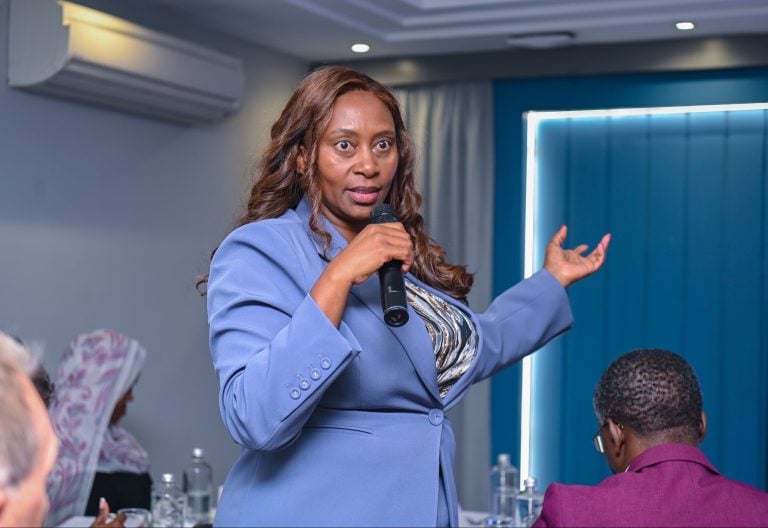
Kenya has stepped up measures to strengthen its preparedness against Ebola Virus Disease (EVD) after neighbouring Uganda declared the end of its 2026 outbreak.
The Ministry of Health said the government is strengthening the national Ebola preparedness and response framework to ensure the country can quickly detect and respond to any possible outbreak.
In a statement shared on X on Tuesday, July 28, 2026, the Ministry of Health said Principal Secretary for Public Health and Professional Standards Mary Muthoni chaired the second meeting of the National Ebola Virus Disease Preparedness and Response Taskforce.
The meeting reviewed Kenya’s preparedness status and agreed on key areas that will guide the country’s response if Ebola cases are reported.
You Might Also Like


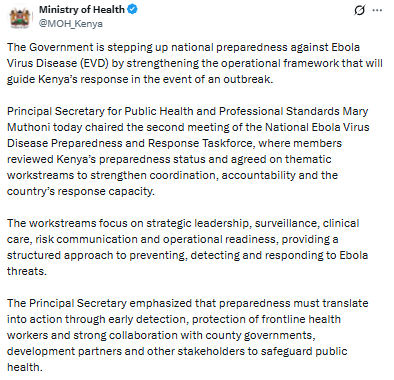
“The Government is stepping up national preparedness against Ebola Virus Disease (EVD) by strengthening the operational framework that will guide Kenya’s response in the event of an outbreak,” the ministry said.
The taskforce identified several workstreams focusing on strategic leadership, disease surveillance, clinical care, risk communication and operational readiness.
The ministry said the areas will help improve coordination between national and county governments, health workers, development partners and other stakeholders involved in protecting public health.
“The workstreams focus on strategic leadership, surveillance, clinical care, risk communication and operational readiness, providing a structured approach to preventing, detecting and responding to Ebola threats,” the Ministry said.
Muthoni stressed that preparedness must go beyond planning and translate into practical action.
“The Principal Secretary emphasised that preparedness must translate into action through early detection, protection of frontline health workers and strong collaboration with county governments, development partners and other stakeholders to safeguard public health,” the Ministry added.
Uganda declares Ebola-free status
Kenya’s preparedness efforts come as Uganda officially declared the end of its 2026 Ebola outbreak.
Uganda’s Ministry of Health announced on Tuesday that the country had completed the mandatory 42-day monitoring period after the last Ebola patient was discharged.
“The Ministry of Health is pleased to announce that Uganda has officially declared the end of the 2026 Ebola Disease outbreak. Uganda is Ebola-free,” Uganda’s Health Minister Chris Baryomunsi said.
Health officials said no new cases had been reported since June, when the final patient left the quarantine facility.
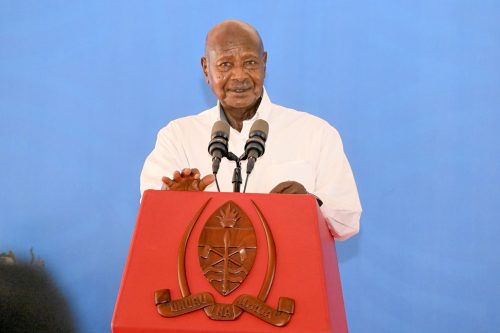
The outbreak, which involved the Bundibugyo strain of the Ebola virus, infected 20 people and caused two deaths.
The World Health Organisation (WHO) had earlier declared the outbreak a Public Health Emergency of International Concern in May 2026 as Uganda intensified measures to contain the spread.
Ebola Virus Disease is a severe viral illness that can cause serious disease and death. The virus spreads through direct contact with infected body fluids or contaminated materials.
Common symptoms include fever, weakness, muscle pain, vomiting and diarrhoea. In severe cases, patients may develop bleeding complications.
The Bundibugyo strain was first identified in Uganda in 2007 and remains one of the known strains of the Ebola virus.
Kenya strengthens surveillance
Kenya has previously increased surveillance at points of entry and health facilities due to its proximity to countries that have experienced Ebola outbreaks.
Health authorities have maintained that early detection, rapid reporting and isolation of suspected cases are critical in preventing the spread of Ebola.
The latest taskforce meeting comes as East African countries continue monitoring public health threats linked to movement across borders.
Kenya shares borders with Uganda, South Sudan, Ethiopia, Somalia and Tanzania, making coordination between countries an important part of disease prevention.
During Uganda’s outbreak, health authorities reported cases linked to contacts of infected individuals, including a health worker and a driver who transported an Ebola patient.
International health agencies have consistently urged countries to maintain strong surveillance systems, train frontline health workers and provide accurate information to communities.
Kenya’s Ministry of Health said the renewed preparedness measures are aimed at ensuring the country remains ready to prevent, detect and respond to Ebola threats.
Author
Kenneth Mwenda
Kenneth Mwenda is a business, sports, and politics digital writer with over seven years of experience in journalism, covering breaking news, feature stories, and in-depth analysis across a range of beats.
For inquiries, he can be reached at [email protected]
View all posts by Kenneth MwendaLatest News




Advertisement
More on News