Advertisement
NTSA introduces mandatory medical checks and digital monitoring for drivers
Tuesday 31st March, 2026 01:02 PM|

The National Transport and Safety Authority (NTSA) has unveiled reforms to enhance road safety on major highways, including the Nairobi-Mombasa and Nairobi-Kisumu-Malaba routes, focusing on driver health and technology.
In a notice dated Tuesday, March 31, NTSA said that under the new regulations, all drivers, especially those operating commercial and public service vehicles (PSVs), will be required to undergo regular mandatory medical checks.
These checks will assess conditions that can affect driving ability, including vision problems, hearing challenges, fatigue-related disorders, and chronic illnesses.
“Addressing vision impairments, which affect 20 to 30 per cent of adults, as well as conditions like diabetes, with a prevalence of 3 to 4 per cent, is essential in reducing risks linked to fatigue and impaired reaction times,” NTSA stated.

You Might Also Like
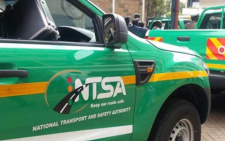

In addition, NTSA announced plans to establish resting stations for drivers along the Northern Corridor to ensure long-distance motorists get adequate rest.
Digital monitoring to track driver behaviour
The Authority also plans to introduce enhanced digital monitoring systems to track driver behaviour in real time. These include telematics, dashboard cameras, and GPS tracking to monitor speed, braking patterns, alertness, and compliance with traffic rules.
“The Safe System Approach, adopted by leading road safety nations and organisations, offers a paradigm shift. It rests on the principle that humans make mistakes, and the human body has limited tolerance to crash forces. It calls for a system that anticipates errors and minimises their consequences,” NTSA added.
Under the new system, vehicles will be required to install approved digital systems that relay data to centralised NTSA monitoring platforms to detect risky driving patterns early. These systems will also integrate with existing databases to create comprehensive driver profiles, improving law enforcement and accountability.
Addressing causes of accidents
NTSA noted that fatigue, medical conditions, and reckless driving remain the leading causes of accidents in the country. According to the Road Safety Status Report 2025, commercial vehicles accounted for 1,087 accidents in 2024, compared to 3,645 for all other vehicle categories.
The authority said the reforms are part of the government’s broader approach to more data-driven, accident-preventive measures.
Author
Latest News







Advertisement
More on News