Advertisement
New toilet technology boosts sanitation
Thursday 25th March, 2021 12:00 AM|
Gastone Valusi
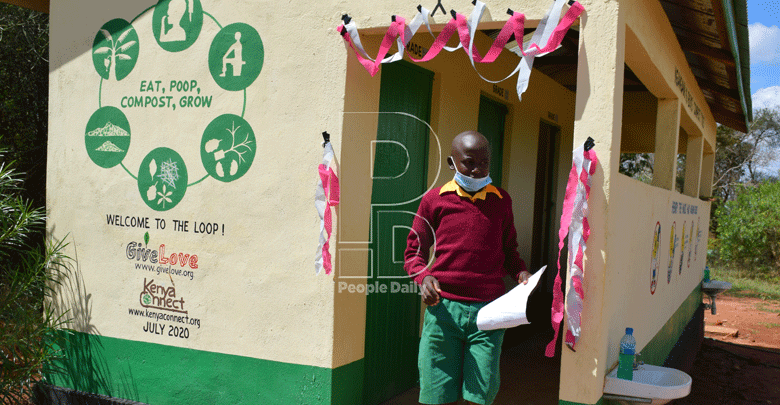
Pupils in two primary schools in Mwala, Machakos county are excited after a local organisation built new blocks of odourless toilets which employ a simple innovative technology.
The compost toilets which use saw dust as cover material provide a clean environment for pupils in rural communities.
The facilities at Ngangani and Maanzoni primary schools were constructed after a one year piloting programme.
The initiative is the brainchild of Kenya Connect in partnership with Give Love Organistion which have stepped in to enhance sanitation in schools by building toilet blocks and handwashing stations in the wake of the Covid-19 pandemic.
“The toilets are not smelly. The smell from the sawdust absorbs bad odour so the toilets do not attract flies.
You feel like you are inside a timber yard or sawmill instead of a toilet,” said Ndile Muia, a Class Eight pupil at Ngangani Primary School during an interview last week.
“We have a sanitary bin which we use to dispose off used sanitary pads,” he added.
The toilets have a seat just like modern flush toilets but the waste covered in sawdust is removed by a cleaner on daily basis and stored elsewhere instead of being flashed down the drain with water.
Fresh sawdust which is acquired from the local sawmillers is then added.
“I like compost toilets because they are hygienic. We use sawdust instead of water and we disinfect before and after use,” said Muema Mwatu, another Class 8 pupil.
Beatrice Mwikali, a Grade 4 pupil said she likes the compost toilets because they were comfortable and not smelly.
The toilets have been installed with handwashing stations and running water to help maintain high standards of hygiene.
Why compost toilets?
Compost toilets provide a simple technology of composting human waste into rich soil, explains Kenya Connect Executive Director James Musyoka. The compost toilets also ensure maintenance of a clean water table in the environment as no pit is dug.
According to the WASH joint monitoring programme report (2019) by the World Health Organisation and Unicef, only 59 per cent of Kenyans have access to basic water services and only 29 per cent have access to sanitary services.
“Kenya Connect is working to change this narrative with the construction and opening of our first banks of compost toilets at two partner primary schools Ngangani and Maanzoni Primary schools after piloting compost toilets with teachers for the past year,” says Musyoka.
Teachers, parents and community members who have used the toilets liked the comfortable design and the cleanliness of the toilet.
Unlike the pit latrines at most schools, the compost toilets provide a stark contrast while producing rich compost that can be used to enrich the soil and cultivate gardens and trees.
Since there is no “pit” for collecting the waste which quite often collapse especially during rain season, students using compost toilets are safe and the water table remains clean.
“As with all Kenya Connect programmes, we engaged the community in the process of the project.
Teachers were instrumental in providing feedback when we piloted using the toilets and were enthusiastic supporters of our efforts to provide clean sanitation for the students,” Musyoka said.
Before the students started using the toilets, parents were invited to the school to learn about compost toilets and in order to give feedback.
They were excited about the project and pledged to supply toilet paper for students to use instead of the customary leaves, maize cobs or rocks.
The block of toilets for girls has a shower room where girls can take a shower.
Author
People Reporter
View all posts by People ReporterLatest News








Advertisement
More on News