Advertisement
Nationwide teachers’ strike looms over healthcare plan and workforce shortage
Friday 03rd April, 2026 10:58 PM|

A nationwide teacher strike is looming as educators warn of industrial action at the end of April 2026 if their demands remain unmet.
The standoff centres on unresolved issues surrounding teachers’ medical cover and persistent staffing shortages, which unions say continue to undermine the quality of education.
With pressure mounting on the government to act, the threat of a countrywide shutdown of learning institutions is becoming increasingly likely.
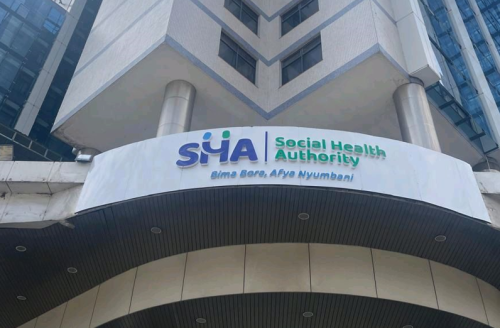
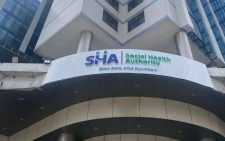
In a press briefing on Friday, April 3, 2026, the Kenya Union of Post-Primary Education Teachers (KUPPET) officials in Bungoma County said the situation has become unbearable, particularly under the new medical scheme managed by the Social Health Authority (SHA).
You Might Also Like



The union leaders said access to healthcare remains limited, with only a few hospitals currently serving teachers in the whole county.
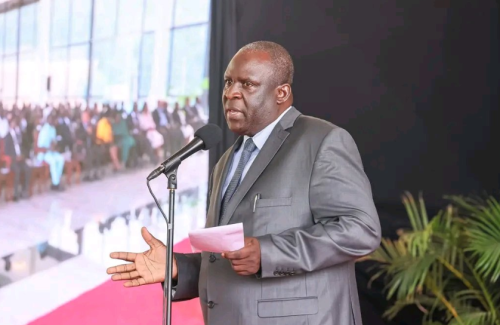
KUPPET representative in Bungoma, Ferdinand Wamalwa, warned that teachers will not hesitate to take industrial action if the issues are not resolved during the school holiday.
“Here in Bungoma, we only have three hospitals in the entire county that are treating our teachers. We have said next term, if this thing of SHA is not worked on, we are going to call for a very serious strike,” Wamalwa said.
“We will direct students to stay home as we embark on a total shutdown. We are giving the government this holiday to address the issue.”
The budget crisis
The union is also called out by the Teachers Service Commission (TSC) for failing to recruit enough teachers, noting that the shortage has increased the workload and pressure on existing staff.
But Emuhaya Member of Parliament (MP) and National Chairperson of the KUPPET, Omboko Milemba, has called for the urgent employment of 44,000 intern teachers on permanent and pensionable terms, warning of a looming crisis in Kenya’s education sector.
His remarks come in the wake of a landmark ruling by the Court of Appeal of Kenya on February 27, 2026, which declared the Teachers Internship Programme unconstitutional, discriminatory, and illegal.
The decision has placed TSC in a difficult position, as it grapples with how to comply with the ruling amid a reported Ksh2.5 billion monthly budget shortfall, which translates to about Ksh30 billion annually.

Speaking during an interview on a local TV station on Tuesday, March 24, 2026, Milemba insisted that the commission must immediately halt the internship programme and seek parliamentary intervention.
“The internship programme is declared illegal by the courts. The Teachers’ Service Commission must now quickly change and move to Parliament. Once they must have apologised to the teachers whom they employed wrongly, because it was illegal,” he said.
Teachers’ medical scheme
Teachers were moved to the SHA medical scheme on December 1, 2025, following a consultative meeting in November of the same year involving TSC, KUPPET, the Kenya National Union of Teachers (KNUT), and SHA officials.
The new scheme was expected to improve healthcare services for teachers nationwide by offering comprehensive coverage, including outpatient and inpatient care.
It was also expected to provide dental and optical services, annual checkups, ambulance services, overseas treatment, group life benefits and cover teachers’ spouses and up to six dependants.
However, teachers now say the implementation has been ineffective, citing limited hospital access and difficulties obtaining treatment across various health facilities.
With the deadline set for action by the start of next term, pressure is mounting on the government to address the crisis and prevent a disruption to learning across the country.
Author
Latest News





Advertisement
More on News