Museveni claims opposition infiltrated 2.7M votes in Uganda’s last poll
By Kenneth Mwenda, January 15, 2026President Yoweri Museveni has accused the opposition of infiltrating 2.7 million votes in Uganda’s last general election as he cast his ballot in the ongoing 2026 polls.
Speaking to reporters and supporters outside his polling station in Kiruhura District on Thursday, January 15, 2026, Museveni said weak vigilance by party agents allowed fraud during the 2021 election. He claimed the disputed votes did not belong to the opposition but were illegally added.
“So still, like in the last election, the opposition infiltrated 2.7 million votes,” Museveni said. “Those votes they claim were theirs were not. They printed one million votes on Nkrumah Road and brought another 1.7 million from Dubai. These are facts, but we discovered them later.”
The opposition has repeatedly denied the allegations, calling them an attempt to shift blame for flaws in the electoral process.
Museveni made the remarks as Ugandans vote today to elect a president and members of parliament. The Electoral Commission announced the date last year. More than 18 million registered voters are taking part at over 34,000 polling stations nationwide. Polls opened at 7am and close at 4pm, with counting set to begin immediately at each station.
Museveni, 81, has ruled Uganda since 1986 and is seeking a seventh term. His main challenger is Bobi Wine, 43, leader of the National Unity Platform (NUP), in a rematch of the 2021 election. Official results from that vote gave Museveni 58 per cent and Wine 35 per cent. Wine rejected the outcome and claimed widespread fraud.
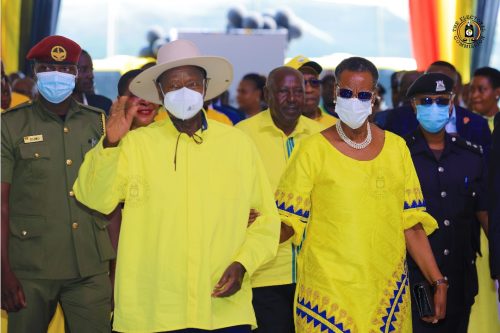
Electoral reforms
During his address, Museveni spoke at length about Uganda’s electoral history, blaming earlier governments for flawed voting systems. He said elections in the early 1960s suffered from multiple voting, ballot stuffing and unreliable voter registers.
He credited his National Resistance Movement (NRM) with introducing reforms, including a single ballot paper, one ballot box, on-site counting and the presence of party agents. He said these measures reduced fraud but insisted vigilance by agents remains critical.
Museveni also referred to biometric voter verification. He said the machine initially failed to recognise his fingerprints but later verified him using facial recognition. He argued that improved technology can help prevent cheating if properly monitored.
Today’s vote takes place under heavy tension. Authorities ordered a nationwide internet shutdown, citing security concerns. Opposition leaders say police arrested and harassed their supporters in several areas.
Human rights groups have raised concerns about violence against opposition rallies during the campaign. The United States and the European Union have urged Ugandan authorities to ensure free and fair elections, though international observation remains limited.