Advertisement
Mudavadi-Sakaja hold Nairobi’s steering committee meeting as jitters over development deepen
Wednesday 08th April, 2026 07:27 AM|

Prime Cabinet Secretary Musalia Mudavadi and Nairobi Governor Johnson Sakaja have moved to steady nerves over the capital’s development agenda, co-chairing a high-level steering committee meeting amid growing concern about infrastructure gaps, flooding and governance questions.
The leaders presided over the second Joint Steering Committee meeting under the National Government–Nairobi City County Cooperation Agreement, a framework anchored within the Nairobi Rising Programme. The meeting focused on reviewing progress and tightening coordination between the national and county governments.
In a statement shared on X on Tuesday, April 8, 2026, Mudavadi said the session marked a renewed push to transform Nairobi through joint action.
“Chaired the 2nd Joint Steering Committee Meeting on the implementation of the National Government–Nairobi City County Cooperation Agreement under the Nairobi Rising Programme, advancing a coordinated effort to transform our capital,” he said.
You Might Also Like



He added that the committee assessed key sectors including infrastructure, housing, water, sanitation and environmental management, while strengthening systems to speed up delivery.
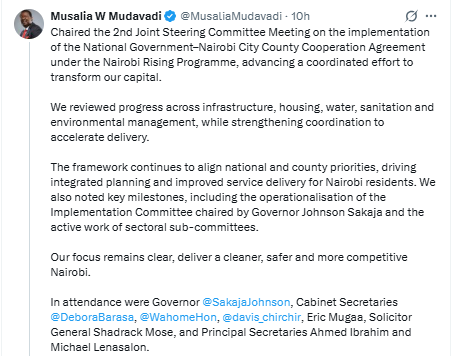
“Our focus remains clear: deliver a cleaner, safer and more competitive Nairobi,” Mudavadi stated.
The meeting comes at a time when pressure is mounting on both levels of government to address Nairobi’s recurring crises, particularly flooding that has disrupted businesses and displaced residents in recent weeks.
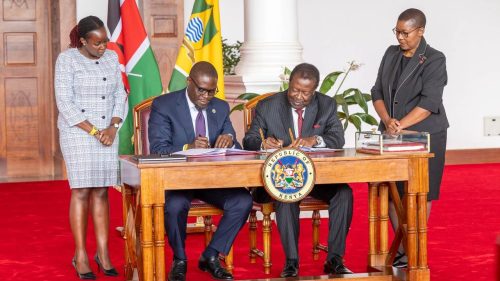
Appearing before the Senate Standing Committee on Devolution and Intergovernmental Relations, Mudavadi defended the cooperation deal, dismissing claims that it undermines devolution. He argued that the agreement is a structured partnership aimed at fixing long-standing service delivery failures.
Mudavadi defends pact
“This agreement represents a deliberate and structured effort by both levels of government to strengthen collaboration in the delivery of critical services and infrastructure within the Capital City,” he told senators.
The Ksh80 billion framework targets major urban projects, including waste management, county roads, affordable housing, markets, water systems, sanitation and non-motorised transport. According to Mudavadi, Nairobi’s importance to the national economy makes such coordinated intervention unavoidable.
Citing data from the Kenya National Bureau of Statistics, he noted that the city contributes about 27.5 percent of Kenya’s Gross Value Added and generates over Ksh4.1 trillion annually. This, he said, means Nairobi’s performance directly affects the country’s economic stability.

However, concerns persist over whether the partnership can deliver results quickly enough.
Governor Sakaja has previously blamed years of underfunding for the city’s weak infrastructure, especially its drainage system.
Speaking after the recent floods, he said Nairobi needs at least Ksh60 billion annually to address its growing challenges.
“I am not overwhelmed, I am under-resourced. Nairobi needs at least Ksh60 billion every year to address the challenges and development needs in a better way,” Sakaja said.
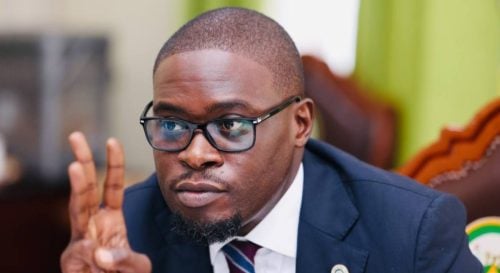
His remarks reflect a broader debate about financing, accountability and preparedness. A past audit by Auditor-General Nancy Gathungu highlighted gaps in disaster response, noting that flood-related losses could have been reduced with better planning and coordination.
The report recommended the creation of a national disaster risk management policy and the development of stronger legal frameworks to guide emergency response. Many of these proposals remain only partially implemented, raising questions about the government’s readiness to handle future crises.
Despite these concerns, Mudavadi insisted the Nairobi Rising Programme is beginning to show progress. He pointed to milestones such as the operationalisation of an implementation committee chaired by Sakaja and the ongoing work of sector-specific sub-committees.
Author
Latest News





Advertisement
More on News