Advertisement
Most Kenyans believe govt should block illegal websites without court order – report
Monday 27th October, 2025 07:40 PM|

A new Stahili Pulse Reports shows that most Kenyans support giving the government the power to block illegal websites even without a court order.
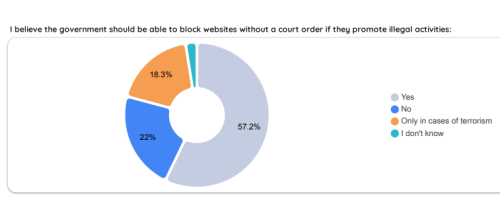
According to a survey titled Cyber Crimes Act—Kenyans’ Views, 57.2 per cent of respondents said the government should be able to block such websites if they promote illegal activities.
The report released on Monday, October 27, 2025, further showed that another 22 per cent opposed the idea, while 18.3 per cent said blocking should only apply to terrorism-related cases. A small number, 2.5 per cent, said they did not know.
The findings come just days after President William Ruto signed into law the Computer Misuse and Cybercrimes (Amendment) Act, 2025. The law gives authorities power to seek court orders to take down websites, digital platforms, or devices suspected of spreading child pornography, extremist content, or facilitating terrorism.
Awareness and perceptions
You Might Also Like



The survey gathered 3,331 responses from across the country. It showed that awareness of the law is high, with 78 per cent of Kenyans saying they had heard about it. Most of those were from the Rift Valley, Central, and Nairobi regions.
When asked who signed the Act into law, 67 per cent correctly said it was President William Ruto. Another 14.6 per cent believed it was the Attorney General, while 13.3 per cent said they did not know.
A majority of respondents (51.2 per cent) also understood that the National Cybercrimes Committee now has the power to order websites or apps to be blocked if they are linked to criminal activity.
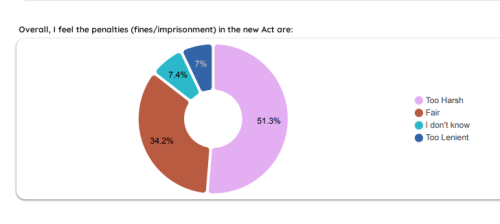
However, opinion was divided on whether the penalties under the Act are fair. About 51.3 per cent said they were too harsh, 34.2 per cent said they were fair, and 7.4 per cent said they were too lenient.
Public concern
While most Kenyans agree on the need to tackle cybercrime, many remain cautious about possible misuse of the law. The report found that 46.7 per cent of respondents were concerned that the new law could limit freedom of speech or online expression.
Government officials have repeatedly moved to calm these fears. On October 23, Government Spokesperson Isaac Mwaura said the law respects constitutional freedoms and does not give the state unchecked powers.
“The power to block websites or applications is limited. Any action must be based on proof of unlawful activity and is subject to judicial review under Articles 47 and 50 of the Constitution,” Mwaura said in a statement.
He added that similar laws exist in other countries to protect children and citizens from harmful online content.
Leaders defend the law
National Assembly Majority Leader Kimani Ichung’wah has been one of the strongest defenders of the Act. Speaking in Malava Town on October 26, he said the law was created to protect Kenyan families from moral decay and tragedies like the Shakahola cult deaths.
“The law is not about silencing Kenyans. It protects families from pornography, religious extremism, and harmful online behaviour,” Ichung’wah said during a church service at St. Teresa’s Isanjiro Catholic Church.
He added that the Bill was a private member’s initiative by Wajir East MP Dawood Aden, who sought to protect children from exposure to adult content online.
Senator Samson Cherargei also backed the law, describing it as a progressive step to keep pace with digital growth. He said it addresses cyberbullying, online sexual exploitation, and identity theft, adding that courts have the power to order the removal of harmful content.
Divided opinion
Not all leaders support the new powers. Kirinyaga Woman Representative Njeri Maina warned that the National Computer and Cybercrimes Coordination Committee could misuse its authority to shut down platforms like TikTok or X (formerly Twitter) without judicial consultation.
Get Kenya’s Real Pulse — Every Week with Stahili
Make faster, smarter business decisions with Stahili Pulse Reports. Live access, real-time, trended insights across 75 sectors and products gathered daily from over 40,000 consumers across Kenya.
Stay informed on brand health, consumer preference and sector trends, all from verified Kenyan voices on the Stahili App.
Get the latest Stahili Pulse Report and unlock the data behind Kenya’s rapidly changing consumer market.
Want to know more and get your Market Pulse access? Email [email protected] and we’ll get your finger on the pulse.
Author
Kenneth Mwenda
Kenneth Mwenda is a business, sports, and politics digital writer with over seven years of experience in journalism, covering breaking news, feature stories, and in-depth analysis across a range of beats.
For inquiries, he can be reached at [email protected]
View all posts by Kenneth MwendaLatest News








Advertisement
More on News