More Kenyans killed fighting for Russia in Ukraine
By Kenneth Mwenda, April 27, 2026Ukrainian military intelligence says Russian forces killed another group of Kenyan recruits in a failed assault near Borova in Kharkiv region.
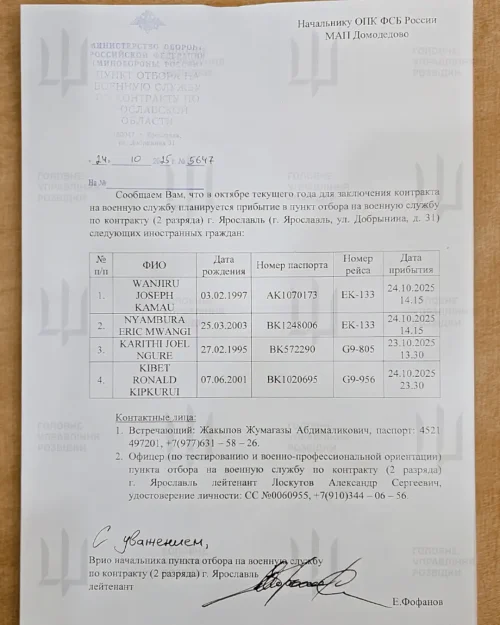
The Defence Intelligence of Ukraine (DIU) named Nyambura Eric Mwangi, born in 2003, as one of the dead. He died from a mortar strike while his unit tried to cross open ground in early 2026.
Mwangi and three other Kenyans – Wanjiru Joseph Kamau, Karithi Joel Ngure, and Kibet Ronald Kipkurui – reached Yaroslavl in Russia on October 23 or 24, 2025. They signed contracts with the Russian army, spent just a week and a half in training, and then moved to the front.
Mwangi received the role of radiotelephone operator but ended up in an assault unit instead. The DIU released the details on April 23, 2026. It also reminded the public of two other Kenyans from the same arrival period who died earlier: Ombwori Denis Bagaku and Wahome Simon Gititu.
Ukrainian officials say Russia treats these African recruits as expendable. They claim Moscow sends them into dangerous attacks with little preparation. Kenya’s government received assurances from Russia only weeks before these latest deaths became public.
Recruitment diplomacy strained
Prime Cabinet Secretary Musalia Mudavadi visited Moscow from March 16 to 18, 2026. He met Russian Foreign Minister Sergey Lavrov and secured an agreement that Kenya would join a stop list. This meant Russia would no longer recruit Kenyans for its military operations.
Russia also promised better consular access and help with voluntary returns. Yet Ukrainian intelligence reports that recruitment continued.
The DIU says it holds personal data for 2,965 citizens from African countries who signed contracts with Russian forces. Kenya sits at the top of the list of countries supplying the largest numbers.
Other countries include Egypt, Cameroon, Ghana, Nigeria, Uganda, Algeria, Mali, South Sudan, and South Africa. By August 2025, at least 316 African mercenaries had died. Real numbers are probably higher.
Mudavadi told Parliament on April 1, 2026 that Kenya’s embassy in Moscow estimates around 252 Kenyans joined Russia’s forces, though the true figure could exceed that. Recruits received signing bonuses of up to 3 million Kenyan shillings and monthly pay of up to 350,000 shillings.
Many also received promises of Russian citizenship. The government has rescued and brought home 47 Kenyans so far. Two others, Evans Kibet and Macharia Willi Muniu, remain prisoners of war in Ukraine. Kenyan officials continue to seek access to them.
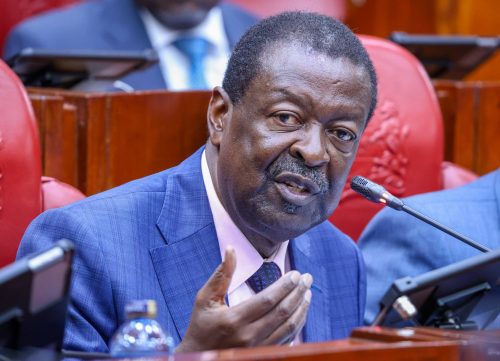
Mudavadi said tracing recruits proves difficult because many left through third countries such as Qatar and the United Arab Emirates. Some abandoned jobs in the Middle East and travelled on tourist visas before joining the Russian army.
Recruitment networks operated through unregistered agencies in Kenya, Russia, and the Gulf. They targeted former security officers and unemployed young men. Investigators arrested at least two people on human trafficking charges.
Mudavadi warned that the lure of money drives many to go willingly. He stressed that the Kenyan government keeps pressing both Russia and Ukraine for the safe return of its citizens. At the same time, he noted that more than 1,000 Kenyans may have been drawn into the conflict zone in various ways.
The latest DIU statement repeats its warning to foreign nationals. It says travelling to Russia for work carries a high risk of ending up in assault units and dying on Ukrainian soil.