Advertisement
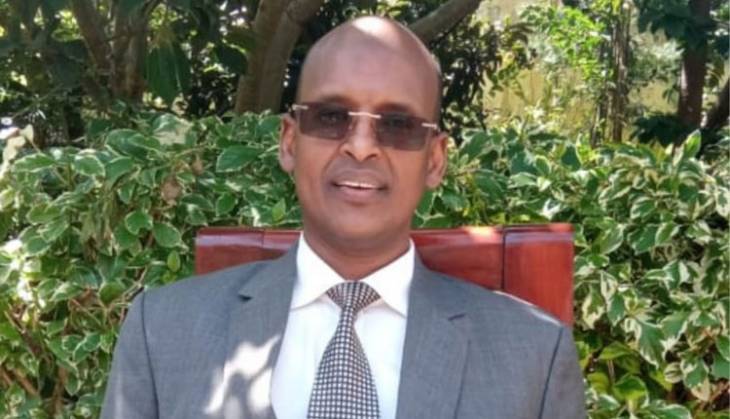
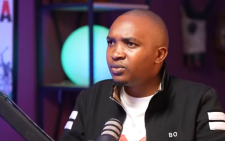
Mohamed Hussein Abdille survived 1984 famine, now fights Covid-19 pandemic
Wednesday 22nd December, 2021 06:00 AM|
Mugumo Munene
Mohamed Hussein Abdille had no idea what nigella sativa was the day he walked — for one more beleaguered shot at life — into Mandera Boys Town Primary School back in 1984.
Nor did the six-year-old lad know much about life except the life-threatening realities that surrounded him, or that he would one day create a remedy to battle a marauding virus that threatens the whole world.
He would never have known what constitutes Traditional Chinese Medicine (TCM) and the millions of wonder ingredients used by the ancient Asians from special plants native to southwest Asia and the Mediterranean.
Nor would he know how his latter knowledge of special medicines would combine with his vast experience in Western medicine to catapult him to a global platform.
He had too much burden for his young shoulders back then and an uncertain, indeterminate journey ahead of him.
All the odds were firmly stacked against him. Little Abdille had been recently orphaned.
As if that were not enough, a drought so severe it made headline news half the world away in the New York Times, was sweeping across Kenya and leaving families famished and hopeless.
His elder siblings had done the best they could to hold things together, but it wasn’t enough.
Abdille decided to go out looking for help in the unknown. That search took him to Mandera Boys Town Primary School established by Father Joseph Zenca, a Catholic missionary on the banks of the coincidentally named River Dawa.
He remembers the childhood events vividly.
In search of food
“We had no food for days in our house. One day, I walked for so long in search of food and I found myself at the Mandera Boys Town Primary School for orphans and the handicapped.
I was hungry, in tatters and desperate,” Abdille told this writer in an interview.
“Father Joseph, who oversaw the school met me at the gate in my deplorable state and was moved by my plight.
He took me in, and I was enrolled at the school. From then on, he became my guardian and ensured I completed my studies up to university.”
On admission, Abdille proved to be an excellent pupil. After his secondary school studies at Wajir High School, he landed a scholarship by the Indian government in 1996 which saw him earn a Bachelor of Science degree in Clinical Medicine and Masters of Sciences in Biotechnology at the Mysore University – the first of steps that would land him at the pinnacle of global knowledge on disease-causing organisms.
His thirst for knowledge would next take him to Scotland where he bagged an MSc in Tropical Medicine from the University of London School of Tropical Medicine and Hygiene.
He would later obtain a PhD in Preventive Medicine from the prestigious China Agricultural University and thus his quest and passion for understanding and preventing diseases such as Covid-19.
“I also undertook post-graduate studies in public health management from the India Institute of Sciences and post-doctorate studies in research of tropical diseases, Basel, Switzerland,” said Abdille,
A post doctorate fellow at various research and academic Institutions in China and USA, including a Fellowship in oncology from the world-famous John Hopkins University.
Elite scientist
Today, Abdille is one of the elite scientists working around the clock to beat back the coronavirus pandemic using his vast research collaborations and experience.
It was while studying for his PhD that Abdille was appointed a lecturer and a researcher at Beijing Medical School and China Agricultural University.
Abdille would later join Egerton University School of Medicine in 2009 as a senior lecturer where he founded the department of Human Pathology.
He later obtained his professorship from China Agricultural University and Egerton University.
The accomplished medical scientist has lately added a new feather to his hat: He has won a global recognition for his role in the fight against the pandemic that brought the world to its knees.
On December 8, Abdille emerged the top scientist for the award of the Fight Against Covid-19 in Third World Nations which was issued by the Chinese National Institute for Viral Infections along with several other research and academic institutions from Asia.
He attributes this recognition to the promotion of the knowledge he shares on his twitter handle – @ProfAbdille – by Kenyans who follow his tweets, debate and reshare that knowledge, helping to broadcast the remedy he created. He dedicates his award to Kenyans on Twitter.
This recognition was in honour of his invention of an immune-booster that Abdille code-named CR-7 in early 2020 as his scientific contribution to the fight against the then novel coronavirus. CR-7 is authorised by the Kenya Pharmacy and Poisons Board.
“I have all the necessary papers and documentation,” said Abdille. “The board has certified it as a borderline product meaning it is part food and part medicinal.”
The competition for the award was immense between scientists from Poland, Korea, Vietnam, Argentina and Peru.
The panelists – who comprised top world scientists and mostly epidemiologists, virologists and medical journalists – judged the entries on the basis of innovativeness, use of available resources to respond to the crisis and the response from the community (in this case Africans and Kenyans) in circulating information on the remedy and its impact on ordinary citizens life.
“I participated with very little expectations but #KOT (KenyansOnTwitter) and all our peoples’ prayers saw us triumph,” tweeted an elated Abdille upon winning he award.
“A panelist from Switzerland openly mentioned the powerful tool that’s called social media and its positive contribution in the fight against the pandemic. Yaani I’m directly told that I won because of KOT.”
But what moved him to create this product? Abdille says he did not invent CR-7 Immune booster by chance – or what scientists call serendipity.
He has spent thousands of hours in laboratories across Africa, Europe and Asia studying disease-causing pathogens working collaboratively with peers and students of medicine pursuing answers; cures and vaccines against illnesses that burden humanity.
“When a crisis arrives, there is no time for talk. President Uhuru Kenyatta urged all scientists and Medical Research Scholars to step up to the situation and contribute to the solution. My invention of CR-7 was in response to this call,” he said.
Abdille said that he’s very proud of being a Kenyan scientist and appreciated the millions of Kenyans that have encouraged him in person and through social media.
1918 pandemic
He took this interview from Wuhan Institute of Virology, China, where he is working with a team of scientists from around the world, to crack the recent Omicron variant of the Covid-19 virus. He has been so busy at it, working in collaboration with other scientists, that he hasn’t had the time yet to travel to Beijing to collect his award.
With 3,000m² of lab space, the Wuhan Institute of Virology is currently the largest Bio Safety Level 4 (BSL4) lab in the world.
BSL4 labs are designed and built so that researchers can safely work with the most dangerous pathogens on the planet – ones that can cause serious disease and for which no treatment or vaccines exist. Researchers are required to wear full-body pressurised suits with independent oxygen. They are spread over 23 countries with the largest concentration found in Europe which has 25 labs. North America and Asia have roughly equal numbers, with 14 and 13 respectively. Australia has four.
In Africa, there are just two BSL-4 research centres situated in Gabon and South Africa, and only three African nations have standard BSL-3 labs situated in Nigeria, Kenya, and South Africa, underscoring their rarity and importance to humanity’s effort to keep disease at bay.
First case
“When you have been teaching clinical virology for so many years, will definitely have the knowledge of all the viruses at your fingertips. Knowing the virus and understanding the human system is very essential in coming up with a solution.
Coronavirus is also part of the SARS Covid. H1N1, bird flu, swine flu and then the human flu. We knew about the coronavirus before it became dangerous. We knew its genetic make-up and the last time that the world experienced a flu of this kind was 1918 where it killed more people than it has today,” said Abdille.
“Before the virus hit Kenya, I was in the process of getting the active ingredients from some of the herbs that we have been studying through collaborative research. Some of the ingredients were immediately available and some were not. But necessity is the mother of invention,” said Abdille.
Armed with this knowledge and collaborative research databases and contacts spanning from Kenya to Scotland, Switzerland, India and China, Abdille got down to work. He released his first immune booster in March 2020 just about the first time the first Covid-19 case was confirmed in Kenya and by April, he had distributed 871 doses which has climbed to 500 kilogrammes currently.
“I will not hide the joy I get seeing patients being helped by CR-7 regardless of age or religion or where they came from. Some Asian countries are using the secret in CR-7,” says the man from Mandera on a march to change the world. —The writer is a communication specialist and a corporate affairs executive —[email protected]
Author
People.Reporter
View all posts by People.ReporterLatest News
Advertisement
More on News
