Advertisement
Mathematics returns as a compulsory subject in SSS
Monday 11th August, 2025 01:00 AM|

Mathematics has reclaimed its place as a compulsory subject in the senior school curriculum after the Ministry of Education unveiled a revised framework for the Competency-Based Curriculum (CBC).
The changes, which expand the number of subjects from seven to 10, come with new rules on compulsory and elective learning areas.
In a circular dated August 8, 2025, addressed to regional, county, and sub-county directors of education, Principal Secretary for Basic Education Julius Bitok detailed the new structure.
Learners will now take seven examinable subjects—four compulsory and three elective. The compulsory list comprises English, Kiswahili or Kenyan Sign Language (for learners with hearing disabilities), Mathematics, and Community Service Learning (CSL).
You Might Also Like
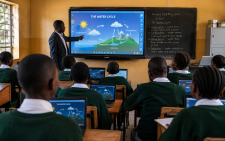
Under the revised arrangement, students in the Science, Technology, Engineering, and Mathematics (STEM) pathway will study Core Mathematics, while those in the other two pathways—Arts & Sports Science and Social Sciences—will take Essential Mathematics.
Learners outside the STEM track who wish to study core mathematics may be allowed to do so, subject to their junior school assessment results.
“In addition to the compulsory learning areas, each student will choose three elective subjects,” the circular notes.
“A learner should take at least two subjects from their chosen pathway. However, a situation may arise where a student’s career choice demands one subject from each pathway—this flexibility should be permitted.”
The elective subjects will be pathway-based, though the ministry encourages cross-pathway combinations if these align with a learner’s career aspirations.
The decision marks a reversal of an earlier move to make mathematics optional—a proposal that had sparked months of public debate among educators, scholars, and policymakers.
Encouraging creativity
Supporters of making maths optional argued that it would allow learners to focus on subjects closely aligned to their talents and career paths, reducing academic stress and encouraging creativity.
Abol Kings, a junior secondary school teacher, noted that removing the subject as a universal requirement could benefit students whose ambitions lie in fields such as journalism, law, or performing arts.
“It allows for interest-driven learning,” Kings said.
“Not every career needs advanced mathematics. This flexibility can free students to focus on relevant skills.”
Proponents also argued that an optional approach would help struggling learners avoid anxiety, improve overall performance, and promote hands-on training in vocational fields where mathematics plays a minimal role.
However, opponents of the idea—who eventually won the day—warned of serious consequences.
They insisted that mathematics underpins essential life skills, from managing finances to problem-solving.
“Even a farmer does mathematics to calculate profits and losses,” said Mary Mueni, a cybercafé attendant in Mkomani, Mombasa.
“When you make mathematics optional, you risk producing a generation that struggles with basic calculations.”
The strongest resistance came from the teaching fraternity.
In Kajiado County, during a national mathematics competition, educators from across the country condemned the proposal to drop mathematics as a universal requirement.
“All STEM disciplines—whether pure sciences, applied sciences, or technical studies—require mathematics,” argued Ignatious Simiyu, founder of the Mathematics Competition.
“Restricting it to a narrow subset of STEM learners is flawed reasoning.”
David Kariuki, principal of Mrishaw School, was even more emphatic: “Mathematics is indispensable for industrialisation, commerce, and daily living. That is non-negotiable.”
The contest in Kajiado drew students from more than 20 schools, with top performers winning the chance to represent Kenya in international competitions in Dubai and the US.
Alongside the maths directive, the ministry introduced three non-assessed subjects—Physical Education, ICT Skills, and Pastoral/Religious Programme of Instruction (P/RPI).
While compulsory for all learners, these will not be examined. Schools must respect students’ religious beliefs and may not compel participation in rites that conflict with those beliefs.
The new framework also standardises the senior school timetable to 40 lessons per week, each lasting 40 minutes.
This allocation includes time for both assessed and non-assessed subjects, as well as dedicated sessions for personal study and moral or spiritual instruction.
Career-ready graduates
Senior school, comprising Grades 10 to 12, represents the fourth tier of basic education under CBC.
According to PS Bitok, the expanded curriculum aims to better prepare students for higher education and the dynamic job market, with an eye toward producing adaptable, career-ready graduates.
The ministry has also informed the Departments of Technical and Vocational Education and Training (TVET) and Higher Education to align post-secondary programmes with the CBC structure ahead of the first senior school cohort in 2029.
The changes take effect in January 2026, when the inaugural CBC group enters Grade 10.
Earlier this year, Education Cabinet Secretary Julius Ogamba defended the initial plan to make mathematics optional, saying it mirrored pre–8-4-4 practices when students in Forms Five and Six tailored their subjects to career goals.
That vision, however, has now been abandoned in favour of reinforcing mathematics as a cornerstone of the curriculum—both for its academic value and for the life skills it imparts.
Author
Reuben Mwambingu
View all posts by Reuben MwambinguLatest News

Advertisement
More on News