Maraga criticizes ‘elite budget’, says hungry Kenyans are being ignored
By Sharon Atieno, June 1, 2026Former Chief Justice David Maraga has raised concerns over Kenya’s budget priorities, questioning whether national spending plans truly reflect the needs of ordinary citizens at a time when many households are struggling with rising living costs and economic pressure.
Speaking in a statement shared on his X account on Monday, June 1, 2026, Maraga says the ongoing budget-making process reflects a deeper national crisis, where policy decisions appear increasingly disconnected from the realities facing Kenyans on the ground.
“A hungry nation and an elite budget cannot go together,” he implied in his remarks, warning that economic planning must prioritise citizens who are bearing the heaviest burden of the country’s financial strain.
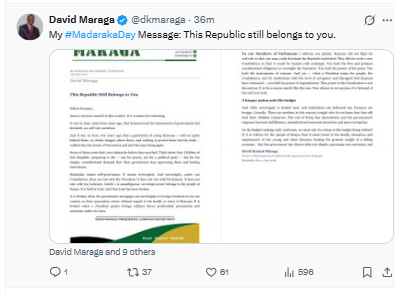
He argues that while major national plans continue to be developed, many families are struggling to afford basic needs, with some households uncertain of how they will survive day to day.
“There are mothers in this country tonight who do not know how they will feed their children tomorrow,” he noted, pointing to what he describes as the harsh reality of a rising cost of living.
Budget focus under scrutiny
His remarks come at a time when the National Treasury has outlined key dates for the 2026/27 budget process, with Treasury Cabinet Secretary John Mbadi expected to present the Budget Statement to Parliament on Thursday, June 11, 2026, at 3:00 pm.

The upcoming budget, estimated at about Ksh4.8 trillion, has already sparked debate, with questions being raised over debt levels, development priorities, and the impact of fiscal decisions on ordinary Kenyans.
Maraga argues that the central question remains unanswered: who is the budget really being written for?
“If it is written for the people of Kenya, then it must invest in health, education, and employment for the young and others carrying the weight of a failing economy,” he said.
Debt over dignity
He further warns that Kenya risks prioritising debt servicing and political interests over public welfare, saying current choices reflect “debt over dignity, patronage over provision, and self-preservation over the survival of the people.”
As the budget process continues in Parliament, scrutiny is expected to intensify over whether national spending will respond to the cost-of-living crisis or continue along what critics describe as an unsustainable economic path.