Manyasa warns new university funding formula won’t fix budget shortfalls
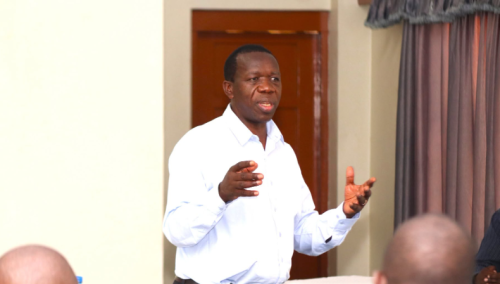
By Sharon Atieno, July 28, 2026Education expert and Usawa Agenda Executive Director Emmanuel Manyasa has argued that Kenya’s university funding crisis is rooted in inadequate government financing rather than flaws in the current funding model, urging policymakers to focus on increasing resources to higher education instead of introducing new financing formulas.
Speaking during an interview with a local television station on Tuesday, July 28, 2026, Manyasa said the Student-Centred Funding Model was rolled out hastily three years ago, creating implementation challenges that have since overshadowed the real issue facing public universities.
“The funding model is not the problem. The problem is the resources being channelled to the sector,” Manyasa said.
He noted that while the government initially intended to finance universities at about 80 per cent of their operational costs, allocations have since dropped to nearly 40 per cent, leaving institutions struggling to meet their obligations.
Budget constraints remain key challenge
Manyasa argued that budget ceilings, rather than the means-testing framework, have become the biggest determinant of how students are placed in funding bands.
He explained that because available resources are limited, the government has been forced to restrict the number of students qualifying for higher funding categories regardless of their actual financial need.
“As long as we don’t deal with the root cause, which is the budget constraint, it doesn’t matter which funding model we introduce,” he said.

According to the education expert, meaningful reforms should prioritise increasing investment in higher education instead of repeatedly changing funding structures.
His remarks echo concerns raised by National Assembly Education Committee Chairperson Julius Melly, who acknowledged that university financing has suffered from chronic underfunding for decades.
Melly noted that previous financing systems, including the Differentiated Unit Cost model introduced between 2014 and 2015, eventually left universities heavily indebted because government allocations failed to match rising enrolment and operational costs.
Universities report mixed results
Even so, Masinde Muliro University Vice-Chancellor Solomon Shibairo said the current funding model has delivered some gains despite existing financial pressures.
He said several universities that previously struggled to pay salaries have improved under the new arrangement, with average government funding rising to about 55 per cent compared to nearly 20 per cent under previous financing levels.
However, Shibairo cautioned that institutions are still operating below optimal levels, forcing many universities to prioritise salaries over research, laboratory equipment and other essential learning resources.
The debate over university financing comes amid renewed discussions on whether Kenya should retain the current Student-Centred Funding Model or adopt a new framework, with education stakeholders maintaining that sustainable funding, rather than frequent policy changes, remains the key to securing the future of public universities.