Advertisement
Local innovation responds to climate risks in Kenya’s north
Wednesday 23rd July, 2025 01:20 AM|

As the conversation around the climate crisis intensifies, experts are busy mulling over more innovative ways of keeping the vulnerable communities informed and engaged about disasters.
In Marsabit County, environmental scientist Somo Guyo and computer scientist Hassan Jattani are striving to make this a reality for communities facing recurring climate-related crises.
The two brothers have visualised a future where a farmer in the remotest parts of Kenya can rely on an app on a basic feature mobile phone to report early signs of an impending disaster- to trigger swift, life-saving action.
“Our platform provides a unified model that empowers citizens to actively participate in disaster preparedness and response, while also strengthening two-way communication between grassroots communities and disaster response institutions,” Guyo said.
You Might Also Like
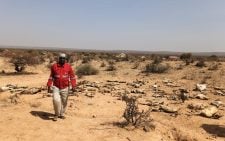
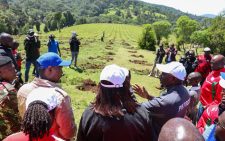
Somo shared that after nearly eight years with the Marsabit County Department of Water, Environment, and Climate Change, he identified a critical gap in disaster risk management requiring urgent attention.
He said the existing disaster risk management frameworks and early warning systems remain largely top-down and inaccessible to local communities.
There are various government institutions such as the Kenya Meteorological Department, the National Drought Management Authority (NDMA), and regional platforms like the IGAD Climate Prediction and Applications Centre (ICPAC).
According to Somo, however, critical gaps in community engagement, real-time reporting, and feedback mechanisms continue to undermine both national policies and county-level disaster response efforts.
Localised alerts
As a way of recognising the urgency of developing a people-centred, accessible, localised, tailored, and gender-responsive early warning system, they prioritised the needs of even illiterate farmers in disseminating vital information.
They developed a technological approach to enhance disaster risk reduction, response, and recovery-also a platform designed to serve all counties in Kenya.
Guyo convinced his brother to leverage his computer science expertise in embarking on a relevant and easy-to-use mobile app development to help bridge the gap.
The duo developed a simple, user-friendly mobile app and USSD platform, dubbed JangaVoice, designed to empower vulnerable communities to report early signs of multiple hazards.
The JangaVoice platform centralises data into a unified dashboard accessible to government agencies and partners, enabling timely early action.
It also facilitates the dissemination of localised alerts to communities via SMS and a mobile app.
The system integrates AI and sensor-based weather forecasting, continually refining its technology to enhance accuracy. The platform provides real-time climate data through automated, AI-driven disaster predictions.
By combining sensors and advanced algorithms, it is anticipated to deliver actionable insights to government agencies, humanitarian organisations, and the private sector.
This will enable timely, data-driven disaster preparedness, response, and long-term planning in climate-sensitive sectors such as agriculture and water management.
JangaVoice provides a simple, user-friendly, and inclusive multi-platform system that supports real-time two-way communication, AI-powered forecasting, and sensor integration.
Its multifunctional design enhances disaster risk reduction efforts by enabling timely action, saving lives, protecting property, and safeguarding critical infrastructure.
In developing the platform, Jattani integrated artificial intelligence for weather prediction, incorporated sensor technology for real-time data collection, and used JavaScript to enhance user interaction on the platform.
He was motivated to leverage USSD (Unstructured Supplementary Service Data), a widely used communication protocol in GSM networks, due to its accessibility and compatibility with basic mobile phones.
The goal is to empower even the most marginalised communities, enabling them to receive, share, and act on critical disaster-related information to help minimise impacts.
JangaVoice allows users to receive alerts and send information, empowering them to prepare, protect, and recover from disasters.
“Additionally, it allows smartphone users to upload photos and other multimedia content to report disaster damage”, Jattani explained, of the app that is similar to the Federal Emergency Management Agency (FEMA) app in the United States.
JangaVoice seeks to leverage existing government disaster risk management structures at the community, county, and national levels to ensure easier adoption, sustainability, and long-term resilience.
At the community level, they target to engage with established committees such as ward climate change planning committees, disaster management committees, peace committees, community health volunteers, drought monitors, and community disease reporters.
At the county level, they will collaborate with local government departments, NGOs, and private institutions.
At the national level, they will work with international organisations, private entities and government departments responsible for multi-hazard early warning systems, covering threats such as human and livestock diseases, wildfires, conflict, drought, flash floods, pest and locust invasions, and extreme weather events.
Currently piloted in three wards in Marsabit County, Kenya, JangaVoice was recognised as a finalist in Africa Climate Hacklab, 2024, organised by UNFPA and a finalist in Start-Up Category for the Kenya Presidential Innovation Challenge and Award 2025, organised by the Kenya National Innovation Agency.
Author
Jacob Walter
View all posts by Jacob WalterLatest News




Advertisement
More on News