Lawyer Eric Theuri questions Judiciary over swift action against Magistrate Martin Kinyua Mutegi
By Ndiritu Wanjiru, July 22, 2026Former Law Society of Kenya (LSK) President Eric Theuri has questioned the Judiciary over what he describes as inconsistent handling of corruption allegations involving judicial officers, following the suspension of Senior Principal Magistrate Martin Kinyua Mutegi after his arrest by the Ethics and Anti-Corruption Commission (EACC).
In a statement shared on Wednesday, July 22, 2026, Theuri compared the Judiciary’s latest response with an earlier corruption case involving a judicial officer, arguing that the institution had not acted with the same urgency despite the seriousness of the allegations.
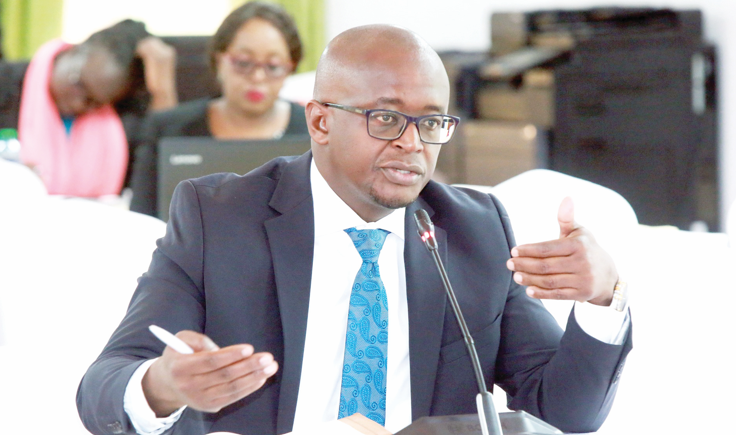
“A while back a judicial officer was arrested with money said to be proceeds of corruption by EACC. No action was taken. In this instance, because of the LSK boycott, action has been swift. Do we need any further evidence of how bad things had become?” Theuri wrote.
While referring to the Law Society of Kenya’s boycott in his remarks, Theuri suggested that external pressure may have influenced the speed of the Judiciary’s response. His comments reflect his opinion and have reignited debate over whether disciplinary action against judicial officers is applied consistently.
Judiciary announces administrative action
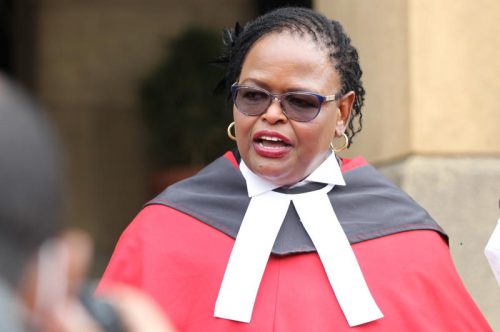
Theuri’s remarks came shortly after Chief Justice Martha Koome announced that Magistrate Martin Kinyua Mutegi had been relieved of his judicial duties pending the conclusion of investigations and the applicable disciplinary process.
In a statement issued on Wednesday, July 22, 2026, the Chief Justice said her attention had been drawn to a statement by the Ethics and Anti-Corruption Commission (EACC) announcing the arrest of Mutegi, the senior principal magistrate at Kangema Law Courts, together with a probation officer, over allegations of soliciting and receiving a bribe in connection with a matter pending before the court.
Koome said the allegations, if proved, amount to a serious violation of the law, the Judicial Code of Conduct and Ethics, and the values that underpin the administration of justice.
She reiterated that the judiciary maintains a zero-tolerance policy on corruption and all forms of unethical conduct, adding that judicial authority is exercised on behalf of the people of Kenya and must always be guided by integrity, impartiality, accountability, transparency and the rule of law.
“The Judiciary will not shield or condone criminal or unethical conduct by any person serving within its ranks,” the Chief Justice said, while emphasising that every individual facing allegations remains entitled to due process.
Investigations underway
According to the Judiciary, the Judicial Officers and Staff Discharge Justice with Honour Committee has commenced the appropriate administrative and disciplinary processes under the Judicial Service Act and the applicable human resource policies.
Pending the conclusion of those processes, Mutegi has been relieved of his judicial duties in accordance with the law and established procedures, without prejudice to the ongoing criminal investigations being conducted by the relevant constitutional agencies.
The Judiciary also pledged to accord the Ethics and Anti-Corruption Commission and other investigative and prosecutorial agencies the necessary cooperation in the discharge of their constitutional mandates.
Judiciary’s take
The Judiciary’s action followed the EACC’s announcement on Wednesday, July 22, 2026, that Magistrate Martin Kinyua Mutegi had been arrested alongside a Probation Officer over allegations of soliciting and receiving a bribe in relation to a matter before the court. Following the announcement, Chief Justice Martha Koome directed that the magistrate be relieved of judicial duties pending investigations and disciplinary proceedings.
Theuri’s response has now sparked fresh debate over consistency in the judiciary’s disciplinary processes.
While the judiciary maintains that it has acted in line with its zero-tolerance policy on corruption and in accordance with due process, Theuri argues that previous cases involving judicial officers accused of corruption did not attract similar administrative action, raising questions about whether accountability has been applied uniformly across the institution.