Advertisement
Lack of IDs big blow to Kenyan refugees as they seek integration
Thursday 24th July, 2025 03:20 AM|

Conzana Cornelius Mangati, the founder of Saidia Community Initiative, arrived at the Kakuma Refugee Complex 20 years ago as a displaced child from war-ravaged South Sudan.
To date, she has not been provided with any identification document.
The 27-year-old humanitarian worker has witnessed refugees succumb to illnesses due to lack of medical documents, since they are not registered under the national health insurance schemes.
During emergencies, they cannot be ferried by ambulances due to lack of legally recognised documentation.
You Might Also Like
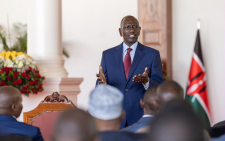

Kenya’s Refugee Act 2021 offers a promising model for refugee integration at a time when many countries are tightening restrictions, with the passage of the Refugee Act marking a significant shift in Kenya’s refugee policy, something Mangati agreed is good progress.
“For example, I have a colleague who went to apply for an ID but she realised that her papers had expired,” she said during a recent forum hosted by the International Rescue Committee (IRC) in Nairobi.
At the forum, it emerged that bribery, corruption and intentional delay in issuing refugees with documentation had affected their social and economic development.
“So you see, these people do not issue out the IDs that are there in the offices, they keep them, and then the procedures take quite a long time,” she said, emphasising that for a refugee, the ID is a key document to have as it facilitates a refugee to secure other documents.
Scholarship opportunities
Without a refugee ID, Mangati said that it becomes difficult for the immigrants to enjoy scholarship opportunities, secure jobs, or any other prospects.
“The ID is the main thing. If you don’t have one, you will not get a Convention Travel Document (CDT),” she said.
The CDT is also known as a refugee travel document that’s issued to refugees and stateless persons by the UN High Commissioner for Refugees (UNHCR) or the country of asylum to allow them to travel outside the country where they have been granted protection.
Mangati is lucky to have secured the Kenya Revenue Authority (KRA) Personal Identification Number (PIN), but has been unable to secure a work permit, more than a decade and counting.
The registration process, she noted, becomes quite long, and while they are waiting, they are relegated to the refugee clearing desk, and stay longer, months and even more than one year, depending on the cases.
Others can even go up to five years, waiting for just a single document.
Sometimes it becomes more difficult when a refugee wants to relocate from a country of asylum to another, perhaps due to security reasons.
“Say I was in Uganda, and I wanted to relocate to Kenya, UNHCR and the governments will investigate quietly why I need to be transferred, and now that’s where you end up finding yourself being in that situation for quite a long time,” she said.
IRC and Oxfam International held the consultations as part of the 2025 Securing Documentation Campaign.
Irene Shiundu, IRC’s Regional Advocacy Coordinator, said the ultimate goal is for more refugees to access documentation.
“One, for purposes of enjoyment of rights, and two, access to services. That would be it.
“Today, we are gathered here to discuss documentation issues and offer recommendations that can be used by our able leaders to sort of bring solutions to these challenges,” said Shiundu.
Kenya and Uganda host 69 per cent of displaced persons, with the two refugee camps, Kakuma in Turkana and Daadab in Garissa, hosting close to 1 million refugees.
Shiundu noted that both countries are grappling with scarce resources, including health resources, which refugees would want to enjoy.
“We have an advisory committee that was established in May of 2025 to sort advice on what the campaign would look like,” she said.
Identify challenges
The Intergovernmental Authority for Development (IGAD) and the East African Community form part of the team.
“The whole purpose is to identify the challenges in refugee documentation.
In Kenya, the advisory committee is working with Safaricom to ensure that the issue of misinterpretation, misinformation about what a document is required at a particular time is addressed.
Jonas Ndayisenga, a Burundian refugee and founder of Umoja Refugee Creative, is a chef, but because of lack of documentation, his dream of securing a job with some of the high-end hotels in Kenya has been a monumental task.
Author
George Kebaso
View all posts by George KebasoLatest News





Advertisement
More on News