Advertisement
Ksh100M worth of illicit alcohol and cigarettes destroyed in multi-agency crackdown
Tuesday 30th June, 2026 04:23 PM|
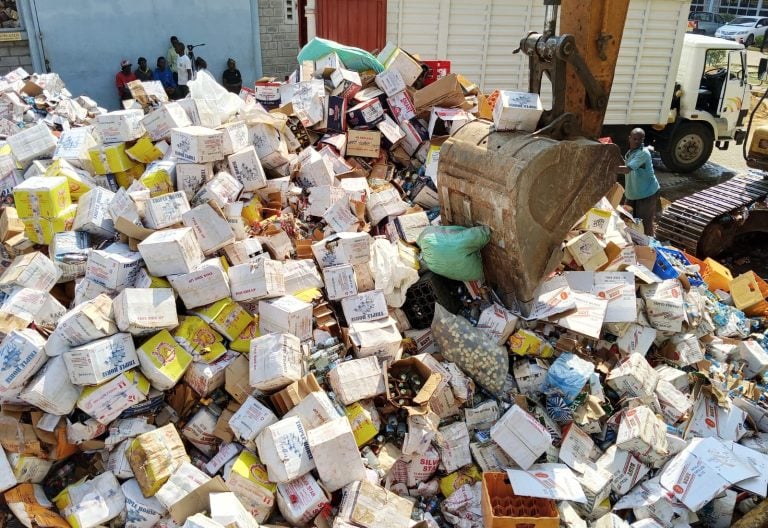
The Kenya Revenue Authority (KRA), in collaboration with other government agencies, has destroyed illicit goods worth approximately Ksh100 million in a renewed crackdown aimed at protecting consumers, supporting legitimate businesses and sealing off the market for counterfeit and smuggled products.
The destruction exercise, conducted at the Kenya Industrial Research and Development Institute (KIRDI) in Kisumu on Tuesday, June 30, 2026, brought together officers from KRA, the National Government Administration Officers (NGAO), the National Police Service, the National Authority for the Campaign Against Alcohol and Drug Abuse (NACADA), the Anti-Counterfeit Authority and other enforcement agencies.
Speaking during the exercise, KRA representative Nancy Chemutai described the destruction as a major milestone in the fight against illicit trade, saying it reflected the agency’s commitment to protecting government revenue and ensuring unsafe products do not reach consumers.
“Today marks a milestone in the fight against illicit alcohol. It is not just a win for KRA but also for all the government agencies we partner with. It is a mark of KRA’s commitment to secure taxes and ensure that illicit products do not find their way into the market,” she said.
You Might Also Like

Chemutai said the destroyed consignment included illicit alcohol, cigarettes and bottled water valued at Ksh100 million.
Similar destruction exercises were also being conducted in Nairobi and Voi.
Protecting manufacturers
She said the operation was intended to protect local manufacturers from unfair competition posed by counterfeit and smuggled products while safeguarding members of the public from goods unfit for human consumption.
“It is also a show of support to society because these products are not fit for human consumption due to how they are produced. We want to ensure that our society only consumes legitimate products,” she said.
Chemutai said KRA would sustain the crackdown, stressing that the fight against illicit trade would not end with the latest operation.
“We are committing to the public that it is not going to end here. We will continue protecting the economy and the people,” she said.

She explained that while some of the seized products are smuggled into the country, others are manufactured locally by unlicensed producers.
Public intelligence key role
Chemutai also credited members of the public for providing intelligence that has enabled enforcement teams to trace and seize illegal products.
“We appreciate the intelligence information we receive from the public. They tell us where these products are, enabling our teams to respond swiftly and seize them,” she said, adding that investigations are also targeting those behind the manufacture and importation of the illicit goods.
NACADA representative Sarah Akoske said the authority had joined the exercise in solidarity with other agencies involved in combating illicit drugs and alcohol.
She warned that the availability of cheap illicit alcohol was exposing more young people to substance abuse, with cases increasingly being reported even among primary school pupils.
“When you talk about illicit brews, they are usually cheaper than legitimate products, making them easier for young people to access and abuse. That is why we are seeing many problems in schools, including primary schools,” she said.
Luring children to drug abuse
Akoske further warned that some dealers disguise drugs in attractive products such as sweet-laced cookies sold near schools, making it easier to lure children into drug abuse.
Regional Manager of the Anti-Counterfeit Authority in Kisumu, Tom Muteti, said destroying seized products was critical in ensuring they never re-enter the market.
He noted that counterfeit products contribute significantly to alcoholism because they are sold cheaply and are easily affordable to consumers.
Kisumu County Commissioner Mohamed Ramadhan said the multi-agency operation demonstrates the government’s resolve to eliminate illegal alcohol and other illicit products from the market.
“We destroy all these products to ensure they do not find their way back into the market. Some of the alcohol was smuggled into the country illegally and is sold cheaply, creating unfair competition for genuine, tax-paying businesses,” he said.
Ramadhan also cautioned that many illicit alcoholic drinks pose serious health risks and often target young people because of their low prices.
“Some of these illicit alcoholic substances are highly dangerous. Because they are sold at throwaway prices, they easily attract young people, and that is what we must prevent,” he said.
Author
Latest News






Advertisement
More on News