Kenya’s High Commissioner to UK presents credentials to King Charles III
By Kepher Otieno, February 21, 2026London’s diplomatic establishment witnessed more than pageantry this week; it felt a shift in tempo. When Kenya’s newly appointed High Commissioner, Amb. Maurice Makoloo, formally presented his Letters of Credence to King Charles III at the historic Court of St James’s, the ceremony carried the weight of tradition—but also the promise of recalibration.
In the gilded surroundings of the royal court, the British monarch extended a warm welcome to Kenya’s 16th envoy, affirming the United Kingdom’s commitment to close cooperation and sustained bilateral engagement.
The assurance from His Majesty underscored a relationship London views as enduring and strategic—anchored in history, yet orientated toward shared prosperity and global responsibility.
For Makoloo, the moment was both personal and geopolitical. Presenting his credentials, he described the occasion as a “deeply humbling honour”, yet his diplomatic posture was unmistakably forward-leaning.
Within hours, at a high-level reception in London attended by senior members of the diplomatic corps, the new High Commissioner unveiled an agenda that signalled this tenure will be anything but ceremonial.
“The Kenya–UK partnership must not only endure,” he declared with measured conviction, “it must innovate, inspire, and deliver tangible benefits for our peoples.” The statement resonated as both reassurance and a challenge—a call to move beyond cordiality into consequential collaboration.
Makoloo’s intervention comes at a moment when global diplomacy is under strain. From armed conflicts to climate shocks and economic volatility, the international system is being tested. Framing diplomacy as a “relay race”, he emphasised continuity with urgency.
“If there was ever a time for nations to reaffirm their commitment to multilateralism and principled cooperation,” he said, “that time is now.” It was a reminder that Kenya intends to be an active architect of global solutions, not a peripheral participant.
As members of the Commonwealth of Nations, Kenya and the United Kingdom share a layered past. Yet Makoloo was deliberate in defining the present as “a modern partnership of equals.” The phrase reflects a broader African diplomatic recalibration—less deference, more parity; less nostalgia, more negotiation. Nairobi’s message is clear: historical ties are the foundation, not the ceiling.
Climate diplomacy emerged as a defining pillar of the envoy’s outlook. As host of the United Nations Environment Programme in Nairobi and a driving force behind continental climate initiatives, Kenya has elevated its environmental credentials. Makoloo stressed that “mitigation and adaptation are not abstract concepts—they are urgent imperatives.”
The subtext was strategic: Kenya seeks expanded green investment, technological collaboration, and climate finance partnerships with Britain. It is positioning itself not merely as vulnerable to climate change but as vital to the global response.
Trade and security cooperation remain steady anchors of the bilateral relationship, but innovation provided the evening’s spark.
Kenya’s “Silicon Savannah” has become shorthand for Africa’s digital ascent, propelled by fintech breakthroughs such as M-Pesa. Makoloo’s pitch was crisp—if Britain seeks a gateway into Africa’s innovation economy, Nairobi stands ready as partner and platform.
Makoloo’s engagement with diaspora
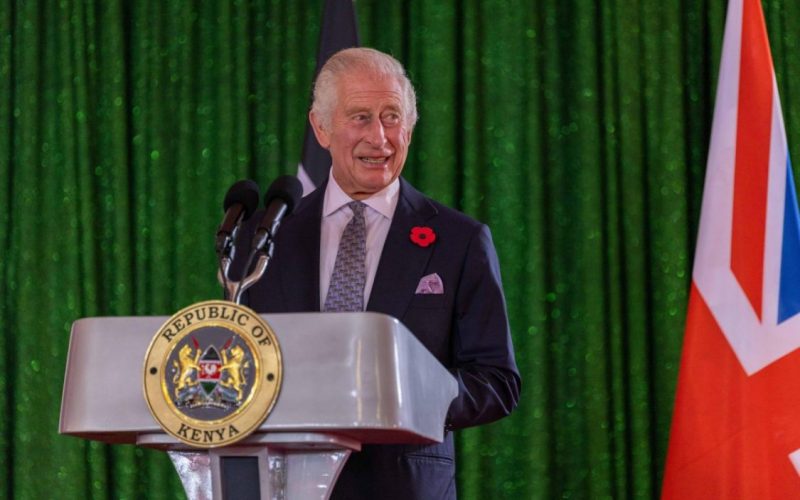
Equally compelling was his embrace of diaspora diplomacy. Addressing Kenyan professionals, students, and entrepreneurs in the room, he described them as “one of Kenya’s greatest strategic assets.”
In a British political climate where migration often dominates headlines, Makoloo reframed the narrative—diaspora as bridge, not burden, as a catalyst for trade, investment, and cultural exchange.
Even the subtleties of the reception carried diplomatic meaning. Kenyan coffee and tea—cornerstones of bilateral commerce—were served generously. Fresh roses symbolised the vibrancy of Kenya’s horticultural exports.
Tourism was woven seamlessly into conversation: daily Kenya Airways connections from Heathrow and Gatwick, white-sand beaches, world-renowned wildlife, and Nairobi’s status as a five-hour aviation hub to much of Africa. Soft power was not incidental—it was intentional.
King Charles-Makoloo’s engagement
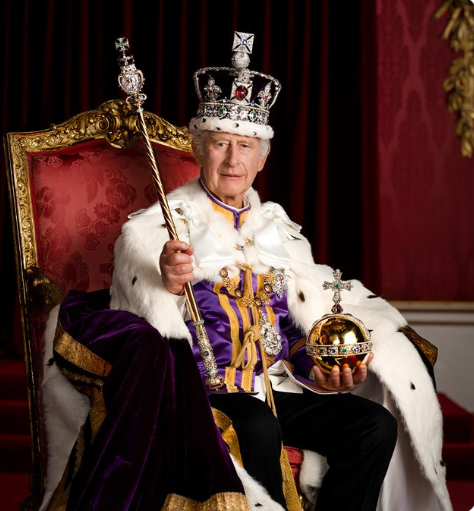
The evening concluded with a toast to His Majesty, but beneath the ceremonial civility lay strategic recalibration. With King Charles III affirming Britain’s readiness for close engagement and Makoloo articulating a results-driven agenda, the message from London was unmistakable.
Kenya arrives not as a supplicant, but as a confident partner—climate-conscious, tech-forward, and diplomatically assertive. The royal handshake may have sealed the formalities, but it is the shared commitment to innovation, investment, and principled cooperation that will define this next chapter.
In the heart of London, amid tradition and protocol, a new diplomatic tempo has begun.