Advertisement
Kenyan women prove resilience amid COVID-19 pandemic
Thursday 20th August, 2020 12:00 AM|
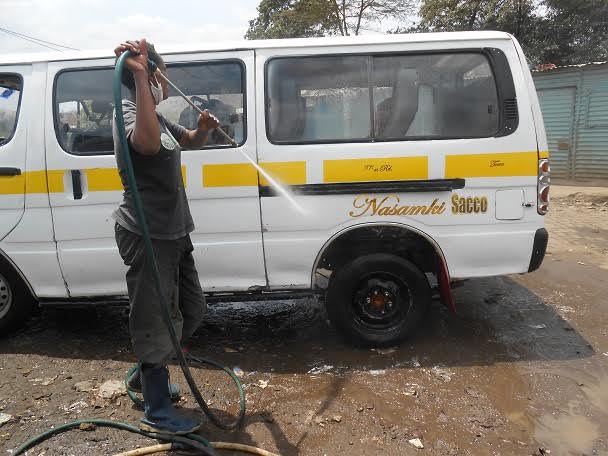
Two cars which were parked beside a road were later driven into the hands of Jedidah Wangari who cleaned them thoroughly while paying special attention to sections that were prone to accumulating dirt.
The mother of two was in her element as she washed vehicles at a makeshift garage adjacent to a working-class suburb located on the eastern fringes of the Kenyan capital, Nairobi.
Wangari has won accolades by performing a “menial” job that is largely shunned by Kenyan women and girls.
“I was rendered jobless during a restructuring exercise in the hotel I was working for three years ago. After scouting for a job for a few months I landed on this occupation that is male dominated,” Wangari told Xinhua during an interview on Wednesday.
There are some jobs that are still classified as belonging to a certain gender in Kenya, but Wangari and her female colleagues have defied that misplaced notion in their quest for self-reliance.
The COVID-19 linked furloughing and collapse of businesses has played a role in thrusting women in uncharted waters, causing them to explore fields that were traditionally reserved for men in a bid to feed their children.
Wangari said that her husband abandoned their marriage as soon as she expressed interest in washing cars for a living three years ago.
His departure signaled a new life for her as she automatically became the only breadwinner for her young offspring.
“He failed to understand how I can be confident lifting horse pipes on the roadside and cleaning people’s cars. I lost my marriage but I have never looked back ever since,” said Wangari.
She currently mentors women who have expressed interest in washing cars for a pay and revealed that the number has gone up in the last couple of months as a result of the economic fallout associated with COVID-19.
“I encourage women that express interest in this work to think about their families and not to be deterred by people’s opinions because those views will not put food on their tables,” said Wangari.
She admitted that she had no prior knowledge of cleaning vehicles as a vocation and it took patience and perseverance to execute it with precision.
Wangari is currently reciprocating the kindness shown to her by mentors to empowering other women keen on becoming full-time employees in car wash stations.
“I was apprehensive when starting because I thought people would rule me out because I am a woman but I got favored by the perception that I thought would work against me,” said Wangari.
With a pay that matches his male colleagues, she is happy not to be part of statistics that lifts the lid on gender disparity in pay albeit in the informal sector.
Wangari said that the car wash business is reeling from the negative impacts of the COVID-19 pandemic.
“People are working from home meaning they are using their cars less. In addition parents are assigning their children the responsibility of cleaning their cars at a time when schools are closed. So generally business is not doing well,” said Wangari.
Prescovia Osundwa, a bubbly 20-year-old mechanic donned in an apron defied balmy weather to prove her mettle in repairing cars.
“I used to sell fruits before the business became non-profitable, prompting me to look for an alternative source of livelihood. Because I always loved cars and heavy machines, the transition was smooth,” said Osundwa.
Ismail Wallah, Osundwa’s boss said that she is a fast learner and possesses soft skills that come in handy when negotiating with clients.
“I would like to tell the young people not to be selective about careers since such mindsets can be a hindrance to success in life,” said Osundwa. (Xinhua)
Author
People Daily
View all posts by People DailyLatest News







Advertisement
More on News