Advertisement
Kenya listed among countries criminalising safe abortion and reinforcing stigma
Sunday 28th September, 2025 12:04 PM|

The Civil Society Organisations (CSO) committed to advancing Sexual and Reproductive Health and Rights (SRHR) across Africa have listed Kenya among the nations impeding and criminalising the procurement of safe abortions.
In a statement on its X page on Sunday, September 28, 2025, the organisation noted that 8.3 million women and girls in Africa undergo unsafe abortions each year, which remains a leading cause of maternal mortality.
Third-party consent
“We maintain that in several countries, safe abortion is inaccessible to a majority of women and girls, attributed to restrictive laws and policies.”
“While there has been some progress made in countries such as Rwanda, persistent barriers remain, for example, in Nigeria, Malawi, Kenya, Tanzania, Uganda, and Zambia, where third-party consent requirements, reporting requirements for healthcare providers, and limitations on the cadre of healthcare providers who can provide services exist,” its statement read in part.
You Might Also Like


The organisation also cited Kenya among countries that criminalise the practice, with patients facing cases of stigmatisation.
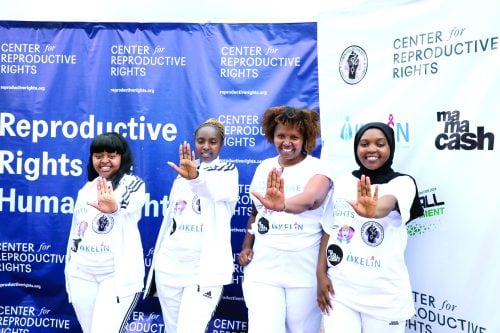
“In some cases, there is blanket criminalisation of those who seek and provide postabortion care; for example, in Nigeria, Tanzania, Malawi and Kenya,” the statement continued.
“As the world commemorates the International Safe Abortion Day 2025 under the theme ‘Safe Abortion is Life-saving Healthcare, the organisation has reaffirmed its commitment to support women’s access to safe abortions as an essential human right.
Solidarity with women
“We stand in solidarity with women, adolescent girls, and all people who can become pregnant, recognising that access to safe abortion is essential healthcare and a fundamental human right.
The organisation observed significant challenging situations across the continent, singling out a case for concern among the adolescents, those living with disabilities, and those in rural and underserved communities.
Call to action
They also pointed out similar challenges incidental to people in conflict situations and survivors of sexual violence.
The firm concluded by demanding the recognition of the medical procedure as a fundamental right as stipulated in the Maputo Protocol.
“We reaffirm that norms and standards provided in the Protocol to the African Charter on Human and Peoples’ Rights on the Rights of Women in Africa (Maputo Protocol), which explicitly recognises abortion as a right under Article 14(2)(c). This provision obligates state parties to provide abortion services in cases of sexual assault, rape, incest, and when pregnancy endangers the mental or physical health or life of the woman, or the life of the fetus.
Author
Latest News




Advertisement
More on News