Advertisement
Kenya leads high-tech path to redefining wildlife safety
Thursday 31st July, 2025 08:40 AM|
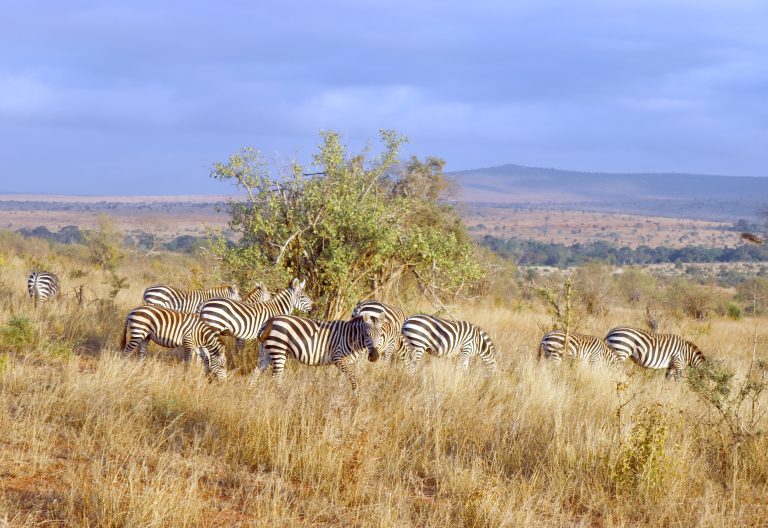
Across the sun-seared plains of Laikipia and the dense scrublands of Tsavo, there is a quiet revolution—one powered not by drones alone or rangers on foot, but by artificial intelligence (AI), thermal cameras and real-time data.
Faced with intensifying climate shocks, poaching threats and fragile ecosystems, the country is turning to emerging technologies to rethink how wildlife is protected and managed.
A high-stakes experiment in conservation tech that could reshape how Africa—and the world—safeguards biodiversity.
“We can’t afford to be left behind,” says Paul Udoto, the senior corporate communications manager at the Kenya Wildlife Service (KWS), noting that technology has moved from being an accessory to becoming the core of conservation in the 21st century.
You Might Also Like


At the centre of this transformation is EarthRanger, a software platform developed by the Allen Institute for AI (AI2).
Think of it as the mission control of modern conservation. It merges streams of data—from GPS collars on elephants, thermal cameras detecting night poachers, ranger patrols, drones, and even community reports—into a single dashboard.
In Ol Pejeta Conservancy, which hosts the world’s last two northern white rhinos, EarthRanger is doing more than tracking movement.
It’s preventing poaching before it happens. Rangers receive real-time alerts of potential intrusions, enabling immediate response.
Instant impact
“Before EarthRanger, we were always reacting to threats. Now, we’re one step ahead,” says George Kuria, a field operations manager at Ol Pejeta.
“It’s predictive conservation.”
The impact is measurable. Since installing AI-powered surveillance and thermal imaging systems, Solio Ranch has recorded zero rhino poaching incidents since 2023.
Kenya is deploying AI-enabled thermal cameras that can distinguish between humans and wildlife. These systems operate around the clock, often in areas too dangerous for rangers to patrol consistently.
One of the beneficiaries of this tech is the only white giraffe in Sub-Saharan Africa, found in Ijara, Garissa County.
The giraffe is now under round-the-clock watch using drones and thermal systems powered by artificial intelligence.
But it’s not just iconic species that are benefiting. In Laikipia, satellite collars fitted to lions and livestock work with EarthRanger to prevent deadly encounters.
When lions move too close to herding zones, automated alerts are sent to rangers and pastoralists, helping avoid attacks and stopping retaliatory killings.
“This is more than wildlife protection,” says Jane Maina of the Northern Rangelands Trust, “It’s a new model of coexistence driven by data and built on trust.”
Even remote communities are contributing. Rangers and herders now use SMS-linked mobile apps to report wildlife movements.
The old image of conservation as a top-down operation is fading. In its place is a hyper-connected ecosystem where local knowledge and AI work side by side.
These efforts are not just local success stories. They are prototypes for the global South.
In Costa Rica, drones and camera traps linked to EarthRanger have led to over 100,000 species observations in the Osa Peninsula.
In the Congo Basin, the technology supports satellite surveillance to combat illegal logging and fishing.
Across 22 reserves, the system is used for everything from poaching deterrence to wildlife reintroduction.
Tech challenges
The use of this technology signals a broader shift in how conservation is done, away from paper logbooks and guesswork, toward evidence-based, tech-driven, real-time protection.
Still, the journey isn’t seamless. Connectivity remains patchy in remote reserves like Samburu, Marsabit and parts of Northern Kenya.
Conservationists also cite limited funding, insufficient training for rangers, and dependency on donor-driven hardware as serious concerns. But solutions are in motion.
Solar-powered field devices and the upcoming expansion of 5G networks could help close the digital gap.
Partners such as WWF, African Parks and the Allen Institute for AI are offering technical training, equipment and system upgrades.
“This isn’t just about deploying gadgets,” says Asha Mukhtar, KWS senior assistant director for customer experience.
“It’s about retooling the entire conservation mindset, from reactive to anticipatory.”
As Africa contends with biodiversity collapse, changing climate patterns and surging demand for land, Kenya’s pivot offers a powerful counter-narrative.
It shows how countries can leapfrog legacy systems using digital tools—not only to save species, but to sustain tourism, empower communities, and reinforce ecological resilience.
“We’re proving that AI and data can protect wildlife—and help people at the same time,” says Bakari Chongwa, Northern Conservation Area assistant director.
For countries in Africa and beyond, the lesson is clear: conservation success in the 21st century will depend not just on passion but on precision.
Kenya is betting on it. And if it succeeds, the rest of the world might just follow.
Author
Jacob Walter
View all posts by Jacob WalterLatest News






Advertisement
More on News