Advertisement
Kenya issues Marburg Virus warning following Ethiopia outbreak
Tuesday 18th November, 2025 07:40 PM|

Kenya’s National Public Health Institute (KNPHI) has issued a warning to all counties to strengthen preparedness and response measures after Ethiopia confirmed a Marburg virus disease (MVD) outbreak in Jinka, Southern Ethiopia.
The advisory was posted on Tuesday, 18 November 2025.
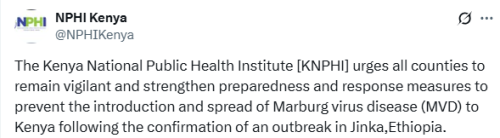
“The Kenya National Public Health Institute [KNPHI] urges all counties to remain vigilant and strengthen preparedness and response measures to prevent the introduction and spread of Marburg virus disease (MVD) to Kenya following the confirmation of an outbreak in Jinka, Ethiopia,” the X post read.
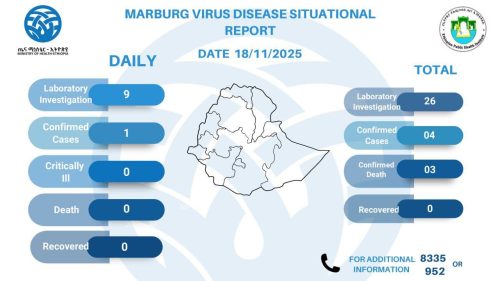
Ethiopia reported three deaths linked to the Marburg virus. The Africa Centres for Disease Control and Prevention (Africa CDC) noted that the outbreak had reached epidemic levels. The World Health Organization (WHO) confirmed that the virus is part of the Filovirus family, which causes severe haemorrhagic fever and can have a mortality rate of up to 90 per cent.
You Might Also Like



The virus spreads from fruit bats to humans and between people through direct contact with bodily fluids or contaminated surfaces. Symptoms include high fever, severe headache, muscle pain, fatigue, and, in many cases, bleeding within a week.
There is currently no approved vaccine or specific treatment, but supportive care such as hydration and symptom management can improve survival chances.
KNPHI Acting Director General Kamene Kimenye highlighted that Kenya is at risk due to strong travel, trade, and migration links with Ethiopia. She stressed the need for counties to increase surveillance, prepare isolation facilities, and enforce strict infection prevention protocols.
County governments have been advised to monitor health facilities, communities, and points of entry. Health workers should conduct active case finding and report suspected cases through national disease monitoring platforms.
Counties are also expected to designate and maintain functional isolation centres, establish clear referral pathways, and train staff in recognising MVD, triaging patients, and providing supportive care safely.
Strict protocols, public awareness
The advisory emphasises strict infection prevention and control (IPC) protocols, including the use of personal protective equipment (PPE), hand hygiene, safe waste management, and environmental disinfection. Health workers must also safely collect, package, and transport samples to national public health laboratories for rapid confirmation and case management.
Community engagement is a key part of the response. KNPHI urges counties to ensure that local leaders, community health promoters, and trusted channels provide accurate information on symptoms, prevention, and early reporting of MVD. Public awareness is critical to preventing the spread of the virus.
For the general public, KNPHI advises avoiding direct contact with blood, vomit, urine, or other body fluids of suspected or confirmed cases. People are urged to wash hands frequently, avoid handling bushmeat -especially bats and monkeys – and practise safe food handling. Safe burial practices are also essential, and only trained personnel wearing protective equipment should handle the deceased.
The outbreak in Ethiopia follows similar incidents in Angola, the Democratic Republic of the Congo, Ghana, Kenya, Equatorial Guinea, Rwanda, South Africa, Tanzania, and Uganda. Previous outbreaks demonstrate that early detection and swift response are essential to preventing the spread across borders.
Author
Kenneth Mwenda
Kenneth Mwenda is a business, sports, and politics digital writer with over seven years of experience in journalism, covering breaking news, feature stories, and in-depth analysis across a range of beats.
For inquiries, he can be reached at [email protected]
View all posts by Kenneth MwendaLatest News







Advertisement
More on News