Advertisement
Kenya and Germany pledge deeper cooperation in economy, education, and clean energy
Tuesday 25th November, 2025 02:16 AM|

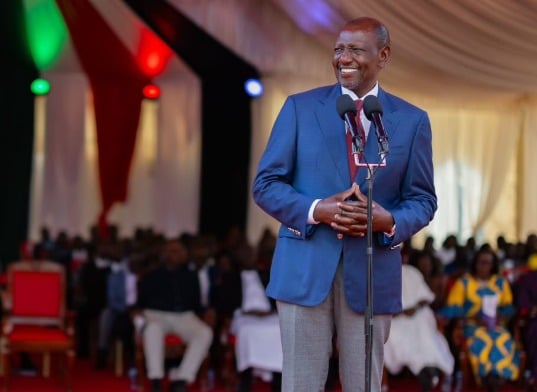
President William Ruto has emphasised the cooperation in trade, investment, education, clean energy, and labour mobility between Kenya and Germany.
Speaking on the sidelines of the 7th African Union–European Union Summit in Luanda, Angola, on Tuesday, November 25, 2025, President Ruto shared key developments and future plans for the bilateral relationship.
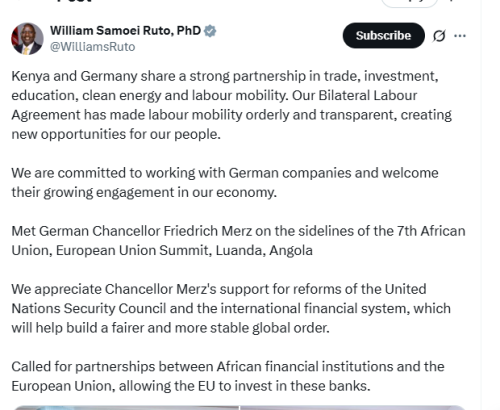
“Our Bilateral Labour Agreement with Germany has made labour mobility orderly and transparent, creating new opportunities for our people. We are committed to working closely with German companies and welcome their growing engagement in our economy,” Ruto stated.
Ruto also expressed appreciation for German support on global governance reforms, noting that Chancellor Friedrich Merz has backed initiatives to reform the United Nations Security Council and the international financial system.
You Might Also Like



We appreciate Chancellor Merz’s support for reforms of the United Nations Security Council and the international financial system, which will help build a fairer and more stable global order.”
The president further called for stronger partnerships between African financial institutions and the European Union, encouraging EU investment in African banks to foster economic growth and development on the continent.
This comes a few months after the Labour Principal Secretary Shadrack Mwadime said the bilateral labour agreements signed between Kenya and Germany in September last year are being fast-tracked for the benefit of both parties.
He spoke upon return from leading a Kenyan delegation to Germany on the operationalisation of the bilateral labour agreements.
Labour Principal Secretary Shadrack Mwadime, who led the delegation, said the Bilateral Labour Agreement between Kenya and Germany was signed in September 2024, adding that the discussions dwelt on ways of enhancing the mobility of skilled labour in various sectors that are experiencing shortages.
The PS also explained that the two sides discussed ways of boosting vocational training opportunities for Kenyans, skills development to ensure potential employees meet international job requirements and also the protection of workers’ rights while in Germany.
“We held discussions with the German Commissioner for Labour, the lead negotiator, and agreed on the need for Germany to deploy teachers of German to our technical and vocational colleges and universities,” he said. “The ability to speak German is critical to getting a job opportunity in the country.”
Author
Latest News




Advertisement
More on News