Advertisement
KeNHA gives timeline for expected completion of Rironi-Mau Summit Road
Saturday 11th July, 2026 03:02 PM|
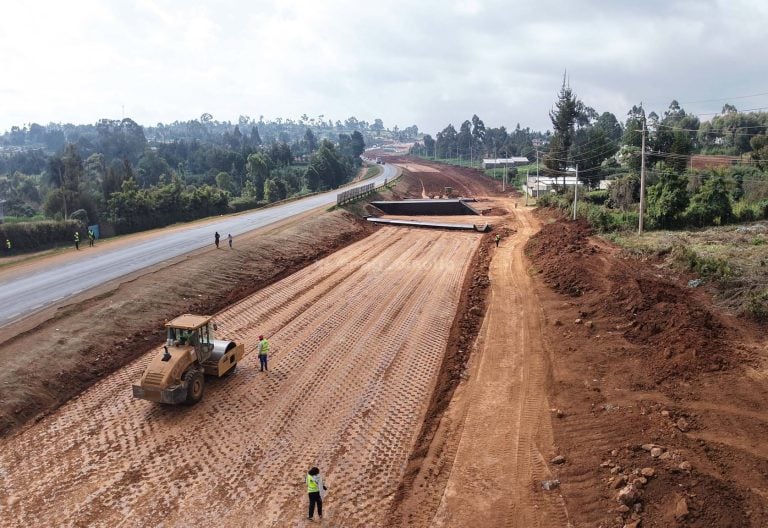
The expansion of the Rironi-Nakuru-Mau Summit Highway is progressing steadily, with the Kenya National Highways Authority (KeNHA) expressing confidence that the project remains on schedule despite its scale.
The authority’s Board of Directors inspected the project on Saturday, July 11, 2026, and reviewed the ongoing design and construction work that began in November 2025.
KeNHA Director General Luka Kimeli said both contractors have made steady progress since construction began and announced that the project is expected to be completed by June 2027.
“On the CRBC section, we are about 15 per cent,” Kimeli said.
You Might Also Like
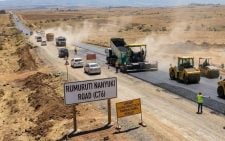

“On the Shandong side, we are still about 10 per cent. But progress is well, as you have heard from our chair, and we hope to finish by June 2027.”
The authority expects work to accelerate as more sections become available for construction following the relocation of public utilities and completion of preparatory works.
The inspection focused on priority sections of the highway that have long been identified as major traffic bottlenecks along the busy Nairobi-Rift Valley corridor.
The road is one of Kenya’s most important transport routes, carrying thousands of passenger vehicles and heavy commercial trucks every day. Once completed, it is expected to ease congestion, improve road safety and shorten travel time between Nairobi, Nakuru and western Kenya.
Dual-front construction
KeNHA said contractors are working from opposite ends of the corridor to speed up delivery of the project.
One contractor is handling the Rironi-Gilgil section, including the Maai Mahiu link, while the second contractor is working on the Gilgil-Mau Summit section.
The dual-front approach allows construction to progress simultaneously across different sections instead of waiting for one segment to be completed before starting another.
According to KeNHA Board Chairperson Winfrida Ngumi, the authority is working closely with several government agencies to prevent delays that often affect major infrastructure projects.
“We are happy with the progress,” Ngumi said.
“We are working very closely with other agencies of government, with Kenya Power, with the water agencies, with the ICT ministry to ensure that there are no bottlenecks and that the project will be delivered to the quality and to the standards that Kenyans expect.”
She said coordination with utility providers is helping ensure that the relocation of electricity lines, water infrastructure and communication networks does not slow construction.
Ngumi said the project is expected to address long-standing traffic congestion and improve safety along the highway.
“We have seen Kenyans suffering on this road. We have seen the traffic situations. We have seen accidents and experienced road safety issues,” she said.
“So this corridor is extremely important because it’s going to provide solutions to all these challenges.”
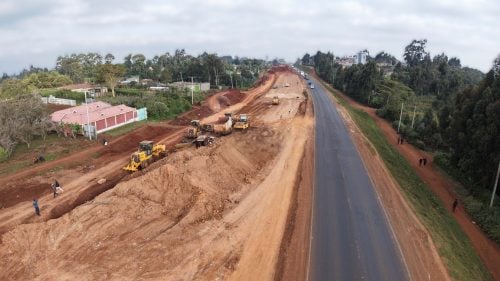
The Rironi-Nakuru-Mau Summit corridor has for years experienced heavy traffic, particularly during weekends and public holidays when thousands of motorists travel to and from the Rift Valley and western Kenya.
Long traffic queues, slow-moving trucks and frequent crashes have made the route one of the country’s most congested highways.
Construction progress
The Rironi-Nakuru-Mau Summit Highway forms part of the wider A8 corridor, which links Nairobi to Nakuru, Eldoret, Kisumu, Uganda and other regional markets.
The government considers the road a strategic investment because it supports trade, tourism and regional integration across East Africa.
Part of the corridor, the 94-kilometre Gilgil-Nakuru-Mau Summit section, is being delivered under a Design, Build, Finance, Operate, Maintain and Transfer (DBFOMT) public-private partnership model by China’s Shandong Hi-Speed Road & Bridge International Engineering Co. Ltd (SDRBI).
Under the agreement, motorists will pay a toll of Ksh8.50 per kilometre once that section opens, with the private partner operating and maintaining the road during a 30-year concession before handing it back to KeNHA.
The upgraded highway will include additional lanes, interchanges, bridges, a viaduct in Nakuru City, drainage systems, toll plazas and other road safety infrastructure aimed at improving traffic flow and reducing travel delays along one of Kenya’s busiest highways.
Author
Kenneth Mwenda
Kenneth Mwenda is a business, sports, and politics digital writer with over seven years of experience in journalism, covering breaking news, feature stories, and in-depth analysis across a range of beats.
For inquiries, he can be reached at [email protected]
View all posts by Kenneth MwendaLatest News







Advertisement
More on News