Advertisement
KCB green bond to lift debt market
Wednesday 23rd March, 2022 12:48 AM|
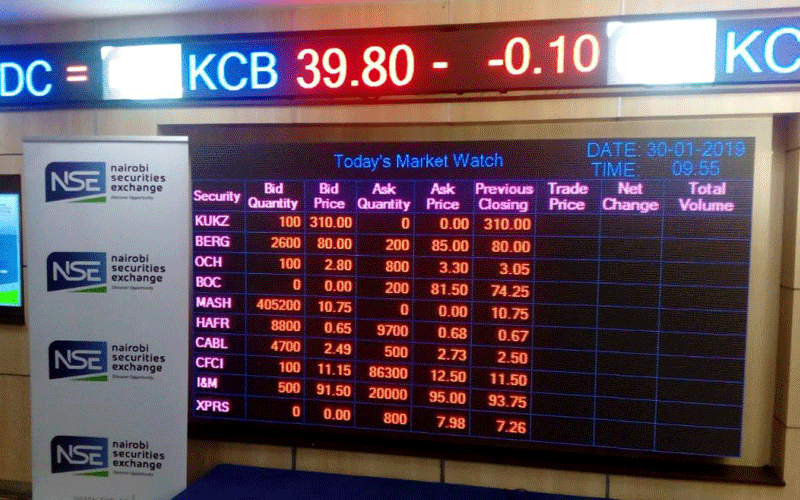
Kenya’s corporate bond market is upbeat after KCB outlined plans to issue a green bond, adding to a string of recent bond issues that have exited the market, after more than a decade of defaults and corporate failures.
Speaking in an earnings call interview KCB Group chief financial officer Lawrence Kimathi said the lender plans to make an entry into the corporate market by floating a green bond.
“We have been looking at a green bond locally. We are still at very formative stages of that conversation, speaking to advisers just to understand what would be the market appetite, at what rate the market will expect a green bond from an entity like ours to pitch at, and then we make the decision,” said Kimathi.
“It is something we are looking at. If we go to the market, it will not be anything below $100 million (Sh11.4 billion). That would be the bare minimum,” he said.
You Might Also Like



The revelation which comes shortly after the successful debut of the Kenya Mortgage Refinance Company (KMRC) bond that was oversubscribed spells out better tidings in the nascent sector.
Recovering trend
The International Finance Corporation (IFC) gobbled up $36.97 million (Sh4.2 billion) worth of bonds issued by KMRC, becoming one of the largest debt investors in the firm.
“A successful green bond launch by KCB will contribute to what is a recovering trend in the corporate bond market. It will also highlight climate sustainability as a theme in the industry as the bank is set to invest the proceeds in sustainable investments,” said Mwango Capital in their weekly banking sector review.
KMRC’s bond is the fifth corporate instrument to be issued over the last two years. Other companies that have issued corporate bonds include Acorn, Centum, Family Bank, and EABL.
Going by the performance of these corporate bonds in the recent past, all indications point to investors yearning for such-like instruments and investment opportunities.
More than ten years ago since the successful issue of the Sh25 billion KenGen public infrastructure bond in 2009, the local corporate bond market has suffered setback after setback.
Due to collapsed issuers and defaults in recent years, the segment seems to have taken a backward step in active issuance of corporate bonds as investors who pumped their money in the two problem issues by Chase and Imperial banks still seek recourse on their outlays.
Most of the issuers redeemed their bonds and opted for alternative sources of funds including loans from banks, shareholders, private equity and development finance institutions.
As of the end of December 2020, there were only six outstanding commercial papers valued at Sh19.1 billion, according to the Capital Markets Authority’s quarter one 2021 statistical bulletin.
Warming up
However recent successes by corporates in the market such as EABL, Centum and others have breathed life in the market and investors have warmed to the appeal, helping to raise competition against government bonds.
This comes at a time when there have not been any significant listings on the Nairobi Securities Exchange for more than three years which is the cheapest source of capital for companies.
Author
John Otini
View all posts by John OtiniLatest News







Advertisement
More on News