Advertisement
Katwa Kigen defends independence amid Ruto ties
Tuesday 28th April, 2026 02:36 PM|
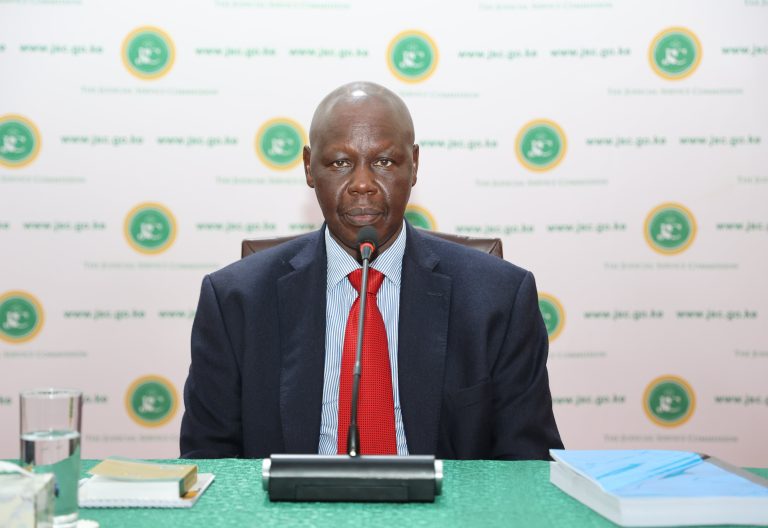
Court of Appeal Judge Katwa Kigen has told the Judicial Service Commission (JSC) that his past legal work for President William Ruto would not affect his independence if appointed to the Supreme Court.
Kigen appeared before the commission on Tuesday, April 28, 2026, as interviews began to fill a vacancy at Kenya’s highest court. The position became open after the death of Justice Mohamed Ibrahim in December 2025.
During the session, JSC commissioner Fatuma Sichale raised concerns submitted by members of the public over Kigen’s suitability. The questions centred on his previous role as a lawyer for Ruto, including as part of his defence team at the International Criminal Court (ICC) and in the 2022 presidential election petition. Ruto is widely expected to seek re-election in 2027.
The issue focused on whether Kigen could remain impartial if a presidential election petition involving Ruto reached the Supreme Court after the next General Election.
You Might Also Like
Kigen admitted that he had represented President Ruto in the past but said that should not be used to judge his fitness for office.
“I have indeed represented him,” Kigen said during the interview.
He added that he would remain objective and fair if given the role.
“I intend to be as objective and neutral in the discharge of my functions as a judge. I will only deal with facts and the law,” he said.
Kigen rejects bias claims
Kigen told the panel he understood why some people had raised questions, but insisted that his professional history should not outweigh his judicial record and conduct.
He said many judges in Kenya had previously worked as advocates before joining the Bench and had represented different clients in private practice.
According to Kigen, singling him out because of one former client would be unfair and inconsistent with how other candidates had been assessed.
“To distinguish me just because of one client would probably not be quite fair,” he said.
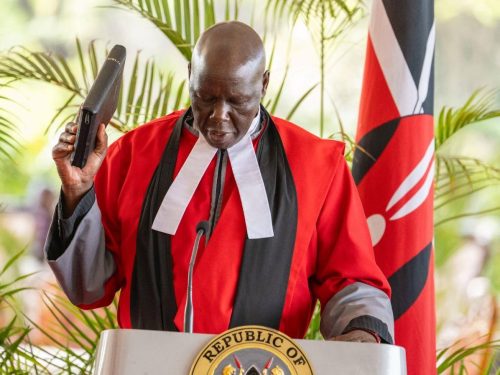
He urged commissioners to judge him on integrity, fairness and justice rather than on a former brief.
Kigen also pointed to legal safeguards that already exist if concerns over bias arise in future cases. He said any party with a valid objection could seek his recusal from a matter.
“There are provisions of how that can be handled, including recusal,” he said.
He added that the Supreme Court handles many constitutional and appellate disputes, not only presidential petitions.
“I am aware that some presidential petitions have been done with fewer than the totality of seven judges. The Supreme Court workload is not limited only to presidential petitions,” he said.
Race for Supreme Court
Kigen is among five shortlisted candidates seeking the post. Others due to face the panel include former Independent Policing Oversight Authority chair Anne Makori, High Court Judge Joseph Sergon, and Court of Appeal judges Francis Tuiyott and Mohammed Warsame.
The successful candidate will join a court that plays a central role in constitutional interpretation, election disputes and final appeals.
The interviews have drawn public attention because the next Supreme Court judge could be part of the bench that hears any major disputes arising from the 2027 elections.
Kigen’s appearance therefore carried both legal and political interest, with commissioners testing whether his previous links to the President could undermine confidence in the court.
He rejected that suggestion and maintained that judges must be judged by their conduct, not by clients they once represented as advocates.
Author
Kenneth Mwenda
Kenneth Mwenda is a business, sports, and politics digital writer with over seven years of experience in journalism, covering breaking news, feature stories, and in-depth analysis across a range of beats.
For inquiries, he can be reached at [email protected]
View all posts by Kenneth MwendaLatest News



Advertisement
More on News