Advertisement
Kakamega on high malaria alert as new climate system predicts outbreak risk
Wednesday 05th November, 2025 07:37 PM|
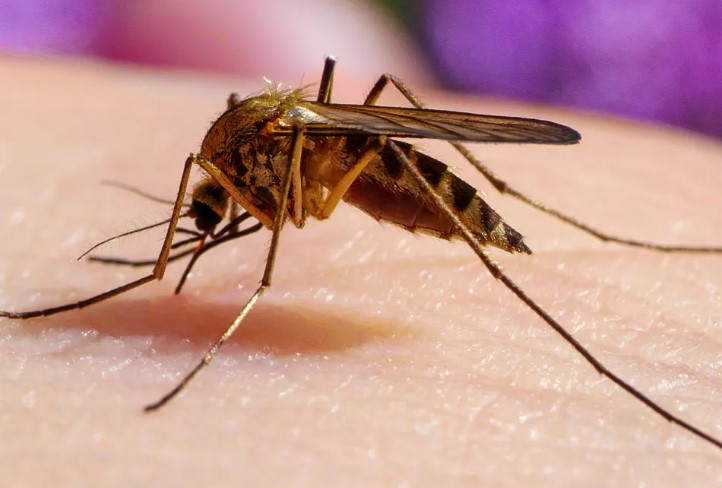
Kenya has issued an early malaria alert for Kakamega County following the release of a new Malaria Epidemic Early Warning Prediction System for the Western Kenya Highlands.
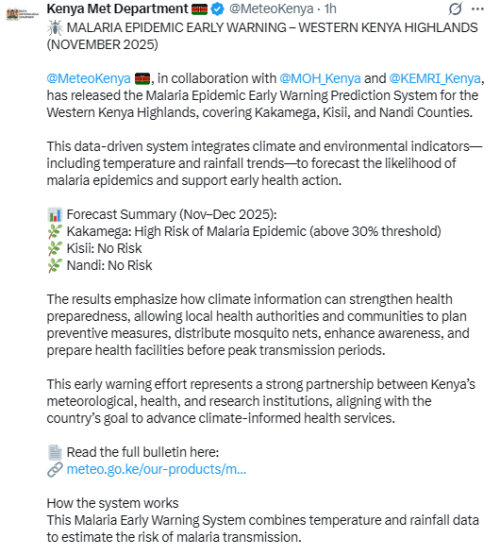
The system, developed by MeteoKenya in collaboration with the Ministry of Health and KEMRI Kenya, predicts a high risk of malaria outbreaks between November and December 2025.
In its latest report titled Malaria Epidemic Early Warning Western Kenya Highlands (November 2025), released on Wednesday, November 5, 2025, the Meteorological Department of Kenya indicated that Kakamega faces a high risk of malaria epidemic (above 30% threshold), while Kisii and Nandi Counties remain at no risk levels.
“This data-driven system integrates climate and environmental indicators, including temperature and rainfall trends, to forecast the likelihood of malaria epidemics and support early health action,” the statement reads
You Might Also Like



The early warning system marks a significant step in the country’s effort to use climate science to predict disease outbreaks before they occur. It allows county health officials to prepare in advance by distributing mosquito nets, mobilising communities, and readying hospitals for possible surges in malaria cases.
Meteorological Department of Kenya stated that climate information can prepare strengthen health preparedness.
“The results emphasise how climate information can strengthen health preparedness, allowing local health authorities and communities to plan preventive measures, distribute mosquito nets, enhance awareness, and prepare health facilities before peak transmission periods,” the statement reads
The system works by combining temperature and rainfall data to estimate malaria transmission risks. “When rainfall and temperature rise above certain thresholds, mosquito breeding and parasite development increase, raising the risk of outbreaks,” the department explained.
The predictive models developed by MeteoKenya are shared with the Ministry of Health and KEMRI Kenya to guide early interventions and prevent potential epidemics.
“This early warning effort represents a strong partnership between Kenya’s meteorological, health, and research institutions, aligning with the country’s goal to advance climate-informed health services,” the statement read.
Meteorological Department of Kenya added that early warnings are crucial to saving lives.
“Early warning, early action the department stated, noting that the partnership is a key step in achieving climate-resilient health systems in Kenya,” the statement reads
Author
Latest News





Advertisement
More on News